
Steven Jones discusses the psychological impact of human-induced risks on seafarers amid growing maritime conflicts and uncertainty.
The founder of the Seafarers' Happiness Index, Steven Jones, spoke about the shadow of sentiment that seems to have descended upon the maritime world.
Jones highlighted the effects of increasing uncertainty, conflicts, and loss of trust on the psychology of seafarers in the maritime industry. According to him, there is a growing atmosphere of collective fatigue and pessimism felt across the sector.
Noting that the phrase 'to be helpless against the forces of nature,' mentioned in a recent court document regarding a shipwreck, also reflects the situation of today's seafarers, Jones stated that seafarers are now battling not only natural conditions but also human-induced threats.
He indicated that the new results of the Seafarers' Happiness Index, which will be announced soon, may not present a positive picture, expressing that those working at sea are going through a difficult period.
According to Jones, 'happiness' in the maritime sector carries a different meaning than the artificial images portrayed in corporate promotional videos. For seafarers, true happiness means the absence of fear and the presence of a sense of security about the future. Fundamental elements such as timely payment of salaries, contracts ending as planned, opportunities for rest, support, and respect form the basis of this feeling.
However, pointing out that this sense of security has weakened recently, Jones stated that global tensions directly affect maritime transportation. He noted that wars have spread again to trade routes, and crews often find themselves serving in conflict zones they did not choose. He remarked that missile and drone attacks target vessels carrying food, fuel, and commercial cargo.
Emphasizing that the tensions in the region have tangible consequences, Jones warned that around 20,000 seafarers could be trapped on ships in the Persian Gulf or nearby due to security risks around the Strait of Hormuz. He reported that some vessels have been attacked, abandoned, or unable to reach ports, stating that this situation has caused serious concern among the families of seafarers.
Jones said that it is inevitable for these developments to create a psychological toll on seafarers. He recalled that challenges were also faced during the Covid-19 pandemic, but at least there was a belief that people were trying to save lives on a global scale during that time. Today, however, crews are confronted with senseless violence and unjust accusations.
He noted that the mental perception of those working at sea has changed, and trust in companies, governments, and the system has weakened. He pointed out that once-safe shipping routes can be closed, or ships may have to divert to longer and riskier routes, leading to an increase in abandonments and seafarers being easily scapegoated when problems arise.
According to Jones, the feeling of being 'disposable' among seafarers is increasingly strengthening. He stated that this situation has a more damaging effect on morale than harsh weather conditions.
Nevertheless, Jones emphasized that the sector should not completely lose hope. He expressed that a renewed sense of trust and purpose can be created for seafarers, starting with listening, understanding, and genuinely caring.
Jones stated that seafarers should be seen not just as statistical data but as human beings. He stressed that shipowners, charterers, and flag states must take responsibility to rebuild a climate of trust in the industry.
Reminding that the maritime sector operates with low profit margins, Jones expressed that despite this, the psychological resilience of seafarers has reached its limits. He noted that continuous uncertainty and insecurity increase despair, stating that the sector cannot be sustainable merely by people enduring it.
Jones remarked that optimism is still possible, but it can only emerge when companies decide to do what is right for their employees.
Recalling that the phrase 'to be crushed by the forces of nature' is used to describe a tragedy, Jones stated that it also serves as a warning. He noted that while the sea can be indifferent, people must care.
According to Jones, the real danger today is indifference. He warned that if an environment is accepted where seafarers are placed under stress, made to feel invisible, and criticized for not being 'brave' enough, the problem could deepen further.
He emphasized that true courage is the kind demonstrated by seafarers who face the world with nothing but a coverall and a helmet.
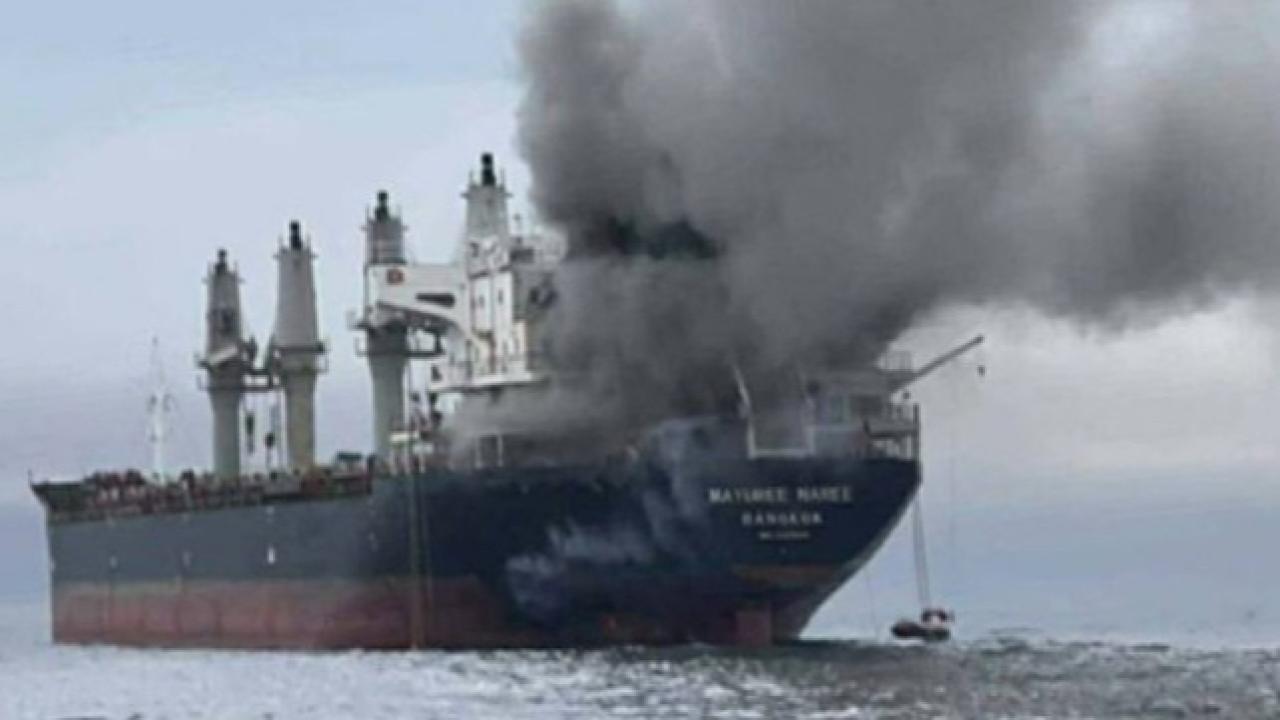
Jones stated that seafarers deserve not only to survive but also to have stability, respect, and hope. He believes that a red sky at sea should symbolize peace and security, not a burning tanker on the horizon.
However, he noted that the darkness over the maritime sector can only be dispelled in this way, and that it is possible through small but meaningful steps. Jones highlighted that the most dangerous threat faced by those working at sea today is 'human-induced risks.'
Source: SeaNews Türkiye


