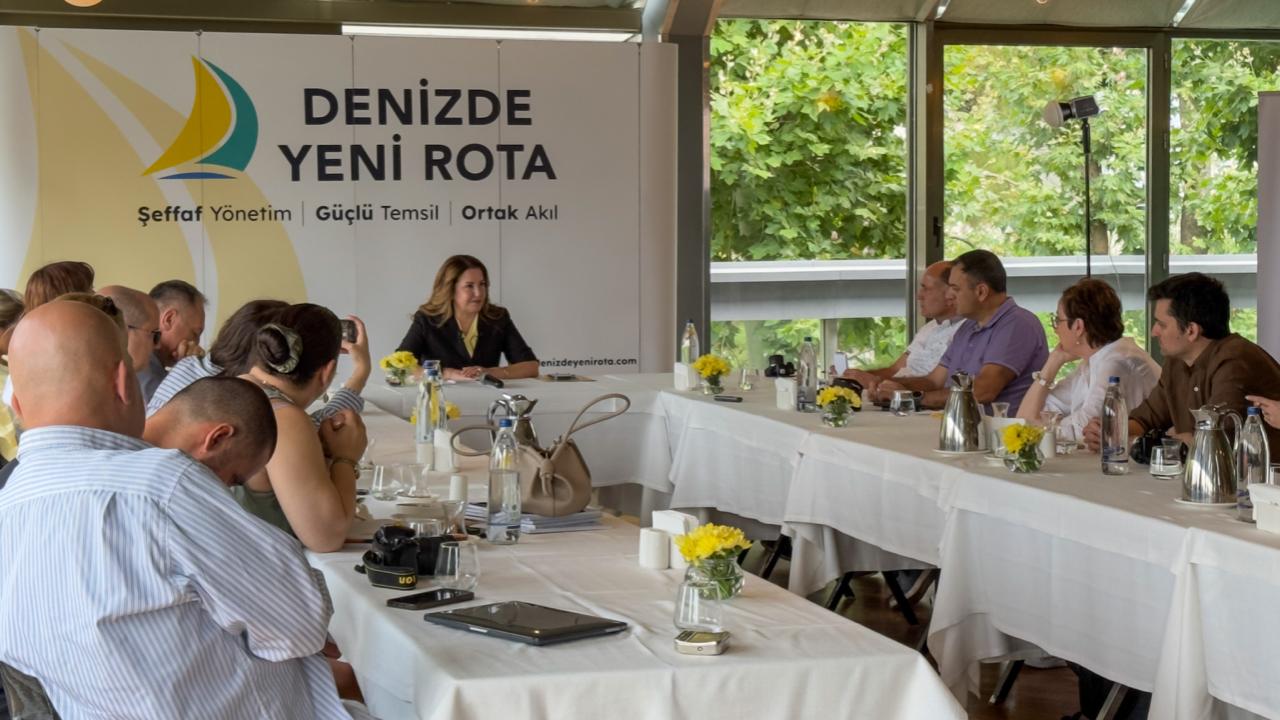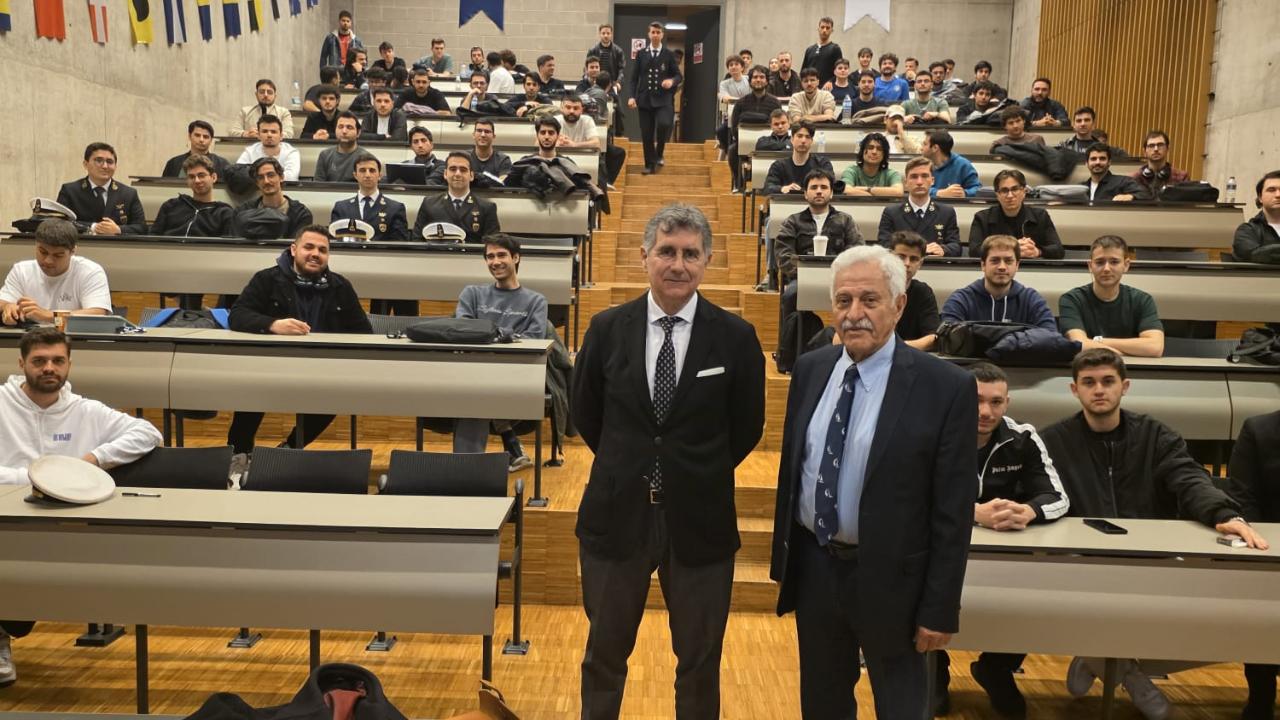

Ömür Karataş emphasized the importance of real-time ship emissions monitoring at EUROPORT 2026, showcasing engineering expertise in digital transformation.
Ömür Karataş Discussed at EUROPORT: Real-Time Monitoring in Ship Emissions Management
Ömür Karataş, Founder of ORTECH Marine and Founding President of the Ship Repair Industrialists Association (GOSDER), evaluated the transition from daily noon reports of ships to real-time monitoring systems at EUROPORT Istanbul 2026. Discussing applications ranging from fuel consumption to machinery health, maintenance planning to emissions tracking, Karataş emphasized that engineering experience is crucial for the success of digital transformation.
EUROPORT Istanbul, held at the Istanbul Yenikapı Fair Center from November 4-6, 2026, brought solutions to the forefront regarding energy efficiency, digitalization, and the transformation of the existing fleet in maritime. Participating in the BlueBridge Maritime Istanbul 2026 presentation series, Ömür Karataş addressed how data can be collected in ship operations and transformed into operational decisions. Official event announcement of EUROPORT
Karataş's session, which started on Thursday, November 5 at 14:30, was titled “Real-Time Monitoring in Practice: Onboard Sensors, Engine Health and Operational Decisions” in the program. The presentation focused on the benefits of supporting traditional noon reports with continuous data flow regarding ship sensors, machinery health, and operational decisions. BlueBridge organizer program
Placing the approach “Without experience, digitalization is merely directionless data” at the center of his presentation, Karataş stated that he aims to combine the experience gained from his 47-year career with digital technologies. He expressed that the system knowledge acquired in the engine room, shipyard, and at sea is indispensable for correctly interpreting the data coming from sensors.
According to Karataş, the value of digitalization in maritime is measured by the amount of data collected and its contribution to operational decisions. An analysis that does not consider the operating conditions of the machinery, the loading status of the ship, and environmental impacts can lead technical teams to incorrect assessments. Karataş summarized this approach with the words, “Technology supports experience; it does not replace it.”
Noon reports, which have been used in maritime companies for many years, provide essential information about the ship's activities over the previous 24 hours to shore management. Karataş explained that while these reports remain important, there is a need for more frequent data collection to understand short-term consumption increases, load changes, and signs of malfunction throughout the day. Real-time monitoring allows technical teams to see issues without waiting for the daily report and to evaluate intervention options.
Behind this need are not only fuel costs but also environmental regulations. The International Maritime Organization's (IMO) 2023 strategy aims to achieve net zero greenhouse gas emissions in international shipping by 2050 or around that time. Karataş stated that digital tools are crucial in this process for making consumption visible, identifying inefficiencies, and monitoring the results of measures taken. IMO's 2023 greenhouse gas strategy
The presentation also addressed the Energy Efficiency Existing Ship Index (EEXI), Carbon Intensity Indicator (CII), and the European Union Emissions Trading System (EU ETS). These regulations cover different areas: EEXI evaluates the technical energy efficiency of the ship, while CII assesses the annual operational carbon intensity. Therefore, the technical characteristics of the ship and daily operational performance need to be monitored together. IMO's EEXI and CII announcement
The EU ETS establishes a delivery obligation for verified emissions, directly linking emissions to operating costs. Thus, accurately measuring and reporting fuel consumption becomes important not only for environmental performance but also for cost management. European Commission's maritime and EU ETS announcement
Karataş also explained the data flow between the ship and shore through ORTECH Marine's real-time monitoring system. In the structure presented, fuel flow meters, machinery and exhaust sensors, generator loads, and navigation information are collected in a common infrastructure. The data is processed through an onboard server and cloud, and transferred to office and mobile monitoring screens. This allows technical managers and inspectors onshore to remotely monitor the operating conditions of the ship.
Among the information evaluated by the system are machinery sensors, emissions data, fuel consumption, propulsion system data, navigation and weather conditions, and voyage plans. Karataş noted that analyzing this information together makes it easier to understand the reasons for an increase in consumption. For example, increased fuel consumption to maintain the same speed can be evaluated alongside weather conditions, loading status, or hull and propeller performance.
The monitored parameters also include hourly fuel consumption of main engines, diesel generators, and boilers. The system records how long equipment operates under different loads, RPMs, fluid temperatures, the ship's location, route, and distance traveled. The duration of fuel replenishment and the amount of fuel taken are also among the tracked information.
According to Karataş, the system can create alerts in addition to recording the times when equipment is turned on and off, such as anomalies in fuel flow meters, excessive RPMs, and boiler temperatures. It also aims to provide records that will assist in investigating unusual consumptions or suspicions of unauthorized discharges by monitoring tank levels and fuel movements together.
One of the prominent topics in terms of maintenance decisions during the presentation was monitoring hull and propeller performance. Karataş highlighted the importance of evaluating the slip data, which expresses the difference between the theoretical advance of the propeller and the actual advance of the ship, alongside other operational information. Monitoring RPM, speed, fuel consumption, and environmental conditions together supports investigating the causes of performance loss and determining cleaning or maintenance timing more accurately.
Karataş explained that examining energy consumption at the equipment level can reveal significant savings opportunities. In the example ship calculation used in the presentation, approximately 79% of total emissions were attributed to the main engine, and 19% to auxiliary machinery. The share of cooling pumps was also shown to be around 47% in the group of equipment examined. These ratios pertain to the example ship calculation and the assumptions used.
Using cooling pumps as an example, Karataş pointed out that despite changes in seawater temperature and actual cooling needs, the continuous high power operation of the equipment could represent an inefficiency that needs to be investigated. Continuous monitoring aims to detect such situations, understand under what conditions consumption increases, and make appropriate operational adjustments.
Monitoring exhaust gas data and automatic reporting was another topic of the presentation. Karataş stated that regularly recording data taken from the ship could facilitate environmental documentation and reduce errors caused by manual data entry. He also emphasized the importance of human oversight in verifying sensor data and tracking measurement deviations.
The presentation shared the assessment that voyage optimization could achieve a fuel saving of 5-10%, and integrated data analysis could provide over a 10% increase in ship performance. Since the measurement period, comparison conditions, and independent verification details regarding these rates were not included in the presented materials, the figures are considered as performance claims conveyed by Karataş.
Karataş addressed digital monitoring alongside energy solutions applicable to existing ships. Battery-supported silent operation, hybrid power systems, and shore power supply were among the applications mentioned in the presentation. As an example, Karataş shared an application conducted in 2021 on the Sunreef 70 type yacht 'Nudnik' in Marmaris, stating that the system supported by batteries and solar panels was established to provide silent operation for up to 18 hours a day.
In hybrid applications, Karataş discussed the use of electric motors, batteries, and traditional power systems together, noting that shore electricity is one of the options aimed at reducing generator use in the port. With these examples, he conveyed the message that existing ships can be used more efficiently through equipment renewal and operational improvements.
Karataş also addressed the barriers to digital transformation, listing the integration of data held in different systems, integration with old equipment, investment costs, personnel training, and cybersecurity as primary issues. He stated that after the system is established, the reliability of the data must be maintained, and the crew should be able to interpret the information on screens correctly.
Karataş concluded his presentation by emphasizing that the existing fleet can maintain its value through maintenance, modernization, and proper operation. He expressed that for digital transformation in maritime to yield results, collaboration among technology providers, ship personnel, and technical management onshore must be strengthened; systems must be able to work together, and engineering experience must be preserved in decision-making processes.
I also found the detailed program of EUROPORT. Karataş's speech is scheduled in the official calendar for November 5, 2026, from 14:30 to 15:00. The relevant sessions of the same day are listed as follows. The complete two-day list can be accessed from the official EUROPORT-BlueBridge program.
For the business meetings segment of the fair, MariMatch, face-to-face meetings are scheduled on November 5 from 10:30 to 17:30, and online meetings on November 12. Details can be found on the official MariMatch page.
Source: SeaNews Türkiye