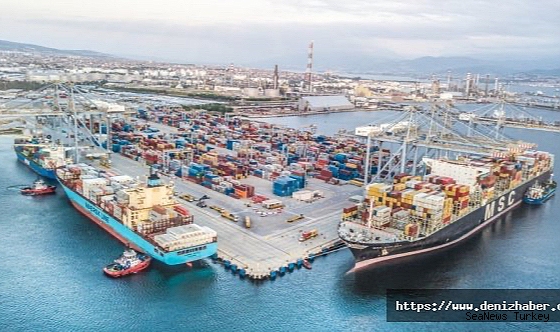
US transpacific cargo peak season eases with import volumes moderating, while consumer spending remains resilient despite inflationary pressures.
The extended peak season for US-bound transpacific cargo is winding down, with import volumes at major American ports beginning to ease, according to the latest Global Port Tracker report from the National Retail Federation and Hackett Associates. This season started earlier than usual and stretched into summer and early autumn, with most holiday shipments already received. Jonathan Gold, Vice President of Supply Chain and Customs Policy at the NRF, noted that the remainder of 2026 will focus on restocking and preparing for early 2027. Consumers can expect well-stocked shelves for holiday shopping despite ongoing inflationary pressures.
Ben Hackett, founder of Hackett Associates, pointed out that while economic indicators remain flat or slightly down, consumer spending has stayed resilient despite low confidence levels and renewed inflation.
US container imports for 2026 are projected to reach 25.8 million TEU, up 1.4% from 2025's 25.4 million TEU. September 2026 imports totaled 2.546 million TEU, a 10.9% year-on-year increase but down 2.2% from August. Cumulative imports for the first nine months of 2026 showed a 0.8% year-on-year gain.
Shifts in the global trade environment, including heightened risks in the Strait of Hormuz, adjustments to US tariffs, improved Panama Canal transit capacity, and the reopening of Red Sea routes, are impacting freight costs and supply chain strategies, according to Descartes.
US imports from China reached 924,000 TEU in September, a 4.5% month-on-month and 21.2% year-on-year increase. However, this figure is still 9.6% below the July 2024 peak of 1.023 million TEU. China's share of total US container imports rose from 34.0% in August to 36.3% in September.
At the port level, the 10 largest US gateways saw imports decline by 0.9% in September. The Port of Los Angeles grew by 8.8%, while Long Beach rose by 5.9%. Houston and Savannah recorded declines of 16.5% and 9.6%, respectively. West Coast ports accounted for 46.7% of total imports in September, compared to 39.7% for East and Gulf Coast ports.
Port delays rose at eight major US gateways in September. Notable increases included Houston, where delays extended to 5.8 days, and New York/New Jersey, which saw delays rise to 8.3 days. Seattle was the only port to improve, reducing delays to 6.5 days.