
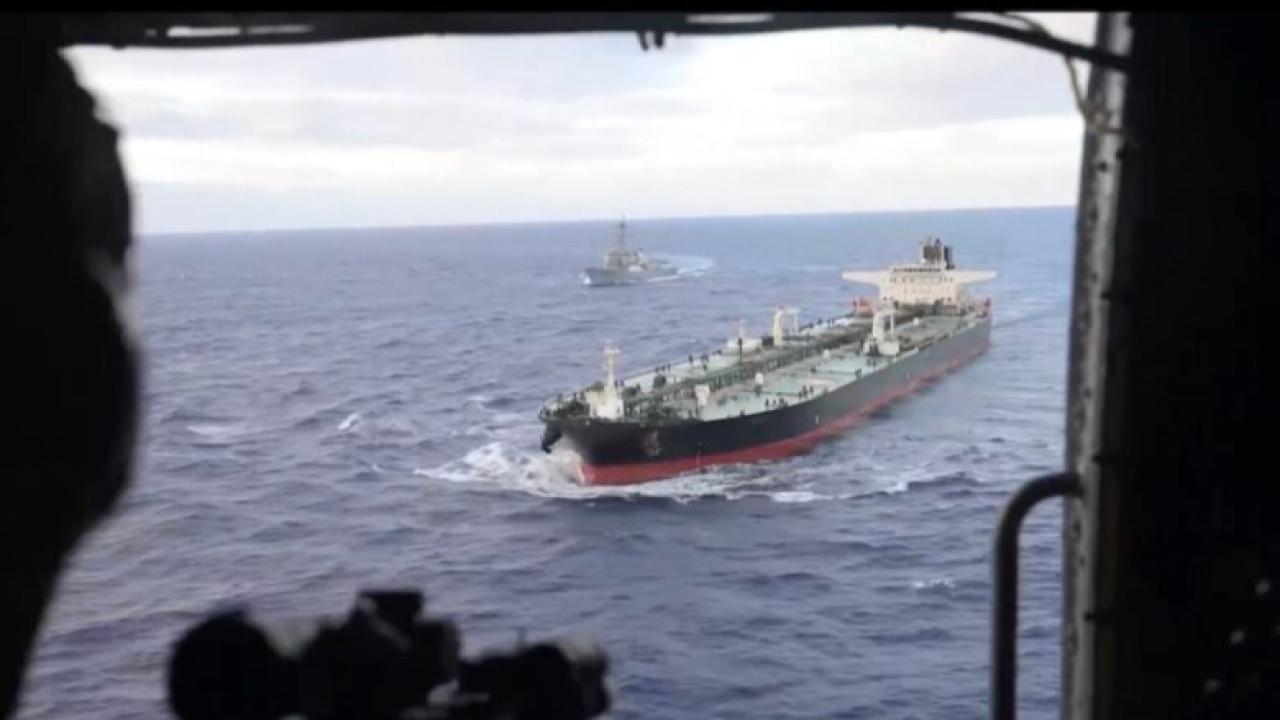
The US Navy intervened with the Aquila II tanker linked to sanctions as it heads to Singapore following Venezuelan President Maduro's arrest.
According to data from the maritime monitoring platform TankerTrackers.com, the partially loaded 22-year-old Suezmax tanker Aquila II was one of the vessels that began its voyage on the morning Venezuelan President Nicolas Maduro was arrested. It was reported to be operating under the name Cape Balder at that time. The sanctioned vessel is currently reported to be heading towards Singapore.
In a statement made through the Pentagon's social media account, the operation was confirmed, indicating that the intervention was carried out as part of 'national security protection.'
The tanker in question is among the vessels blacklisted by the United States, the United Kingdom, and the European Union for its role in violating Russia-related sanctions. According to maritime analytics company Windward, the U.S. has taken control of a total of eight tankers since the intervention on the very large crude carrier Skipper on December 10. The latest operation has been recorded as the farthest intervention to date in terms of distance.
The developments were not limited to the open sea. The Caribbean Port State Control Memorandum of Understanding (Caribbean MOU) announced that two former Venezuelan-flagged tankers have been held in ports as a result of inspections conducted in recent weeks. The 30-year-old tanker Morning Sun, with a deadweight tonnage of approximately 99,000 dwt, was reported to have been detained by Dutch authorities, along with the 106,000 dwt aframax tanker Regina, built in 2001.
Experts indicate that the recent interventions could increase the impact of energy sanctions on maritime transportation; however, they note that the legal and operational consequences of the operations conducted at sea continue to spark debate.
Source: SeaNews Türkiye


