
Two incidents in the Strait of Hormuz escalate U.S.-Iran tensions, showcasing maritime security risks in the region.
On Tuesday, two separate incidents in the waters surrounding the Strait of Hormuz highlighted once again how tensions between the U.S. and Iran are reflected in maritime routes. The developments, occurring during a period when the Trump administration increased pressure on Tehran, revealed the extent of maritime security risks in the region.
The first incident of the day occurred in the Arabian Sea, approximately 800 kilometers from the Iranian coast. According to a Pentagon spokesperson, an Iranian unmanned aerial vehicle (UAV) approached the USS Abraham Lincoln aircraft carrier, which had recently arrived in the area, in a 'hostile manner.' In response, an F-35C fighter jet, part of the carrier's air wing, shot down the UAV 'in self-defense.' No U.S. personnel were harmed in the incident.
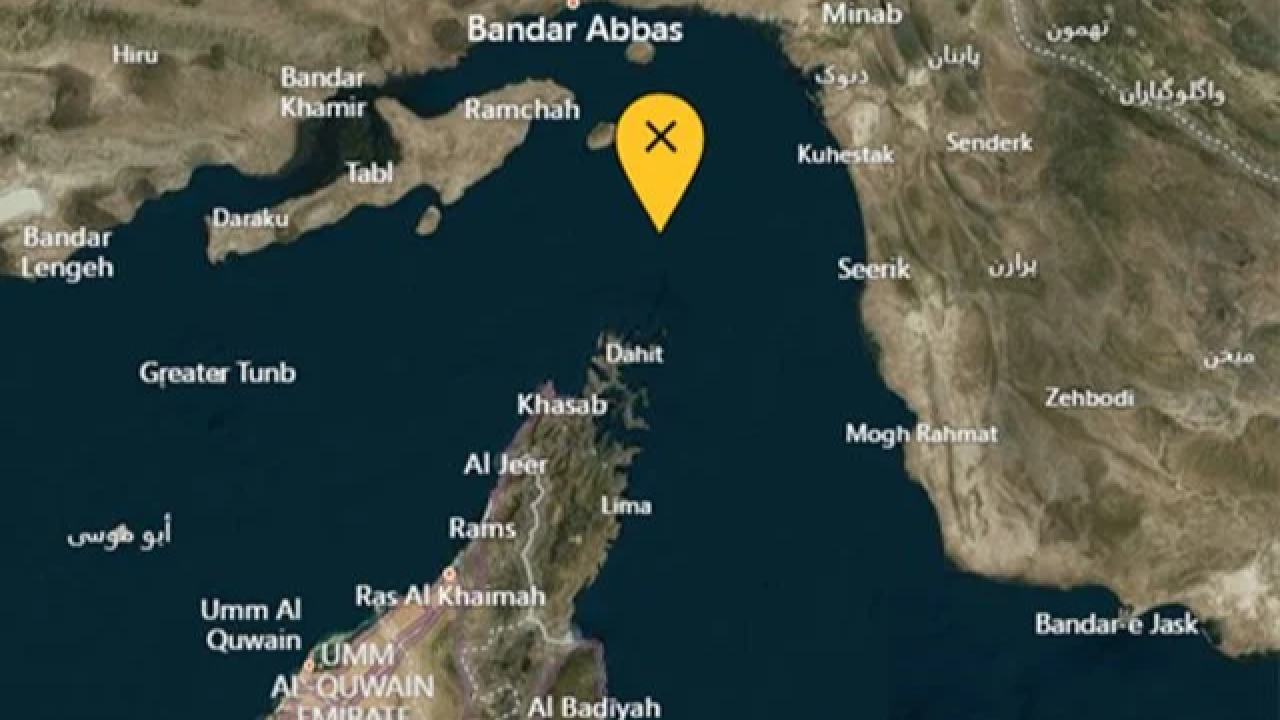
The second incident took place a few hours later in the Strait of Hormuz. The United Kingdom Maritime Trade Operations (UKMTO) reported that early on the morning of February 3, numerous small armed boats called on an unidentified vessel via VHF radio, demanding that it stop.
The maritime security consulting company Vanguard Tech identified the harassed vessel as the U.S.-flagged and U.S.-crewed tanker Stena Imperative. According to the company's assessment, three pairs of Iranian boats, armed with machine guns, approached the tanker and demanded that the captain stop the engines and prepare for 'boarding.' After the captain ignored this call and continued on his course, a U.S. Navy warship began to escort the tanker shortly thereafter.
The harassment reportedly took place off the northern tip of the Musandam Peninsula, within Omani territorial waters but south of the internationally recognized Traffic Separation Scheme. This indicates that the incident occurred outside Iranian territorial waters.
It is known that commercial vessels navigating in the region are commonly called upon by the Iranian Navy, the Islamic Revolutionary Guard Corps Navy, and Iranian Coast Guard when they enter Iranian waters. However, vessels are not obligated to respond to such calls while in Omani waters, and Omani authorities generally prevent such calls.
Experts suggest that the incidents can be interpreted as a show of force by elements of the Islamic Revolutionary Guard Corps Navy in response to the increasing military pressure from the U.S. While some factions within the Iranian government call for de-escalation and negotiations, the hardline faction appears to be taking more confrontational steps.
Iran's recent announcement of a two-day live-fire exercise in the Strait of Hormuz, followed by its cancellation, is also seen as a reflection of this dual approach.
Meanwhile, no significant increase in the U.S. Central Command's naval presence off the coast of Iran has been detected. Activities at Diego Garcia are reported to be at routine levels, with a C-17 heavy transport aircraft, two civilian charter planes, and the U.S.-flagged general cargo ship SLNC Star present in the region. Additionally, a 290-meter Watson-class RO/RO vessel anchored at Diego Garcia is stated to belong to the U.S. Military Sealift Command.
These developments indicate that maritime navigation safety in the Strait of Hormuz will continue to be one of the key topics closely monitored by the maritime community in the upcoming period.
Source: SeaNews Türkiye


