
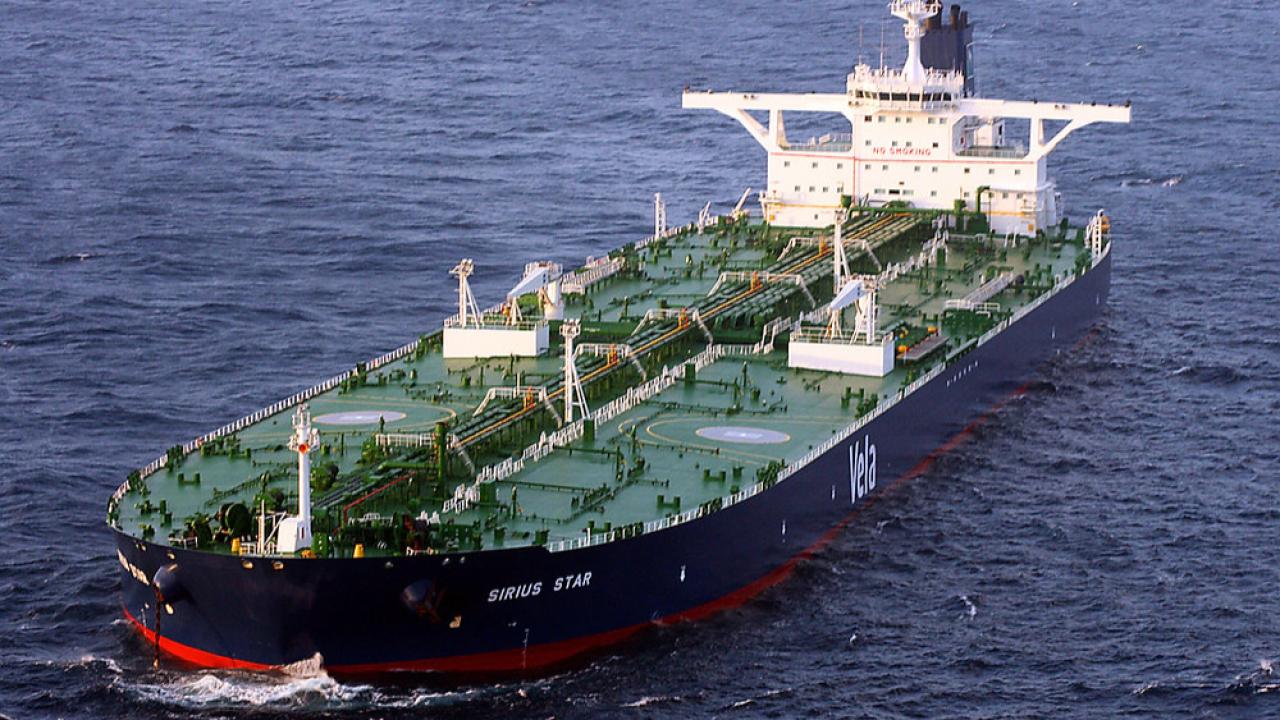
Geopolitical tensions are elevating tanker freight rates, but long-term demand risks loom as uncertainty persists in global markets.
As global geopolitical risks reach a four-year high, uncertainty is particularly supporting freight rates in the tanker market. Analysts emphasize that while these risks are strengthening the market in the short term, they pose a threat to demand and investments in the long term.
Geopolitical risk indicators have surged to unprecedented levels in the four years since Russia's full-scale invasion of Ukraine, with increasing global uncertainty particularly driving up freight rates in the tanker market.
Sentosa Shipbrokers, based in Singapore, highlighted the relationship between the rise in global geopolitical risk and the increase in tanker freight rates in their published assessment. January began quite tumultuously with the ongoing war in Ukraine, alongside new crises stemming from Venezuela, Iran, and Greenland.
According to Sentosa, the key factors supporting freight rates this month in both clean and dirty tanker segments were limited vessel availability and high cargo volumes. Analysts from the brokerage firm emphasized that the rising geopolitical risk has also strengthened market sentiment in a broader context.
The relationship between periods of geopolitical uncertainty and sudden spikes in freight rates is a topic that Mark Williams, president of Shipping Strategy consultancy, has long been studying. In a statement to Splash Extra, Williams noted that geopolitics has moved from being an input in forecasting models to forming the foundation of industry expectations.
Williams indicated that geopolitical risk could benefit the shipping sector by raising freight rates in the short term. However, he warned that if uncertainty becomes permanent, investments may decline, trade volumes may drop, and the growth of transportation demand could slow.
“Goods will be transported more slowly, over shorter distances, and at higher costs in a world where globalization has receded, is partially decarbonized, and is less efficient,” said Williams, adding that this could mean high freight rates for shipowners; however, it would also bring increased operating and capital costs, heavier regulatory burdens, and higher physical risks.
Matthew Wheatley, Chief Analyst of Wood Mackenzie Maritime Research, stated that the recent strengthening in the tanker market is clearly linked to rising geopolitical tensions. Wheatley predicted that in 2026, vessel availability, sanctions, and shadow fleets would be decisive in the course of freight rates. He noted that the division of the world into competing trade blocs, tightening sanctions, and long route deviations around the Cape of Good Hope are forcing tankers to travel longer distances, which is supporting freight rates.
Experienced financier Dagfinn Lunde recalled that his former boss, Torvald Klaveness, often mentioned that political instability often leads to positive outcomes for the shipping sector. According to Lunde, political crises typically lead to sudden price spikes in the tanker market, and this effect can gradually spread to container and LNG transportation as well. The dry bulk sector is relatively less affected.
Dr. Martin Stopford, a leading figure in maritime economics, approached the relationship between geopolitical developments and freight rates with historical examples. He reminded that shipowners made high profits during the Boer War, the Korean War, and the Suez Crisis, while noting that not every crisis yields the same result.
Stopford recalled that the oil crises of 1973 and 1979 plunged the tanker industry into a deep crisis, leaving hundreds of VLCCs idle and freight rates at low levels for years. Evaluating Sentosa's graph, Stopford pointed out that the correlation between geopolitical risk and freight rates has exhibited an irregular structure since 2010.
“Geopolitical events can further accelerate tight markets,” said Stopford, warning that “if these developments coincide with a recession or undermine demand, the consequences could be extremely destructive.”
Source: SeaNews Türkiye


