
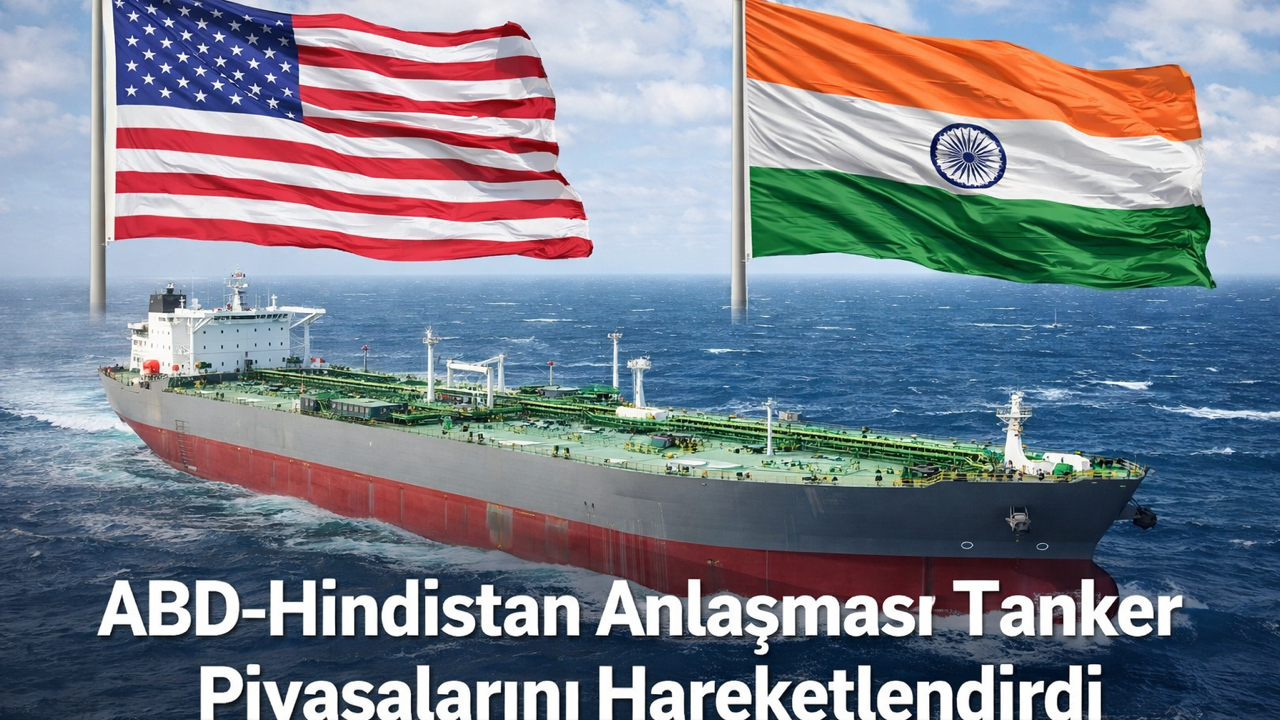
The US-India trade agreement disrupts tanker markets by reducing tariffs and altering oil supply dynamics, particularly affecting Russian oil imports.
US-India Oil and Trade Agreement Shakes Tanker Markets
The new trade agreement between the US and India, which reduces the high tariffs imposed by Washington on India, has led to significant fluctuations in global tanker markets. Under the agreement, the US plans to lower the customs duty on products originating from India from 25% to around 18%; in return, it is reported that India has agreed to halt its purchases of Russian oil. However, both countries' official statements on the matter and the legal framework of the agreement have yet to be clarified.
Breakthrough in Oil Rotation
One of the most important clauses of the trade agreement is India's commitment to reduce or halt its purchases of Russian oil. This approach involves cutting or significantly reducing crude oil purchases from Russia, which has been India's largest oil supplier for many years, and recent data indicates a declining trend in Russian oil shipments to India in recent months.
This strategic shift could change the direction of supply in the tanker market. The tonnage traditionally imported by India via the Black Sea and Russian Pacific routes may be replaced by long-distance shipments from the US Gulf and Latin America. In particular, exports from the US to India could stimulate demand for VLCCs (Very Large Crude Carriers), while shorter Atlantic basin routes could increase business volume in smaller tanker classes such as Aframax and Suezmax.
Shipowners and Charterers Adjust Strategies
Amid prevailing uncertainty in the market, tanker chartering and ownership parties are reassessing their routes, service strategies, and fuel supply plans. Since the start date and terms of the agreement are not tied to official announcements, maritime companies tend to establish flexible operational models against potential directional changes.
Existing trends indicate that India's reduction of Russian oil purchases could positively impact VLCC demand. In this context, barrels shipped to India from alternative supply points such as Venezuela may support this large tanker class by generating longer ton-mile demand compared to traditional shipments from the Atlantic basin to Asia.
Geopolitical Shift in Energy Resources
The agreement reflects not only a commercial but also a geopolitical transformation. It is emphasized that the US tariffs have emerged as a significant part of the strategy to reduce India's share in Russian oil trade, compelling India to reshape its oil supply basket.
However, experts note that it will take time for India to completely end its current contractual obligations and dependence on Russian oil, indicating that the transition process in the markets will be complex and turbulent.
All these developments clearly demonstrate the direct impact of the geopolitical elements of oil trade on maritime transportation. Until the official framework of the agreement is clarified, the dynamics of the tanker markets may continue to change.
Source: SeaNews Türkiye


