
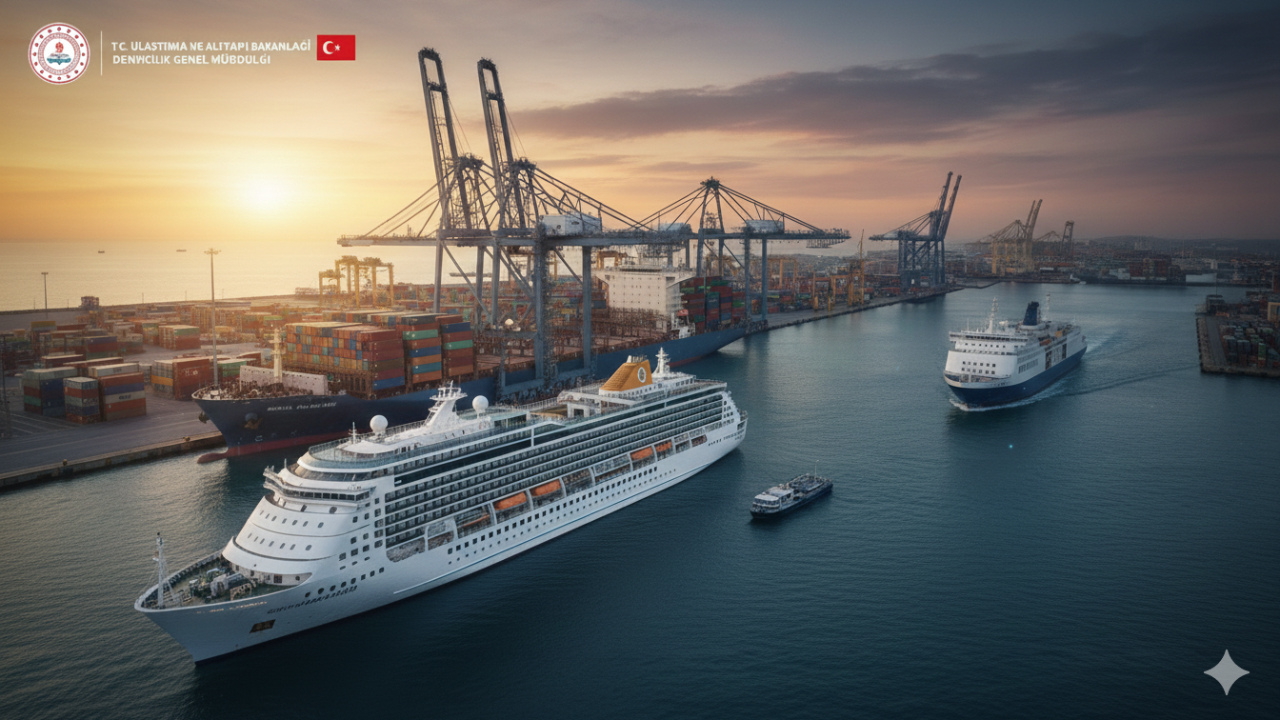
In 2025, Turkey's ports handled 553.3 million tons, a 4% increase, reinforcing its role in global maritime trade.
TURKISH PORTS BECAME THE RISING STAR OF GLOBAL TRADE IN 2025
The 2025 Maritime Trade Statistics shared by the General Directorate of Maritime Affairs of the Ministry of Transport and Infrastructure of the Republic of Turkey proved that Turkey is making steady progress towards becoming a global center in maritime affairs. In 2025, the total cargo handled at port facilities across Turkey increased by 4.0% compared to the previous year, reaching 553 million 268 thousand 303 tons. This growth rate significantly exceeded the global average of 1.1% in maritime freight transportation, showcasing Turkey's competitive strength.
Aliağa Maintained Its Leadership in Container Handling
When examined on the basis of port authorities, the Aliağa Regional Port Authority maintained its title as Turkey's busiest cargo center with a handling volume exceeding 89.5 million tons. Following Aliağa, the ports of Kocaeli and İskenderun ranked next, while the top 10 port authorities accounted for 83.8% of the total cargo. In container transportation, the Ambarlı Regional Port Authority retained its leading position with a transaction volume surpassing 3.4 million TEUs. The total amount of containers handled across Turkey reached approximately 14 million TEUs, reflecting a 3.5% annual increase.
Cruise Tourism Experienced a Boom
The year 2025 was recorded as a golden year not only for cargo transportation but also for maritime tourism. The number of cruise ships visiting our ports increased by 15.1%, rising to 1,375, while the number of passengers reached 2 million 138 thousand 136, marking a 13.2% increase. The port of Kuşadası declared its clear leadership in this field with 617 ship calls, while the ports of Istanbul (Galataport and Sarayburnu) ranked second with a total of 265 calls.
Ro-Ro Transportation and Vehicle Statistics on the Rise
The number of vehicles transported on international regular Ro-Ro lines reached 724,726, showing a 2.6% increase compared to the previous year. A significant portion of these vehicles was comprised of routes connected to Europe, while passenger cars became the most active vehicle group at the ports with a handling volume exceeding 2.2 million units. The activity in the export of passenger cars for sales purposes once again emphasized the critical importance of maritime logistics for the automotive sector.
Strategic Development in Liquid Bulk Cargo and Containers
In analyses conducted by cargo types, liquid bulk cargo ranked first with 169.7 million tons, followed by solid bulk cargo with 160.9 million tons. The total weight of cargo transported in containers exceeded 144 million tons, maintaining its strategic importance. Particularly, the massive 20.1% increase in the amount of liquid bulk cargo transported in cabotage represented the most concrete data indicating that energy logistics in the domestic market has shifted to maritime transport.
You can access the complete statistics and detailed analyses from here.
Source: SeaNews Türkiye


