
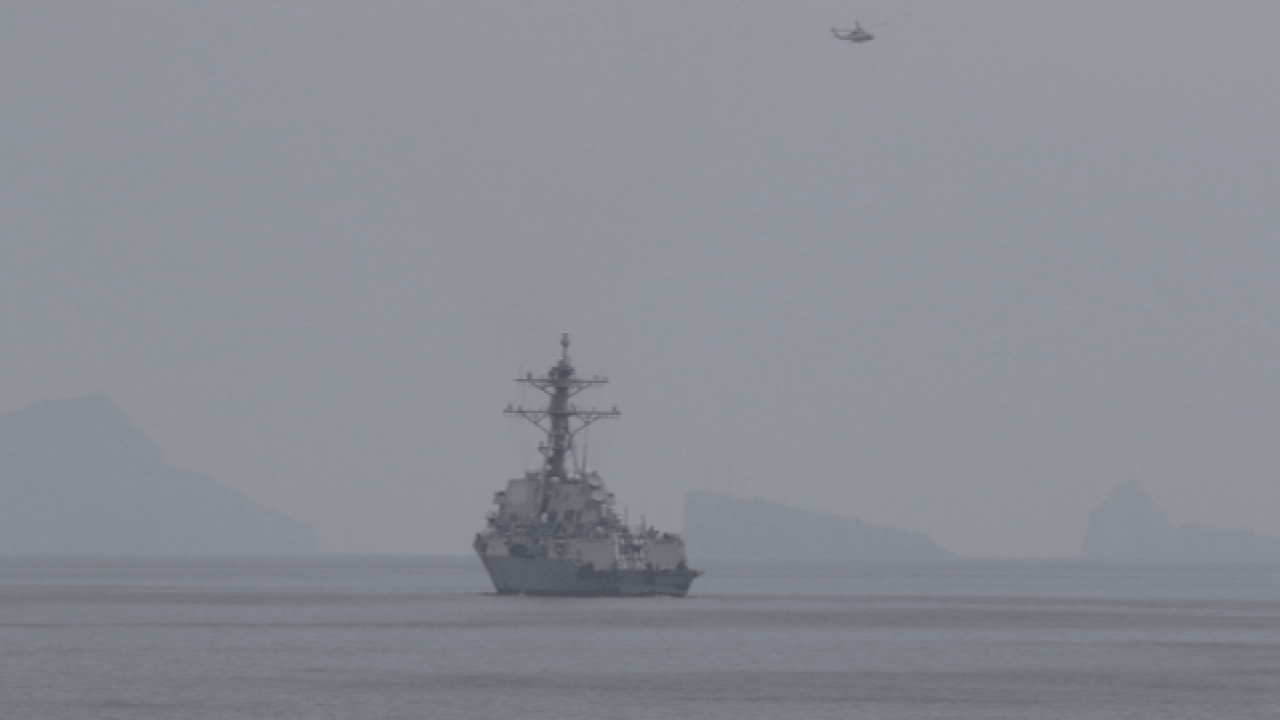
The US and Iran finalize a 60-day ceasefire to reduce tensions in the Strait of Hormuz and resume maritime traffic amid regional conflicts.
The United States and Iran have concluded long-standing negotiations aimed at reducing tensions in the Strait of Hormuz and resuming maritime traffic. The 60-day ceasefire agreement reached between the parties had been postponed at the last minute due to Israel's attack on Beirut.
Following Iran's decision to suspend the agreement planned for signing on Sunday and prepare for retaliation against Israel, according to Iranian sources, the White House offered additional concessions to prevent the attack, thus finalizing the agreement.
Iran's Deputy Foreign Minister Kazim Garibabadi stated, 'The armed forces were ready to respond decisively. This situation contributed to the completion of the agreement text and made it possible to make progress on some issues that could not be resolved in the negotiations.'
The signing ceremony is expected to take place in Geneva.
The agreement is anticipated to be signed next Friday in Geneva, Switzerland. It is expected that U.S. Vice President JD Vance will attend the ceremony, and it has been indicated that President Donald Trump may also be included in the program. Vance stated on Sunday that there is a possibility of Trump's participation.
The White House announced that mutual blockades in the Strait of Hormuz would be immediately suspended following the signing of the agreement. Iranian sources claimed that this arrangement was one of the new concessions granted to Tehran.
According to Iranian media, the initial draft foresaw the gradual lifting of the blockade imposed by the U.S. within 60 days, depending on Iran's compliance with the agreement. However, the Fars News Agency claimed that Washington agreed to immediately suspend the blockade to prevent an Israeli attack, which would allow Iran quick access to revenues from its oil exports.
Details of the agreement are a subject of discussion.
While the White House has not disclosed the details of the agreement, it has been noted that the statements made by Iran could not be verified by independent sources. Nevertheless, assessments are being made that a significant portion of Tehran's demands has been met.
According to statements from the Iranian government, which is influenced by hardline Revolutionary Guards, the agreement will:
- Allow Iran access to $25 billion of frozen funds abroad,
- Suspend U.S. sanctions on Iranian oil,
- Enable Tehran to rebuild its ballistic missile stockpiles,
- Permit the retention of highly enriched uranium in Iran.
Additionally, it has been expressed that discussions regarding the reduction of uranium to lower levels and the details of the program will continue for 60 days.
The Trump administration emphasizes that Iran will not be able to obtain direct cash under this agreement and will commit not to develop nuclear weapons.
Reactions to the agreement in Israel.
Initial assessments in Israel have been negative. Numerous commentators have pointed out that the agreement allows Iran to gain economic benefits without significantly limiting its military capabilities.
i24 commentator Amichai Stein stated, 'The Americans are giving Iran a lot, but getting nothing in return. The most striking point is that the war ends with the lifting of oil sanctions. Such a situation did not exist before the war.'
Stein argued that the agreement does not contain any limitations on Iran's nuclear program, ballistic missile capacity, or proxy forces such as Hezbollah, the Houthis, and Shia militias in Iraq.
Conflicting statements regarding frozen funds.
Iran's Mehr News Agency claimed that $12 billion of frozen funds would be released to Tehran before the negotiations began under the agreement.
However, White House officials denied this claim in statements to CBS News. Officials stated that the agreement includes performance-based payment provisions and that Iran would only have access to billions of dollars in funds after demonstrating compliance with its obligations.
Trump: 'An opportunity for real peace has arisen.'
U.S. President Donald Trump stated in a Sunday night announcement, 'Many presidents tried to achieve peace with Iran before me, but all failed. For the first time, regional leaders have found a president who can make real peace possible.'
In his post, Trump said, 'The world's ships, start your engines. Let the oil keep flowing.'
Israel's attack on Beirut jeopardized the agreement.
Concerns about the future of the agreement increased following Israel's extensive operation in Beirut in response to Hezbollah's missile attacks. The Iranian Revolutionary Guards also signaled that they were preparing for retaliation against Israel.
A diplomat close to the negotiations told Fox News, 'This is an attempt by Israel to sabotage the agreement and drag the U.S. back into war.'
Trump also reacted to Israel's operation. Speaking to Barak Ravid from Axios, Trump said, 'This is very bad. It happened just an hour before we were to sign the agreement. Why did Prime Minister Benjamin Netanyahu have to carry out such an attack? I was very angry. I told him so.'
Iran: The U.S. cannot fulfill its obligations.
Iran's Parliament Speaker and chief negotiator Mohammad Baqir Qalibaf stated after the attack on the Dahiyeh area in southern Beirut, which is considered Hezbollah's stronghold, 'The Zionists' attack on Dahiyeh has once again shown that the U.S. does not have the will or capacity to fulfill its obligations. In such a situation, it is not possible to talk about proceeding on the same path.'
Concerns continue in Israel.
Various analysts and Israeli officials argue that the conditions reportedly agreed upon between the U.S. and Iran could harm Israel's interests.
A senior Israeli official told journalist Shaiel Ben-Ephraim, 'No one is pleased with this. We think it is not good for Israel and harms our interests. What is concerning is that Israel cannot influence the process. Iran has seen that it can achieve gains through the use of force and will use this against its neighbors and us.'
Source: SeaNews Türkiye


