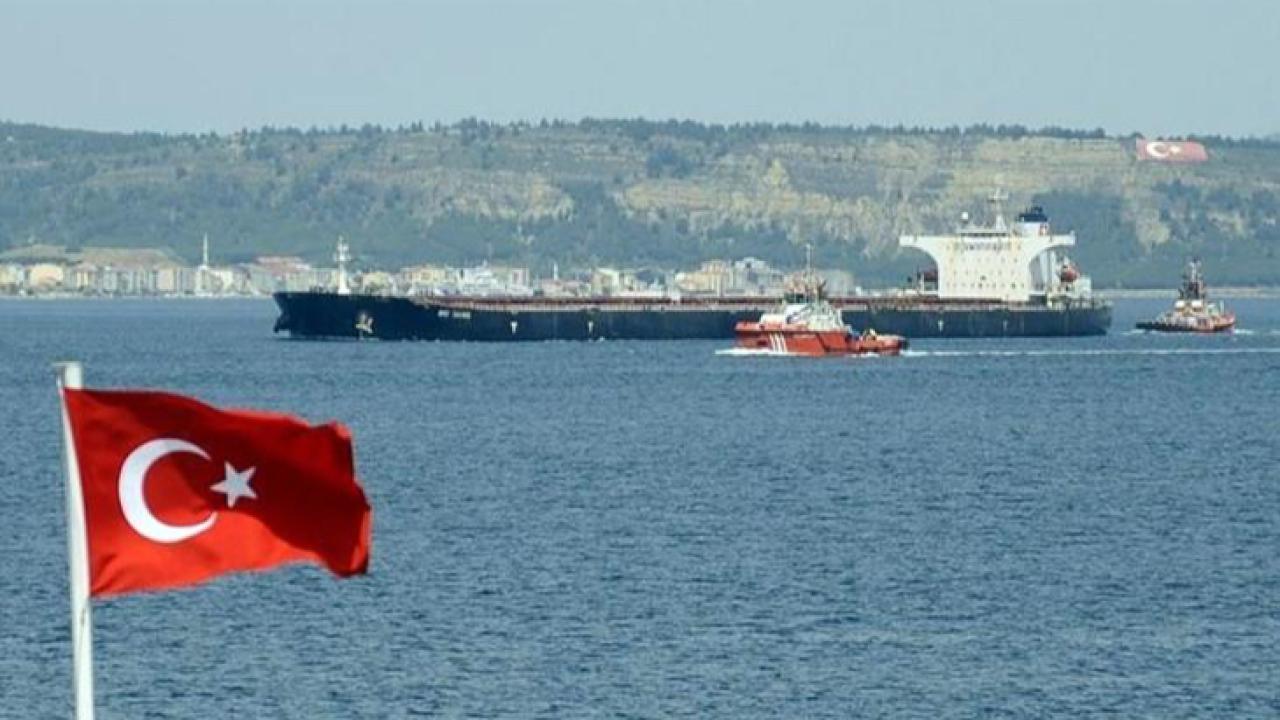
The Blue Homeland Law aims to clarify Turkey's maritime rights, ensuring a robust legal framework for its territorial waters and beyond.
The 'Blue Homeland Law,' which has entered Turkey's agenda, should not be seen merely as a simple legislative creation. If the law is drafted correctly, it will be possible to systematize the rights that Turkey has long asserted in the seas through diplomatic notes, NAVTEX announcements, licensing areas, actual practices, and international notifications within domestic law.
The issue is not about producing a new slogan. The main concern is to place our current maritime policy within a viable, clear, and internationally compliant framework. Because having rights at sea is one thing, and demonstrating in law how that right will be protected by which institution, through what means, and with what sanctions is an entirely different matter.
Our existing legislation provides us with a solid starting point. Article 1 of the Law on Territorial Waters No. 2674 states, 'Turkish territorial waters are part of the territory of Turkey.' This provision is far beyond a dry legislative expression; it is a clear and unequivocal definition of homeland. The homeland is the territory over which the state exercises full sovereignty. Territorial waters have been considered a part of the territory of Turkey by the explicit will of our legislator. Therefore, the term 'Blue Homeland' regarding our territorial waters is a legally grounded, appropriate, and strong expression.
The debate is not about territorial waters but rather about the areas beyond them. The continental shelf and exclusive economic zone are not considered areas of full state sovereignty. In these areas, the coastal state has sovereign rights and certain authorities. The seabed and subsoil resources, living and non-living natural riches, energy production, scientific research, environmental protection, artificial islands, and facilities are among the significant rights granted to the coastal state. However, the legal nature of these rights is not equivalent to sovereignty over territorial waters.
This distinction is not an academic nuance but a legal distinction that has direct consequences in the field. The navigation of foreign warships and some military activities in the exclusive economic zone are considered within the scope of high seas freedoms according to interpretations of international law adopted by many states. If we present these areas directly to the public as 'homeland territory,' we risk either falling under an excessively loaded discourse in the face of such an activity tomorrow or undermining the concept of homeland to the extent that our response is insufficient. The homeland is not a concept to be undermined.
The function of the Blue Homeland Law is not to equate every area outside territorial waters with the homeland. The function of the law is to clearly delineate which maritime areas Turkey has rights and authorities over, and on what issues. It should be regulated with clear provisions that unauthorized seismic research cannot be conducted in our continental shelf; that Turkey has exclusive rights over the natural resources on the seabed and subsoil; and that Turkey has the authority of consent, oversight, and sanctions regarding underwater cables, pipelines, artificial islands, energy facilities, scientific research activities, environmental protection measures, and the management of living resources.
At this point, there is a vivid memory in our minds. On August 6, 1976, when the old Hora ship, which was refurbished by the MTA and launched as 'Seismic-1,' went out for research in the Aegean, Greece withdrew its note the next day and brought the issue to both the United Nations Security Council and the International Court of Justice. The statement of then-Prime Minister Süleyman Demirel that 'Seismic-1 will conduct research under the protection of the Turkish navy if necessary' is still considered a symbol of Turkey's refusal to allow unauthorized research in its continental shelf. The true skill of the Blue Homeland Law lies in embedding the political will of that day into the legal framework of today.
This aspect of the law will empower the legal enforcers in the field. A Coast Guard commander, a frigate commander, a port authority, relevant ministry units, and even a public prosecutor should be able to clearly identify which article of the law is being violated by an act before them. The state's will at sea must be made visible not only through diplomatic notes but also through defined powers and sanctions in domestic law.
While all this is being done, the law should strengthen Turkey's international legal claims and should not be forced in any way. This sensitivity is particularly significant regarding the Aegean. The Aegean is far from being an ordinary sea. Its geographical structure, island positioning, mutual coastlines, status issues arising from the Lausanne and Paris treaties, territorial waters width, airspace, FIR responsibility lines, search and rescue areas, continental shelf disputes, and non-military status headings are interconnected. Presenting a single heading in the Aegean as a solution while isolating it from the others tends to undermine Turkey's long-standing holistic approach.
In the legal history of this complex equation, the Bern Agreement dated November 11, 1976, holds a special place. Just three months after the outbreak of the Seismic-1 crisis, the two sides, who sat at the table, committed to avoiding unilateral research and drilling activities in disputed areas until a continental shelf delimitation was made. Turkey's established thesis is that the continental shelf areas beyond territorial waters in the Aegean have not yet been delimited. Therefore, any unilateral actions by one of the parties to establish a status are inconsistent with the spirit of the Bern Agreement. Greece's violation of this agreement with its search activities initiated off the coast of Thasos in 1987 serves as a reminder of how easily the crisis can flare up.
Greece's initiatives to declare a marine park in the Aegean should be scrutinized through this lens. Environmental protection is a legitimate and commendable motive in itself. However, in a sea where disputes are intertwined, establishing an area of authority under the guise of environmentalism, creating administrative actions over geographically disputed formations, and attempting to draw a de facto maritime jurisdiction map cannot be interpreted merely as an environmental policy. Turkey's objections to these initiatives are well-founded and legally defensible.
Another point that needs to be refreshed in memory is this: The crisis that began with the grounding of the bulk carrier Figen Akat on the Kardak rocks on December 25, 1995, which brought the two countries to the brink of war in January 1996, has proven how significant legal consequences can arise from 'small' geographical formations. The statement of then-Prime Minister Tansu Çiller that 'That flag will come down, that soldier will leave' was not an expression of bravado but a direct declaration of state sovereignty rights. Today, Greece's attempts to establish administrative actions over the same disputed formations under the guise of a marine park, fishing protection area, or similar titles should be interpreted as an attempt to revive the 'gray zone' doctrine of Kardak in a new guise.
At the same point, Turkey must also demonstrate consistency in its own actions. If we oppose Greece's unilateral establishment of status in the Aegean under the guise of environmentalism, marine parks, or fishing regulations, we must also maintain the same line in our own regulations. Otherwise, we risk encountering the principle of estoppel, known in international law, which addresses inconsistencies. If we assert today that 'status cannot be established through unilateral actions,' and tomorrow present our own unilateral action as status-creating, the other party may use this against us as evidence. State wisdom requires consistency before courage.
Another commonly misunderstood aspect of the law is the issue of declaring an exclusive economic zone (EEZ). Public perception sometimes mistakenly assumes that this law automatically means the declaration of an EEZ. However, the framework law and the declaration of an EEZ are distinct legal actions. The law can regulate the principles to be applied if Turkey declares an EEZ; it can transfer our existing continental shelf theses into domestic law; it can foresee fishing areas, environmental protection zones, and licensing regimes. However, each of these regulations does not directly result in the declaration of an EEZ.
Turkey's notification of its continental shelf boundaries in the Eastern Mediterranean to the United Nations is a decisive step, as is the Memorandum of Understanding on the Delimitation of Maritime Jurisdiction Areas signed with the Libyan Government of National Accord on November 27, 2019, which transformed Turkey's claims in the field into a legal document. The rapid approval of this memorandum by the Grand National Assembly of Turkey on December 5, 2019, its publication in the Official Gazette on December 7, and its eventual registration with the United Nations on September 30, 2020, serve as a concrete example of how domestic law-international law compliance should be established. The delimitation of the continental shelf with the TRNC and the conduct of seismic and drilling activities with our own vessels are also parts of the same strategy.
In the Aegean, however, the conditions are different. In the Aegean, the Bern Agreement, the balance of 6-mile territorial waters, the issue of whether islands generate maritime jurisdiction areas, and the consequences of Greece's claim to 12 miles are various chapters of a single file. Particularly regarding the issue of territorial waters, it is essential to emphasize the decision of the Grand National Assembly of Turkey dated June 8, 1995. The General Assembly declared that Greece's decision to extend its territorial waters in the Aegean beyond 6 miles would be considered a 'cause for war'; this decision retains its legal validity today. Preserving this framework while preparing the Blue Homeland Law is crucial to ensure that the Aegean and the Eastern Mediterranean are not forced into the same mold.
The work of DEHUKAM in this process is valuable. The development of institutional capacity in the field of maritime law in Turkey and the transfer of academic knowledge into legislative preparation is commendable. However, the subject is not broad enough to fit within the scope of a single academic center. Maritime law, maritime safety, maritime trade, port management, fishing, environmental protection, naval forces applications, Coast Guard practice, energy policy, and diplomacy should all be considered at the same table.
For this reason, it would be prudent to gather the opinions of maritime civil society organizations, professional associations, the maritime sector, and individuals with expertise in the field during the law preparation process. Contributions from organizations working in maritime safety and maritime affairs, especially our Maritime Safety Association, as well as individuals who have worked in public service, maritime administration, academia, diplomacy, and practice will add depth to the process. The experience of individuals who have dedicated years to the maritime field, including the author of these lines, is not an alternative to academic effort but a complement to it.
The true success of the law will not lie in producing a new slogan but in making the state's behavior at sea predictable. Which institution will grant which permission? How will intervention be carried out against a vessel conducting unauthorized research? What sanctions will be applied to a foreign vessel polluting the marine environment? Which authorities will evaluate fishing quotas, special protection areas, scientific research permits, and cable and pipeline crossings? How will coordination between the Ministries of Foreign Affairs, National Defense, Transport, Energy, Agriculture and Forestry, and the Coast Guard and Naval Forces be achieved? The law will only become a genuine state document to the extent that it provides clear answers to these questions.
The Blue Homeland Law should also bring about a change in mindset regarding maritime affairs. Turkey must move beyond being a country that looks to the sea only when crises arise. It should educate maritime lawyers, enhance its hydrographic and oceanographic capacity, align its marine environmental policy with national interests, strengthen fishing management, monitor seabed resources with scientific data, and consider its maritime trade fleet and public maritime law within the same strategy.
Maritime power is not solely comprised of warships. A warship is the visible face of deterrence. If there are no lawyers, cartographers, hydrographers, diplomats, energy experts, fishing authorities, environmental scientists, port management, and research fleets behind it, maritime power remains incomplete. The Blue Homeland Law is a suitable opportunity for establishing this integrity.
In conclusion, the Blue Homeland Law should neither be a law of bravado nor a timid bureaucratic text. It must boldly defend Turkey's rights at sea while also preserving the fundamental distinction that our existing law has already established. As stated in the Law on Territorial Waters No. 2674, Turkish territorial waters are part of the territory of Turkey; this area is our homeland at sea. The continental shelf and exclusive economic zone should be defined not in terms of the concept of homeland but as Turkey's indispensable maritime jurisdiction areas and sovereign rights domains.
A strong state at sea is not the one that shouts the loudest. It is the state that knows where it is right, chooses which concept to defend its rights with, and provides the same legal ground to both its vessel in the field and its diplomat at the table. The Blue Homeland Law will only become a historical document to the extent that it can establish this ground. Otherwise, we will only suffice to color the map; however, Turkey's need is for measure before color, law before slogan, and state wisdom before excitement.
Source: SeaNews Türkiye