
The Blue Breath Project aims to restore the Marmara Sea's ecosystem through collaborative dives and research, targeting significant improvements by 2025.
The Blue Breath Project continues its improvement efforts in the Sea of Marmara. In collaboration with the Marine Clean Association/TURMEPA, Garanti BBVA, and the Technology Transfer Office of Istanbul University, data has begun to be collected on the underwater ecosystem through dives carried out as part of the Marmara Sea Improvement Project, which is set to be implemented by the end of 2025.
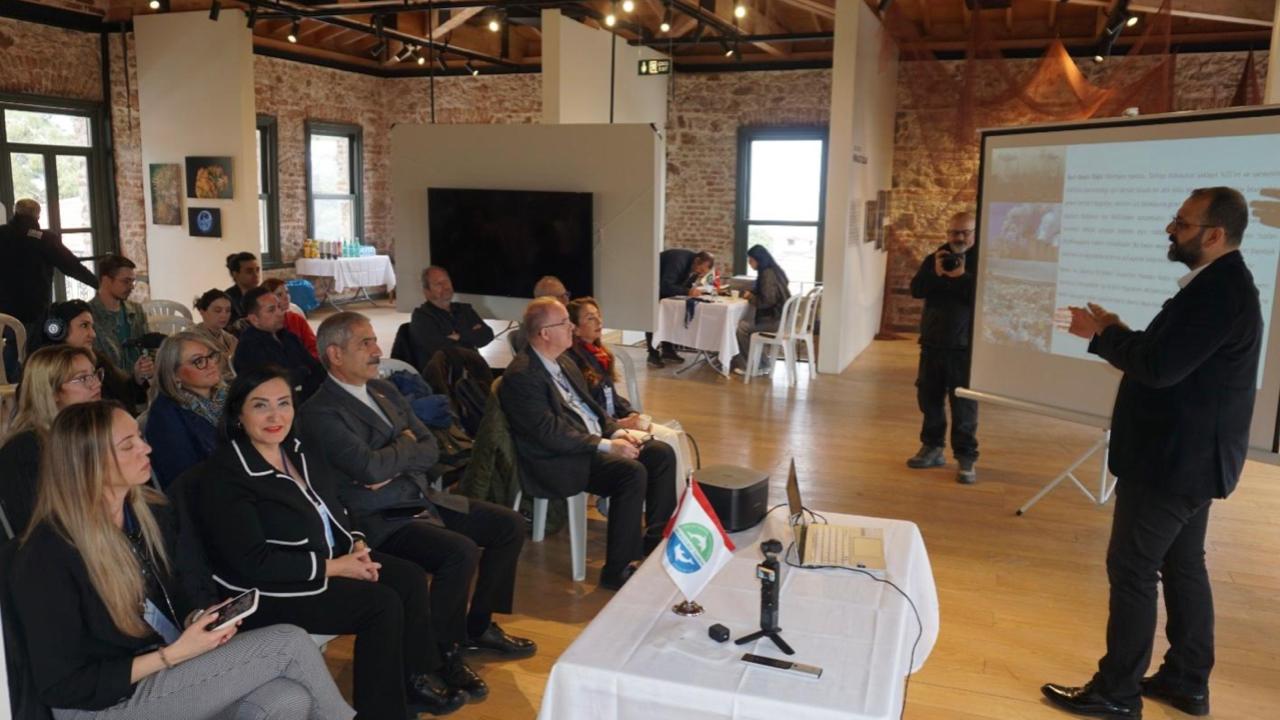
As part of the project, an informational workshop was held at Büyükada Taş Mektep with the participation of local stakeholders, academics, fishing and aquaculture cooperatives, and professional chambers.
At the Marine Ecosystem Conservation and Monitoring Workshop organized under the leadership of Assoc. Prof. Dr. Cem Dalyan from Istanbul University’s Department of Hydrobiology, the studies conducted within the scope of the Marmara Sea Improvement Project were shared. The event, which focused on the surroundings of the Princes' Islands, addressed regional issues and proposed solutions in all aspects with the participation of public institutions, local governments, and various stakeholders.
The workshop featured opening speeches by Istanbul Adalar Municipality Mayor Ali Ercan Akpolat and TURMEPA General Manager Semiha Öztürk, and was conducted under the guidance of Assoc. Prof. Dr. Cem Dalyan from the Department of Biology at Istanbul University. The event also received contributions from Uğur Sina Şen, Vice Chairman of the Board of Directors of SS Mavi Marmara, Sadettin Doğu, Director of the Fisheries and Aquaculture Branch of the Istanbul Provincial Directorate of Agriculture and Forestry, and numerous academics and participants devoted to the islands and seas.
In his speech, Istanbul Adalar Municipality Mayor Ali Ercan Akpolat emphasized the importance and sensitivity of the Islands for the Sea of Marmara, stating, 'We have voluntarily known the underwater riches here very well for 25 years and are carrying out serious efforts to protect them. We have worked to clear natural reefs from nets and ensure the continuation of life there. Because there is significant vitality underwater, just as there is above water, and it is invaluable for the sustainability of life. The Marmara is one of the unique and unparalleled closed inland seas. It is our duty to protect it. I thank TURMEPA and everyone who has contributed to this effort. The seas are our greatest heritage and wealth that we must pass on to future generations.'
TURMEPA General Manager Semiha Öztürk, who delivered the opening speech at the workshop, highlighted the importance of the work being carried out in the Sea of Marmara, saying: 'With the Blue Breath Project, we first raised awareness, and now we are lifting the veil over the Sea of Marmara. In the process initiated five years ago to prevent pollution in the Sea of Marmara, we took part in the Coordination Board of the Marmara Sea Action Plan and, with the support of Garanti BBVA, embarked on the fight against mucilage. With the collaboration we started with Istanbul University at the end of last year, we are taking concrete steps to understand and improve the ecosystem of Marmara with scientific data. By working hand in hand with the local community, our stakeholders, and cooperatives, we aim to restore the health of the Sea of Marmara through collective intelligence.'
Assoc. Prof. Dr. Dalyan stated that they are conducting studies to determine the current situation around the Princes' Islands with the Blue Breath Project, saying, 'The Sea of Marmara is a sea that contains biodiversity and a unique ecosystem structure, all of which are our responsibility. The climate crisis and human-induced pressures are making this sensitive system more fragile. Therefore, the continuity of scientific monitoring and conservation efforts is of great importance. Within the scope of the project, we conducted 30 dives under very challenging conditions during the winter months, where water temperatures dropped to 8 degrees. With these dives, we began to observe and record the distribution of seagrasses, habitats, and species diversity on-site. Although all analyses have not yet been completed, we are collecting significant data on the underwater ecosystem of Marmara. These studies are crucial for accurately understanding the current state of the sea and shaping the steps to be taken on a scientific basis.'
The pulse of the sea is being monitored in Marmara.
As part of the studies conducted in the Sea of Marmara, dives have begun to map seagrasses, underwater forests, fish species, and habitats. While the analysis process is still ongoing, important data is being collected regarding the underwater ecosystem. Additionally, field trials of equipment developed to reduce the effects of mucilage are being conducted, and improvement efforts are ongoing. Within the scope of the project, not only ecological data but also human activities in the region and the relationship with the sea are being evaluated to analyze the social impact of conservation efforts. This holistic approach aims to develop more effective and sustainable solutions for the Sea of Marmara.
The Marmara Sea Improvement Project, which will last for two years, aims to protect seagrasses, monitor biodiversity, and restore the ecosystem health of the Sea of Marmara. Through collaborative efforts, science-based, measurable, and applicable solutions are being developed for the future of the Sea of Marmara.
The Blue Breath Project has been ongoing for 5 years.
The Blue Breath Project, which has been ongoing for 5 years, continues to expand its impact in different regions of Turkey through marine cleanliness, awareness, and science-based conservation efforts. In the marine cleanliness aspect of the project, two marine sweepers are operating in the Bosphorus, collecting waste from the seas and recycling over 300,000 kilograms of waste to date.
In the awareness aspect of the project, online training is provided to students and teachers studying in middle schools affiliated with the Ministry of National Education regarding the importance of the seas, the protection of marine ecosystems, and sustainable water resources. In its 5th year, the project has reached over 130,000 students and more than 7,000 teachers.
The conservation and improvement efforts of the Blue Breath Project continue not only in the Sea of Marmara but also in the Saros Gulf and Göcek. The project aims to protect ecosystems that include seagrasses, corals, and other marine life, conduct restoration efforts in areas where decline is observed, and scientifically reveal the pressures on the marine ecosystem.
Additionally, within the scope of the project, a liquid waste collection vessel operating in the Fethiye-Göcek Gulf during the summer season collects waste from yachts and tourist boats, contributing to the reduction of the environmental impact of marine tourism.
Source: SeaNews Türkiye


