
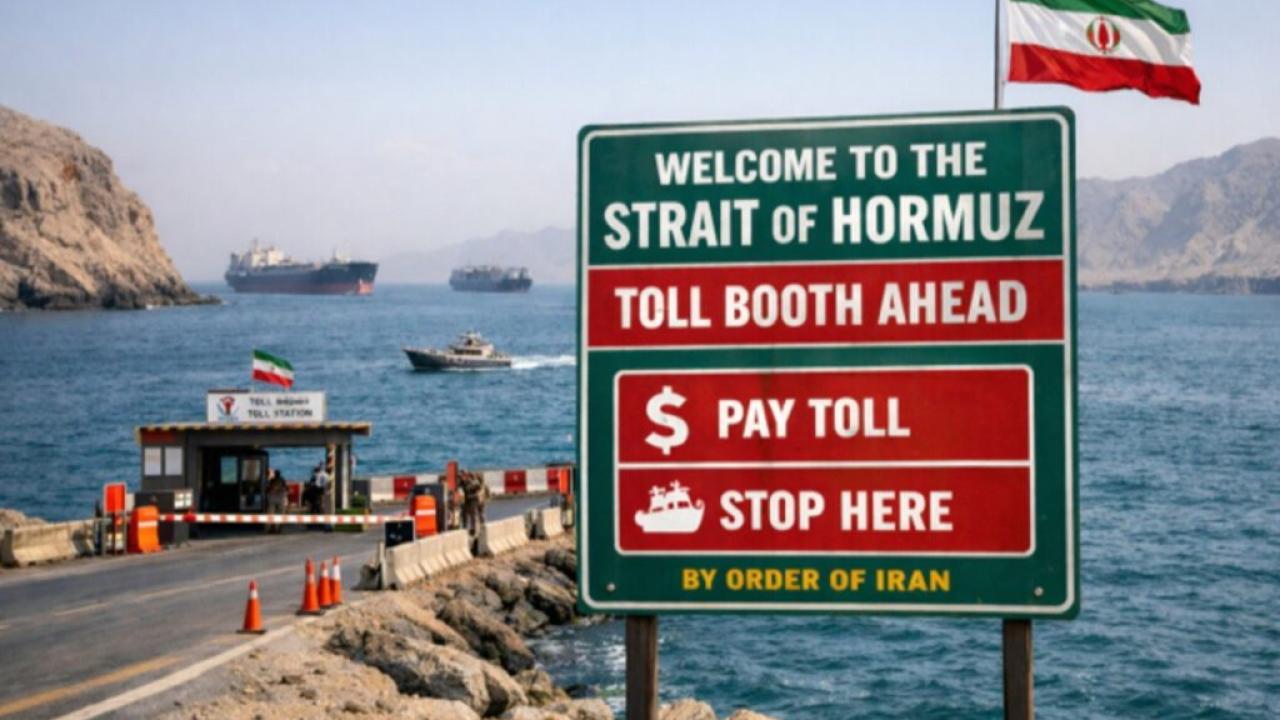
US halts 'Project Freedom' as Iran demands transit fees, complicating shipping in the Strait of Hormuz and raising risks for shipowners.
US Takes a Step Back, Iran Establishes 'Transit Toll Booth': The Nightmare of Sanctions for Shipowners in the Strait of Hormuz
The 'Project Freedom,' initiated by the administration of US President Donald Trump to safely extract stranded commercial vessels from the Persian Gulf, was suspended just two days after its launch. This pause, which took place with the mediation of Pakistan and was presented by Washington as 'a significant advancement towards an agreement,' is being celebrated in Tehran as a 'victory.' However, the real ticking time bomb for the commercial shipping sector has just been ignited.
Immediately following the US's withdrawal from its move, Iran launched an official institution that will deeply shake global trade: the Persian Gulf Strait Authority.
The Dilemma of Paying 'Transit Fees' to a Terrorist Organization
This new authority established by Iran is offering shipowners an official email address 'transit@pgsa.ir' and demanding that they enter into authorization and fee agreements directly with the Islamic Revolutionary Guard Corps (IRGC) to ensure safe transit through the Strait of Hormuz. This bureaucratic facade is pushing shipowners into one of the most dangerous minefields of international law.
Any payment made to the IRGC, which has been officially designated as a 'Foreign Terrorist Organization' by the US, carries a massive risk of sanctions. Washington threatens to add all institutions that pay money to Iran under the guise of transit fees to its sanctions list and exclude them from the global financial system. Given the vast monitoring capacity of US signal intelligence (SIGINT), it is nearly impossible for companies to conceal these payments.
Shipowners now face a deadly decision: either risk becoming targets of Iran's missiles or pay tribute to a terrorist organization and fall victim to the devastating economic sanctions imposed by the US.
Diplomatic Rhetoric and Stark Reality on the Ground
While US Secretary of State Marco Rubio and Defense Secretary Pete Hegseth softened their hawkish rhetoric just a day earlier, stating that the operation had been successful and that they 'preferred the path of peace,' the realities on the ground contradict this optimism. Even at the moment Trump announced the suspension, the Malta-flagged cargo ship CMA CGM San Antonio was struck by unidentified munitions in the strait, revealing the extent of the crisis.
The critical assessment made by Martin Kelly, President of EOS Marine Consulting, summarizes the gravity of the situation:
'The most fundamental conclusion to be drawn from this is that Iran has proven its capacity to detect ships and identify them, even at night, when their Automatic Identification System (AIS) is turned off. Iran maintains control over the Strait of Hormuz.'
Source: SeaNews Türkiye


