
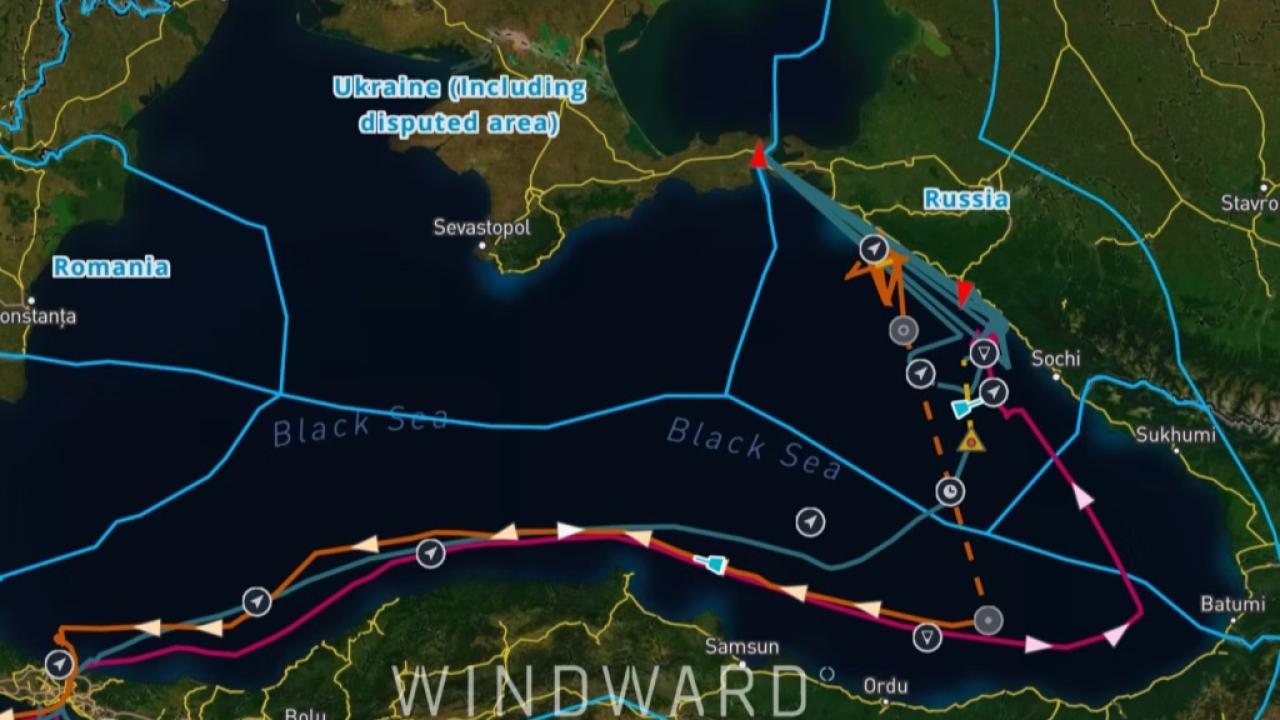
Russian tankers are changing routes near Turkey to avoid Ukrainian drone attacks in the Black Sea, according to Windward's analysis.
According to a recent report from Windward, an international maritime intelligence and risk analysis company, Ukraine's drone attacks on Russian energy transportation in the Black Sea have significantly altered the navigation behavior of the 'dark fleet' tankers affiliated with Russia.
The analysis indicates that tankers transporting Russian oil, many of which face sanctions, are now opting for indirect routes that bring them closer to the Turkish coastline instead of following their usual open-water paths in the Black Sea. This change aims to avoid drone attacks conducted by Ukraine at sea.
Ship tracking data from Windward reveals that several tankers are navigating unusually close to the shore and taking longer routes compared to their normal paths. These vessels are attempting to establish a more protected route against potential drone strikes by following a path parallel to the coasts of Turkey and Georgia.
The report highlights that a significant portion of these tankers are aging vessels with complex ownership structures, which carry sanction risks. The preference for close-to-shore navigation could increase military risks and pose environmental hazards and maritime safety issues.
Windward emphasizes that this change in navigation behavior should be closely monitored due to its implications for maritime traffic, insurance risks, and regional diplomatic sensitivities in the Black Sea.
The report concludes that the route change of the Russian shadow fleet is not merely a temporary maneuver but a defensive response to the threat of attacks. This situation may permanently alter the risk dynamics associated with energy transportation in the Black Sea.
Source: www.denizhaber.com


