
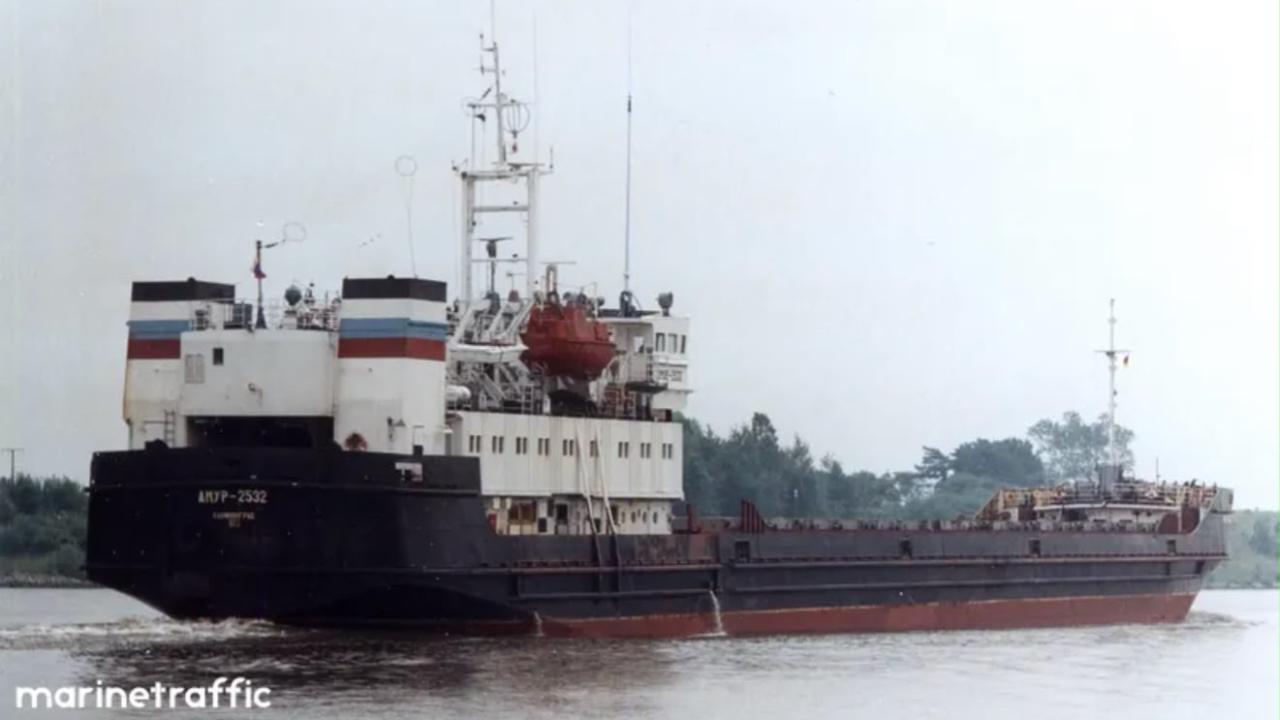
Drone attacks on June 5, 2026, in the Sea of Azov resulted in five crew fatalities, raising serious concerns for Turkish maritime safety.
On the night of June 5, 2026, a bloody attack occurred in the Sea of Azov, where the maritime aspect of the Russia-Ukraine war has increasingly targeted commercial shipping. According to the first operational report received by the Taman Maritime Search and Rescue Coordination Center at 03:04 Moscow time, two bulk carriers named 'Natra' and 'Zircon,' sailing in ballast (unloaded) in Taganrog Bay, were hit by unmanned aerial vehicles (UAVs) approximately one hour apart. A total of five crew members lost their lives in the attacks; both vessels were en route to the port of Rostov-na-Donu, Russia, to load grain after departing from Turkey.
The fact that the 'Natra' is operated by a Turkish company based in Istanbul has led to close monitoring of the incident concerning Turkish maritime interests. The attack has been recorded as one of the new and deadliest links in the chain of assaults targeting Turkish-owned or Turkish-operated vessels in the Black Sea and Azov basin in recent months.
Two ships hit one hour apart
According to official data, the first target was the 'Natra,' which was struck at 00:45 local time. Four UAVs hit the vessel; the fire was extinguished through the extraordinary efforts of the crew. However, the attack could not prevent the death of two crew members at the scene. The Belize-flagged vessel had a crew of 12 on board. Heavily damaged, the 'Natra' managed to stay afloat; however, as it was unable to navigate under its own power, two tugboats were dispatched to the area for towing.
The second attack targeted the Palau-flagged 'Zircon' at 01:55. Four UAVs struck near the ship's superstructure (stern), leading to the deaths of three crew members. As the fire could not be brought under control, the crew had to abandon the ship using lifeboats. According to the latest information from the region, the 'Zircon' was still engulfed in flames at the time it was abandoned.
The surviving sailors were rescued from the sea by three vessels passing through the tragedy site. All crew members rescued in the morning hours were safely transported to Russia's Yeysk Port. It has been reported that search and rescue operations and the towing operation for the 'Natra' were ongoing at the time of writing.
The scene of two burning ships and the crew forced to jump into the sea in the darkness of night complicated the rescue efforts in the area. The involvement of commercial vessels passing by the incident site demonstrated that the classic obligation to 'assist those in danger at sea' was once again in effect — despite all risks. However, this solidarity was not enough to save the lives of the five sailors.
Operator of one of the attacked vessels is a Turkish company
According to international registry records, the registered owner of the 'Natra' targeted in the attack is NATRA SHIPPING CO LTD, registered in the Private Sector Shipyards Area of Aydıntepe Neighborhood, Tuzla, Istanbul. The ISM manager responsible for the safe operation of the vessel, as well as the ship management and commercial management, has been undertaken by EFEM GEMİ KİRALAMA VE DENİZ, based in Kadıköy, Istanbul, since March 13, 2026. Therefore, although the vessel flies a foreign flag (Belize), the daily operational responsibility lies with a Turkish operator.
The fact that the management was transferred to this Turkish company only three months ago, on March 13, 2026, is also significant in terms of the legal and commercial implications of the incident. Questions regarding the distribution of responsibilities between the owner and the operator, the employment relationship of the crew, and insurance law will be among the topics that will come to the fore in the coming days.
Crew members are Azerbaijani citizens
It has been reported that all sailors serving on both vessels are Azerbaijani citizens. Azerbaijani official sources emphasized that the crew members were contracted sailors working in the private sector; that the vessels flew foreign flags; and that there was no connection with the Azerbaijani state. There were 12 crew members on the 'Natra' and 14 on the 'Zircon.'
Initial sectoral information indicated that the two crew members who lost their lives on the Turkish-operated 'Natra' were the captain and the first mate. However, official confirmation regarding the identities of the deceased and injured sailors has not yet been made. The names of the missing will be announced after the families have been informed; our report will be updated as this information becomes available.
Claims of a third vessel: 'Bavly'
Immediately following the incident, initial reports from the field — which do not yet fully align with official reports — suggested that a third vessel, a Russian-flagged tanker named 'Bavly,' also sustained damage that night; it was claimed that one sailor lost their life and 12 were rescued by lifeboat. However, the official operational report from the Taman Search and Rescue Center only mentions the two vessels — 'Natra' and 'Zircon.'
The 2013-built 'Bavly,' with a capacity of approximately 4,541 gross tons and 6,613 DWT, has Conaro Shipping JSC, based in Rostov-na-Donu, listed as the ISM manager, Nafta-Invest LLC, based in Kazan (Tatarstan), as the owner, and Petrotanker Ltd, based in St. Petersburg, as the commercial operator in its registry records. The connection and fate of this vessel regarding the attack have not yet been confirmed by official authorities.
Targeting Russia's grain and fuel logistics
The fact that both confirmed vessels were heading to Rostov-na-Donu to load grain after departing from Turkey sheds light on the background of the attack. This route lies in the midst of an increasingly fierce struggle that has intensified since the beginning of the war. Ukraine has been targeting Russia's grain and fuel exports conducted via sea — particularly the tanker network referred to as the 'shadow fleet' and the grain logistics line — using both aerial and unmanned surface vehicles (USVs), extending this campaign far beyond the front lines.
Indeed, the last few months in the Azov-Black Sea basin have witnessed a series of attacks on commercial shipping. From April 3 to 5, 2026, the Soviet-built Russian grain ship 'Volgo-Balt 138' was struck and sank in the Sea of Azov; three crew members lost their lives in the attack. On May 30, Ukrainian unmanned systems units set fire to a shadow fleet tanker and a fuel depot in Taganrog Port. Within this chain, the June 5 attack stands out as one of the new — and most severe in terms of civilian casualties — links in the pressure on Russia's southern logistics line.
Why is the Sea of Azov crucial?
The Sea of Azov, a shallow and narrow inland sea that opens to the Black Sea through the Kerch Strait, is at the heart of Russia's grain, coal, and fuel exports with its ports such as Rostov-na-Donu, Taganrog, Yeysk, and Azov. Thanks to its connection to inland waters via the Don River and the Volga-Don Canal, the region serves as a strategic logistics corridor heavily utilized by 'river-sea' type vessels. This position makes the Sea of Azov a highly valuable target for Ukraine's deep operations.
The narrowness, shallowness, and heavy traffic of the geography limit the maneuverability of commercial vessels, making them more vulnerable to unmanned aerial and surface vehicles. The sharing of the same narrow waterway by a civilian bulk carrier or tanker and a military target continuously keeps the risk of 'collateral damage' high.
Recurring threats to Turkish maritime interests
Targeting Turkish elements in the region is not new. On March 26, 2026, the Turkish crude oil tanker 'Altura,' registered under the flag of Sierra Leone and owned by Pergamon Maritime, was struck by an unmanned vehicle approximately 14 miles from the Istanbul Strait after departing from Novorossiysk; the 27-member Turkish crew on the tanker carrying 140,000 tons of crude oil escaped unharmed. On May 28, 2026, the Vanuatu-flagged 'Ant,' owned by a Turkey-based company and carrying bulk cargo from Odessa to Turkey, was attacked by UAVs; two sailors were lightly injured.
The Turkish Ministry of Foreign Affairs condemned the attack on the Turkish-owned vessel in its statement No. 102 dated May 29, 2026, expressing deep concern over the targeting of civilian shipping and freedom of navigation. The deadly attack on June 5 unfortunately demonstrated once again that these concerns were not unfounded.
Legal dimension: civilian sailors and freedom of navigation
The attack on vessels engaged in commercial purposes and carrying civilian crew raises serious questions under international maritime law and the law of armed conflict. The safety of sailors who are citizens of third states not party to the conflict; obligations arising from the International Convention for the Safety of Life at Sea (SOLAS) and the maritime search and rescue regime; and finally, the protection of freedom of navigation in international waters highlight that this issue is not only military but also legal.
Whether a civilian vessel can be considered a legitimate target on the grounds that it serves the logistics of a warring party; how the principles of distinction and proportionality will be applied in this specific case will occupy the agenda of the international community, classification societies, and insurance-owner circles in the coming period. In fact, these attacks have already raised war risk insurance premiums and freight costs; significantly complicating the supply of vessels and crews to the basin.
No one has yet claimed responsibility
At the time of writing, there is no party that has explicitly claimed responsibility for the attack. In similar incidents, Ukraine generally does not officially confirm individual attacks on commercial vessels; Russia, on the other hand, holds Ukraine responsible for the attacks. The narrow and shallow geography of the Sea of Azov creates a 'bottleneck' where both unmanned surface vehicles and navigating commercial vessels are trapped, further exacerbating the risks faced by civilian shipping.
Developing news
Information regarding the incident continues to come in moment by moment. The identities of the deceased and injured sailors, the progress of the towing and rescue operation for the 'Natra,' the fate of the fire on the 'Zircon,' and confirmation regarding the claim of a third vessel will become clearer in the coming hours. Our report will be updated as official statements and names of the missing become available.
This attack in the Sea of Azov, which cost the lives of five sailors in one night, has once again shifted the burden of war onto civilian crew members who are not parties to the conflict; it has once again highlighted the risks faced by Turkish maritime interests far beyond the 'blue homeland.'
Note: The official operational report only confirms the 'Natra' and 'Zircon'; information regarding the 'Bavly' is based on initial reports from the field and requires confirmation.
Trend News Agency (Baku) — 'UAV attacks on two Azerbaijani-crewed vessels in Azov Sea leave casualties (UPDATE),' June 5, 2026.
The Maritime Executive — Attack on grain ship in Azov Sea and its effects on civilian shipping.
gCaptain — 'Russian Grain Ship Sinks in Sea of Azov After Suspected Drone Strike,' April 6, 2026.
Hürriyet / DHA — 'Turkish-operated ship targeted by unmanned surface vehicle' (Altura / Pergamon Maritime), March 26, 2026.
Turkish Ministry of Foreign Affairs — No: 102, May 29, 2026, Regarding the Attack on a Turkish-Owned Bulk Carrier in the Black Sea.
International ship registry / management records (Natra, Zircon, Bavly identification information).
Source: SeaNews Türkiye


