
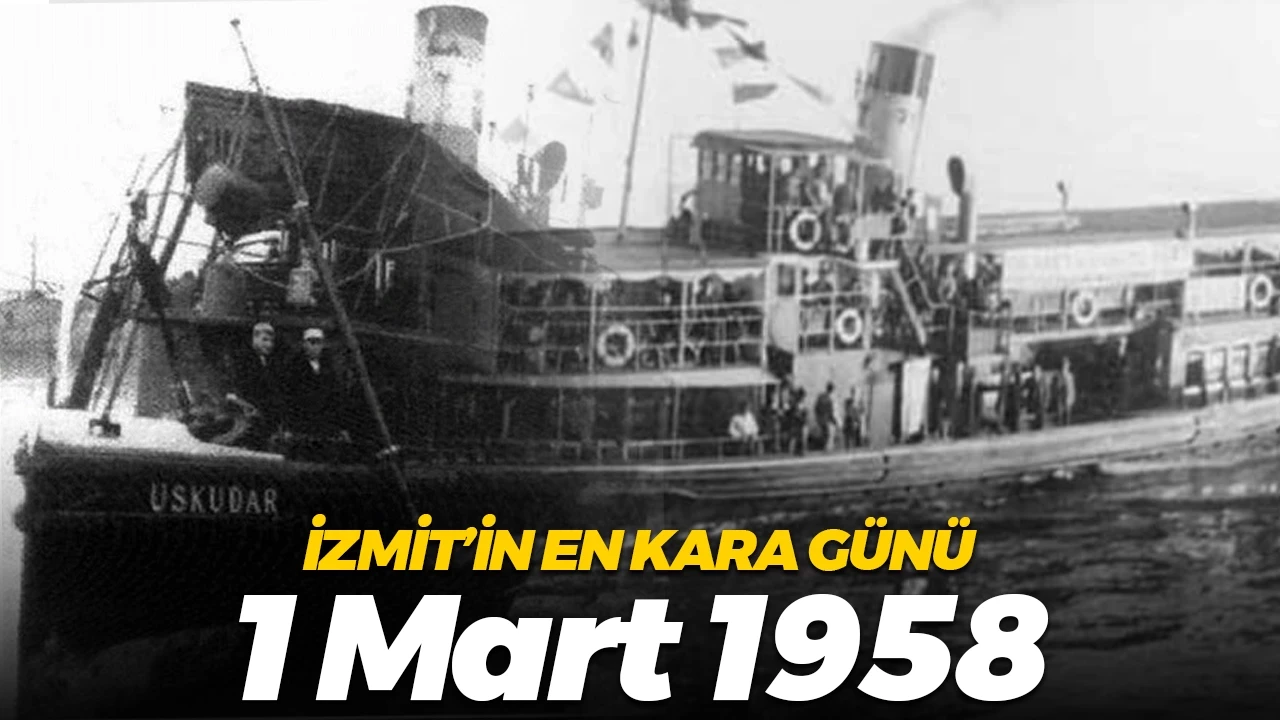
The Üsküdar Ferry Disaster of 1958 in İzmit Bay claimed 392 lives, highlighting the need for improved maritime safety standards in Turkey.
One of the most tragic pages in Turkish maritime history, the Üsküdar Ferry Disaster, remains etched in memory years after the events of the morning of March 1, 1958, in İzmit Bay.
The Üsküdar ferry, which was carrying passengers from İzmit towards Gölcük and Değirmendere, set sail despite the severe southwesterly winds and adverse weather conditions. Shortly after departure, the ferry lost its balance among the waves and capsized, sinking in a short time.
According to official records, 392 people lost their lives in the disaster. However, due to witness accounts from the time and deficiencies in the recording system, it is suggested that the actual death toll could be higher. A significant portion of the deceased consisted of students who boarded the ferry to go to school.
Bad weather, overloading, and inadequate precautions contributed to the tragedy.
Investigations conducted after the disaster revealed that the ferry was carrying passengers above its capacity, that the weather conditions were unsuitable for sailing, and that safety equipment was insufficient. The lack of life jackets and the poor maintenance of passenger lists also complicated rescue efforts.
A judicial process was initiated against those responsible following the accident. The incident led to a reevaluation of safety standards in maritime transportation in Turkey.
A scar in the memory of the bay, the Üsküdar Ferry Disaster is recorded as one of the largest maritime accidents in the history of the Republic. Commemoration ceremonies are held every year on March 1 in İzmit and its surroundings.
Although the screams that rose in the bay that morning have today given way to a silent memory, the lives that were cut short on that cold March day in 1958 continue to live on in Turkey's collective memory.
Source: SeaNews Türkiye


