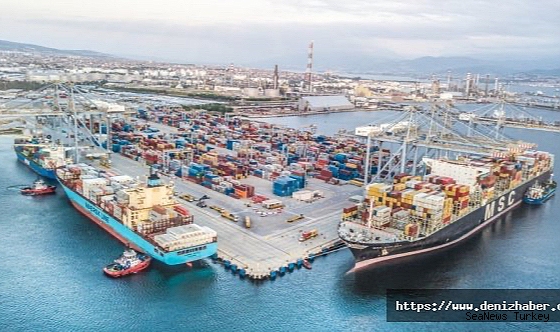
Suez container transits hit 314 in September, marking a 64.4% increase year-on-year as carriers shift back to the Red Sea route.
Suez container transits reached 314 in September, up 64.4% year on year and the highest monthly total since the Houthi attacks began in late 2023.
Containership transits through the Bab el Mandeb Strait climbed to their highest monthly level in September since the Houthi attacks began in late 2023. The surge reflects more carriers abandoning the longer Cape of Good Hope diversion for the Red Sea route. For cargo owners that have absorbed nearly two years of extended transit times, the shift marks a significant turning point in Asia-Europe supply chain planning.
Data from the Maritime Intelligence Unit at Lloyd's List Intelligence recorded 314 boxship crossings of the strait, which is the southern gateway to the Red Sea and the Suez Canal. The September total rose 14.6% from August and 64.4% from the same month last year.
The Red Sea route was once the most vital artery for long-haul trade between Asia and markets in Europe and the Mediterranean. After the Houthi strikes began, however, most containerships on the trade diverted around southern Africa.
The week of September 21-27 stood out, with 85 transits, the highest single-week count in five weeks. Linerlytica's assessment broadly supports this finding, identifying the same week as the busiest for containership traffic through the canal since 2024.
Larger ships drove the growth. Vessels of 7,000 teu (twenty-foot equivalent units, the standard measure of container capacity) and above recorded 124 movements in September. These ships accounted for 62.5% of the month-on-month increase.
The year-on-year shift was even more pronounced. Transits by vessels of at least 7,000 teu rose by 107 compared with the same period of 2025. The return of high-capacity tonnage indicates that carriers are now restoring core mainline services to the route, rather than limiting their return to smaller, lower-risk deployments.
Dark transits are voyages made with Automatic Identification System (AIS) transponders switched off. These accounted for 139 passages in September, or 44.3% of the total. Larger ships made up most of this traffic, with 108 dark passages, or 77.7%, involving vessels of at least 7,000 teu.
Major container lines operated most of these dark sailings. This concentration of large vessels further suggests leading carriers are accelerating their return. The provisional count for September 28 to October 4 stands at 67 transits. That figure is expected to rise because details of dark voyages may arrive late.
The Premier Alliance, which comprises Ocean Network Express (ONE), HMM, and Yang Ming, is the latest grouping to announce a return to Red Sea routing. According to Alphaliner, the alliance will reroute two Asia-North Europe services through the Red Sea in both directions. So far, many Asia-Europe loops have resumed Suez transits only on eastbound voyages.
FE1 (Southeast Asia-North Europe): The 8,110 teu One Continuity will lead the new routing, with a westbound Suez transit planned for November 9. The service is deployed with ships of 8,110-9,040 teu, and its round trip will shorten by two weeks to 11 weeks.
IOX (Indian Subcontinent-North Europe): Starting with the 7,164 teu One Reliability, the round trip will shrink from 13 weeks to 10. The first westbound Suez passage is planned for November 17, and seven ships of 6,350-7,164 teu have been nominated so far.
These reductions in round-trip time will strengthen schedule predictability and inventory planning for cargo owners on both corridors.
The announcement follows last month's decision by the Gemini Cooperation of Maersk and Hapag-Lloyd to reroute three more Asia-Europe services. These include the AE12, the AE11, and the AE5, which together deploy 41 ships ranging from 14,100 to 20,500 teu.
Cosco Shipping, a member of the Ocean Alliance, has scheduled nine eastbound voyages via Suez since mid-September. On October 4, it made its first westbound Suez transit in more than two years with the 24,188 teu OOCL Spain on its Asia-North Europe service, according to Lloyd's List Intelligence vessel-tracking data.
Linerlytica noted that ONE now joins CMA CGM, Maersk, MSC, Hapag-Lloyd, and Cosco in making the switch. Only Evergreen, Yang Ming, and HMM have yet to send their own ships back to the Red Sea.
The cumulative shift is now substantial. Linerlytica estimates that more than 140 containerships, with a combined capacity of over 2 million teu, have returned to the Suez route since May. In a report dated October 1, Maritime Strategies International estimates that roughly 35% of Asia-Europe sailings now use the Red Sea, with some variation between headhaul and backhaul legs.
The speed of the return is already reshaping market fundamentals. Linerlytica's market barometer has turned negative for the first time since January 2026. Teu-mile growth has slipped below supply growth because of fewer Cape of Good Hope diversions and Golden Week blank sailings in China. Newbuilding deliveries also accelerated, with almost 200,000 teu delivered in September and no ships removed from the fleet.
For shippers, forwarders, and importers, the combination of shorter routings, rising capacity, and softening demand-supply balance marks more than a change in navigation. It signals a structural reset in Asia-Europe trade that will shape freight procurement, transit planning, and inventory strategy in the months ahead.