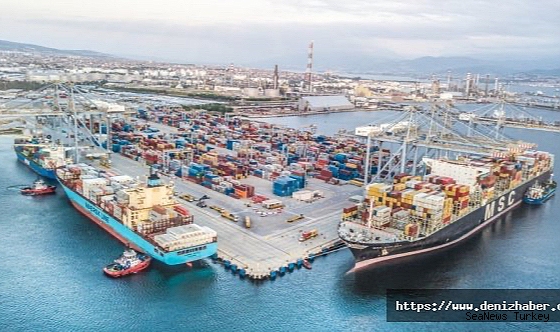
Panama Canal cuts daily vessel transits due to low rainfall, adjusting auction slots to ensure sustainable operations amid El Nino challenges.
The Panama Canal Authority has issued a formal notice announcing that, in response to below-average rainfall across the canal watershed, daily vessel transit allocations through its lock systems will be reduced beginning in September, accompanied by corresponding adjustments to the daily transit slot auction mechanism.
Under the revised arrangements, effective 3 September, the Neopanamax locks will be allocated nine available daily transit slots, while the Panamax locks will be allocated 25, bringing the combined daily transit total across both lock systems to 34. From 15 September, the Panamax locks will see a further reduction to 23 daily slots, lowering the canal's aggregate daily transit capacity to 32 vessels.
The Panama Canal Authority has stated that, despite the arrival of the rainy season and the implementation of water conservation measures designed to mitigate the adverse effects of the El Nino phenomenon, prevailing watershed conditions—including precipitation levels that remain below forecast—continue to necessitate further action to safeguard the canal's long-term sustainable operations.
In parallel, the Authority is introducing a temporary adjustment to the daily transit slot auction mechanism, aimed at promoting a more equitable distribution of available slots and more accurately reflecting market structure and the distinct characteristics of different cargo types and vessel segments.
Effective 3 September 2026, the daily auction sessions for Neopanamax, Supers, and Regular vessel categories will be organized into four distinct groups: LNG and LPG vessels; dry bulk and general cargo vessels; container ships, vehicle carriers/roll-on roll-off vessels, and reefer vessels; and chemical tankers, product tankers, and crude oil tankers. Furthermore, within the Neopanamax lock allocation process, fully cellular container vessels of the largest capacity class will be accorded priority consideration.
The Authority has advised customers that advance bookings are strongly recommended to minimize the probability of extended delays, noting that a confirmed reservation represents the sole means of securing a designated transit date. It has further cautioned that reductions in daily transit volumes are likely to extend waiting times for vessels that have not secured advance bookings.
The Authority has additionally noted that, in order to maintain safe and efficient canal operations, it reserves the right to temporarily suspend all or part of the transit reservation system should circumstances require. In such an event, vessels whose reserved slots are canceled will not be subject to penalties, surcharges, or cancellation fees.
Separately, drawing on current water levels in Gatun Lake and the latest available meteorological forecasts, the Authority has revised the effective dates governing maximum draft restrictions for the Neopanamax locks: the 48.0-foot (14.63-meter) draft restriction, originally scheduled to take effect on 26 August 2026, has been deferred to 2 September; and the 47.5-foot (14.48-meter) restriction, originally set for 3 September, has been deferred to 1 October.
The Panama Canal Authority has confirmed that it will continue to monitor weather conditions, watershed inflow, and lake water levels with close attention, adjusting operational measures in a timely manner as circumstances evolve.