Maersk and CMA CGM are pioneering bio-ethanol bunkering, marking significant advancements in marine fuel strategies.
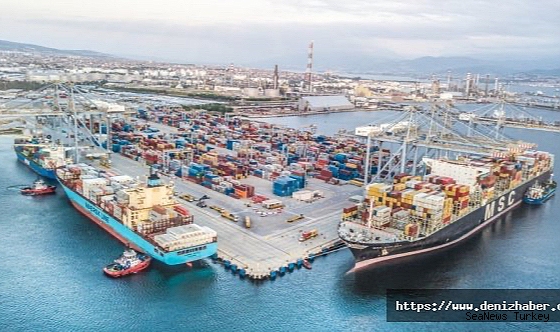
A new contender is emerging in the marine fuel landscape: bio-ethanol. Maersk has announced that its 9,016 TEU container vessel Tangier Maersk completed a 100% American corn ethanol bunkering operation in Houston, Texas - marking the first commercial ship-to-ship ethanol bunkering operation for an ocean-going container vessel in the United States. The exercise was designed to test the practical conditions surrounding ethanol as a viable fuel, including supply logistics, infrastructure requirements, procurement processes, and operational parameters.
CMA CGM has pursued a parallel course in South America. On July 12, its 13,000 TEU vessel CMA CGM IRON completed a bio-ethanol bunkering operation at the Port of Santos in Brazil. Equipped with a tri-fuel engine capable of running on conventional fuel, methanol, and bio-ethanol, the vessel received a supply of Brazilian sugarcane ethanol provided by Copersucar - a first of its kind bunkering for an ocean-going container ship in Brazil.
Across the broader liner industry, alternative fuel strategies remain firmly anchored in methanol and LNG dual-fuel solutions. Hapag-Lloyd has completed methanol retrofits on two 10,000 TEU container vessels this year, with the first retrofitted ship completing a 3,000-tonne bio-methanol bunkering operation in Shanghai between late August and early September. COSCO Shipping completed a green methanol bunkering operation - conducted simultaneously with cargo loading and unloading - aboard a methanol dual-fuel container vessel in Hong Kong in March. HMM has also advanced its methanol dual-fuel programme, with its vessel HMM Green completing a 2,900-tonne ISCC-EU certified green methanol bunkering in Shanghai.
Taken broadly, the leading liner operators have concentrated their near-term fuel transitions on methanol dual-fuel and LNG dual-fuel platforms, with biofuels deployed predominantly as direct substitutes or blending components for conventional marine fuels. Ethanol bunkering for ocean-going container vessels remains a relatively limited practice, making Maersk's 100% ethanol bunkering in the United States a meaningful and closely watched development.
Ethanol and methanol share a common classification as alcohol-based fuels, with overlapping technical characteristics in engine compatibility and fuel handling that allow carriers to draw on existing operational experience and infrastructure. Yet ethanol is not a straightforward substitute for methanol; the two fuels diverge significantly in their underlying supply chains.
Maersk's Houston bunkering drew on American corn ethanol, while CMA CGM's Santos operation utilised Brazilian sugarcane ethanol - a distinction that reflects the geographic realities of global ethanol production. Both the United States and Brazil rank among the world's leading ethanol producers, providing shipping companies with an established industrial base from which to source supply. Maersk has acknowledged within its broader energy transition strategy that the low-emission fuel market continues to face uncertainties across supply availability, cost structures, and regulatory frameworks - and has committed to maintaining a multi-fuel approach while continuing to evaluate ethanol's commercial potential.
For any ocean-going container vessel, the path from fuel trial to full-scale adoption ultimately depends on the convergence of competitive pricing, reliable supply, and evolving emissions regulations. Ethanol's growing presence in bunkering operations signals not an isolated experiment, but a deliberate effort by leading carriers to position themselves across the full spectrum of viable low-emission fuel pathways.