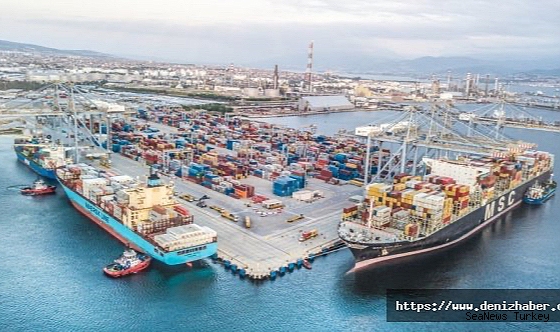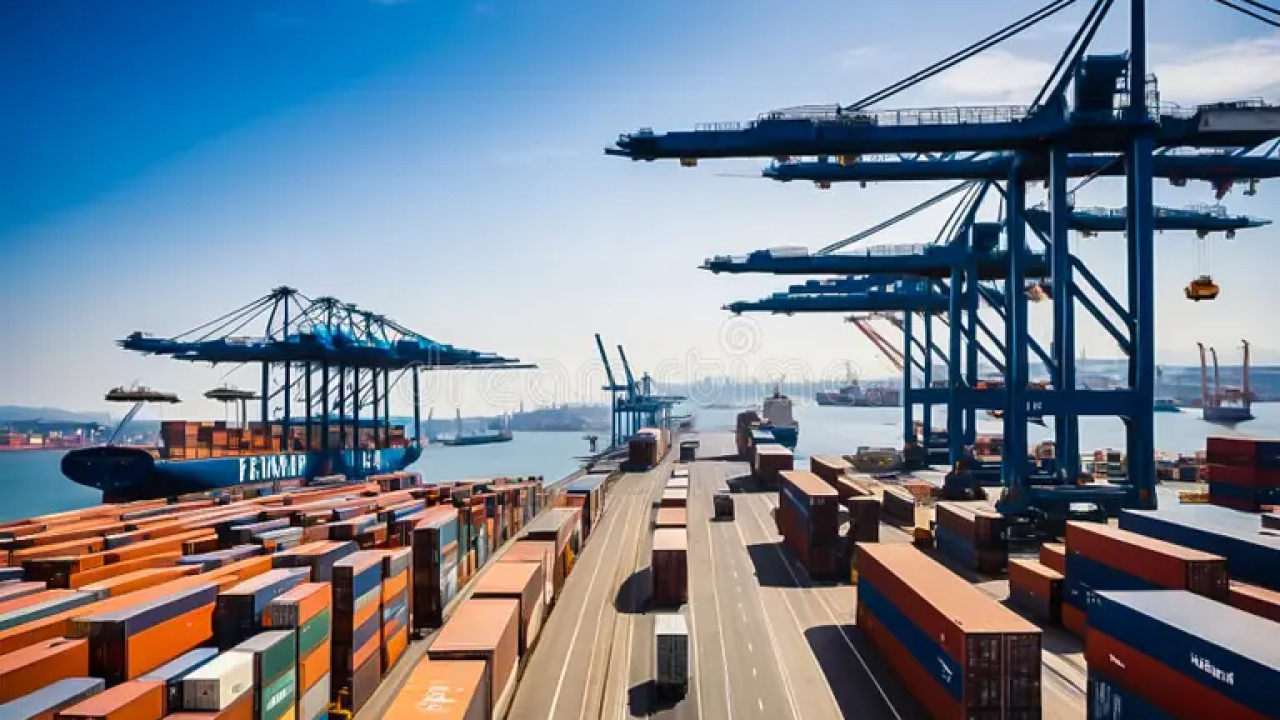
Shipowners are enhancing cargo capacity to adapt to market changes, according to Christoph Rasewsky from ABS Europe, as reported by gCaptain.
Shipowners are adapting to fleet and market dynamics by maximizing cargo capacity for flexible operations, according to Christoph Rasewsky, Global Container Sector Lead at ABS Europe, reports Ventura, California's gCaptain.
The containership market is evolving, with designs focused on efficiency and flexibility. Pressure to maximize volume capacity is shaping ship characteristics as operators respond to changing market conditions.
Consolidation of freight and charter rates reflects the surge in vessel deliveries this year and beyond. Re-routing via the Cape of Good Hope has supported the market, but the influx of new ships is creating pressure.
Smaller vessels under 1,000 TEU average 19.9 years in age, while mid-size units between 1,000 and 6,000 TEU show limited orderbook activity. Larger ships of 12,000 TEU and above are younger, with strong growth in the 12,000-17,000 TEU range.
Diversions from the Red Sea crisis have curbed recycling, but Clarksons data suggests scrapping could reach 605,000 TEU in 2027, the second highest in a decade.
Fleet analysis shows a shift to lower maximum speeds. Older ships reached 27 knots, but newer designs rarely exceed 22 knots, with larger units closer to 18 knots. Compact designs are increasingly common in the 3,000-12,000 TEU classes, except for the Maxi-NPX class, which retains Panama Canal beam dimensions.
ABS supports owners with fuel strategy, including CII rating analysis and compliance with EU regulations. It also provides operational profile reviews, hull optimization matrices, and vessel specification assessments tailored to client needs.
In one case, ABS boosted the nominal capacity of a 9,000-TEU vessel from 8,914 TEU to 9,860 TEU, a 10.6 percent increase, by applying new techniques and technologies to enhance commercial opportunity and future-proof assets.