Şadan Kaptanoğlu calls for a transformative approach in Turkish shipping to adapt to global changes and ensure maritime safety and sustainability.
We Cannot Solve the Problems of the 21st Century with the Methods of the 20th Century; We Need a New Course at Sea
Şadan Kaptanoğlu, the candidate for the Board of Directors of the İMEAK Chamber of Shipping and the leader of the New Course at Sea Movement, stated in the Green Horizon program presented by Dünya Taşlardan on CNBC-e that global shipping is experiencing one of the greatest transformations in its history and that Turkey needs a new working approach during this process.
Kaptanoğlu said, 'The Chamber of Shipping is the umbrella organization of our sector. We need to set sail for new horizons with a new way of working and a new course.'
Dr. Şadan Kaptanoğlu, candidate for the Board of Directors of the İMEAK Chamber of Shipping, leader of the New Course at Sea Movement, and Chairman of TURMEPA, was a guest on the Green Horizon program aired on CNBC-e.
Responding to questions from Dünya Taşlardan, Kaptanoğlu evaluated various topics concerning the future of shipping, from green transformation to the safety of maritime trade, from digitalization to Turkey's global competitiveness, and from financing the transformation to the roles of women and youth in the sector.
Kaptanoğlu expressed that global shipping has entered the most significant transformation process since the transition from sails to steam engines, emphasizing that this change is not solely about alternative fuels. He stated that decarbonization, digitalization, artificial intelligence, automation, and the redevelopment of human resources should be addressed as a whole, saying, 'We are in the midst of a significant transformation that extends to 2050. It is not yet entirely clear which alternative fuel will be used, where, and to what extent. One thing we know is that there will not be a single solution. Multiple fuels, technologies, and approaches will develop together. This transformation will happen sooner or later; those who adapt the fastest and most accurately will stand out in competition.'
'Our seafarers are not soldiers; their safety is paramount'
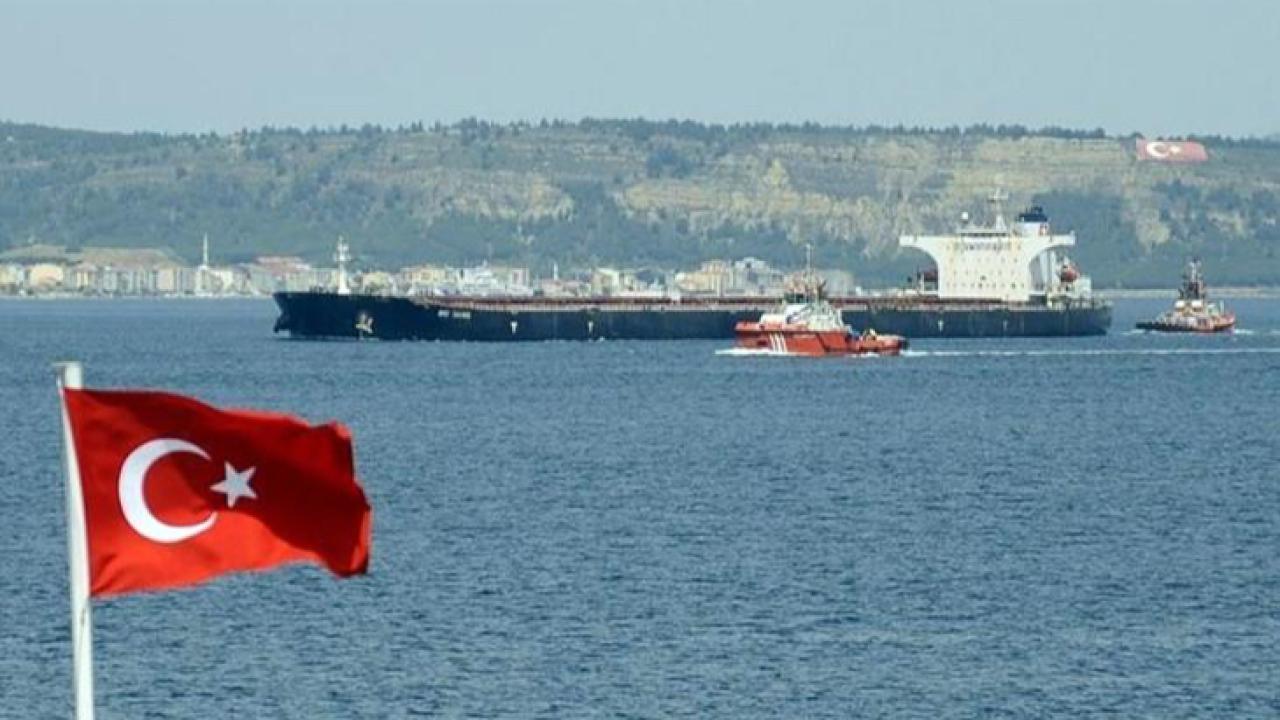
Kaptanoğlu also addressed the impact of regional conflicts and tensions in critical maritime passages on commercial shipping, stating that it is unacceptable for the lives of seafarers working in conflict zones, particularly in the Black Sea, to be put at risk. 'Our commercial vessels are not military ships, and our seafarers are not soldiers. Ships are commercial vehicles that transport goods from one point in the world to another. Therefore, the inviolability of commercial vessels and the safety of seafarers must be protected. We have seen that international cooperation has yielded results in the fight against piracy. We must develop similar cooperation models against other security threats as well.'
Kaptanoğlu pointed out that maritime transport forms the backbone of the global supply chain, emphasizing that global economic and social life cannot be sustained without shipping.
'Turkey has all the elements to be a strong maritime center'
Kaptanoğlu expressed that Turkey's strategic position in the Black Sea, Aegean, and Mediterranean provides a significant competitive advantage, stating that the Turkish commercial fleet, shipyards, ports, and maritime service sectors should be evaluated together.
Kaptanoğlu said, 'Our fleet is among the top 12 in the world. Our shipyards have become globally branded in maintenance-repair and quality shipbuilding. Our ports are our gateway to the world. However, a maritime center is not only made up of ships, shipyards, and ports. Our agencies, brokers, suppliers, sub-industries, logistics companies, and skilled human resources are integral parts of this ecosystem.'
Emphasizing that Turkey's goal of becoming a regional logistics hub and a strong maritime center should be supported by a project-based approach that encompasses the entire ecosystem, Kaptanoğlu pointed out the importance of adapting good international examples to Turkey's conditions.
Call for a new financing model for green transformation
Kaptanoğlu noted that the environmental transformation of the maritime sector has created a significant investment need, stating that a financing model specific to Turkey should be established that can be accessed by different actors in the sector at various scales.
'We see that the resources generated by carbon taxes in Europe are directed towards transformation incentives. Turkey needs to develop a model that brings together carbon trading, taxation, incentives, and project financing tools, where the public and the sector work together. We should view the transformation not just as a liability but as an investment area that will enhance our competitiveness.'
Kaptanoğlu expressed that artificial intelligence and digitalization will be decisive in a wide range of areas, from reducing fuel consumption to route optimization, from port operations to fleet management, and highlighted the need for retraining the existing maritime workforce in line with new technologies as a priority issue.
'Our seas are our blue heart; it is everyone's responsibility to protect them'
Kaptanoğlu emphasized that the protection of the seas is an integral part of the green transformation, stating as the Chairman of TURMEPA, 'One of the two breaths we take is provided by our seas. We should think of our seas as our blue heart.'
He pointed out that marine pollution is a shared responsibility not only of the maritime sector but also of the public, private sector, and every individual; emphasizing the importance of TURMEPA's efforts in line with the Zero Waste Blue approach, he stated that waste should be reduced at the source, prevented from reaching the seas, and a lasting environmental awareness should be created in society. 'We should not say, 'What difference does what I do make?'; our individual choices can change a lot. Blue transformation and blue economy can only be possible when we all take responsibility,' he stated.
'Turkey's voice must be stronger at international tables'
Kaptanoğlu referred to her experience as the first Turkish and first female president of the International Chamber of Shipping BIMCO, emphasizing that international representation is not just about attending meetings: 'I learned how to make our voice heard at tables where the world's largest shipowners and public authorities are present, how to access information, and how to make a Turkish voice resonate strongly. I believe that this accumulation should reflect more on Turkish shipping. We should be a sector that does not lag behind international regulations but speaks up during their formation.'
Kaptanoğlu also stated that women and youth should be more visible in shipping, emphasizing that experience should not be pitted against youthful energy. She expressed that giving responsibilities to women and youth would accelerate the transformation in the sector, saying, 'We can move forward by creating good examples, paving the way, and granting real responsibilities in decision-making mechanisms.'
New Course at Sea: Producing Results from Representation
Kaptanoğlu's approach, presented live, forms the basis of the election vision developed by the New Course at Sea Movement for the İMEAK Chamber of Shipping. The movement is based on goals such as strong international representation, committee-based concrete solution production, financing for green and digital transformation, development of skilled human resources, and the participation of all elements of the maritime ecosystem in decision-making processes. In this context, it is aimed to establish a more effective working order for the Chamber of Shipping, where not only problems are voiced but also needs are identified with data, projects are developed, public initiatives are regularly monitored, and tangible results are returned to members. At the end of the program, Kaptanoğlu summarized the role that the Chamber of Shipping must undertake in the upcoming period with the following words: 'The Chamber of Shipping is our umbrella organization. We should no longer try to solve the problems of the 21st century with the methods of the 20th century. We need new courses in shipping. We must set sail together for entirely new horizons with a new way of working. Turkey has the power and expertise to do this.'
Source: SeaNews Türkiye