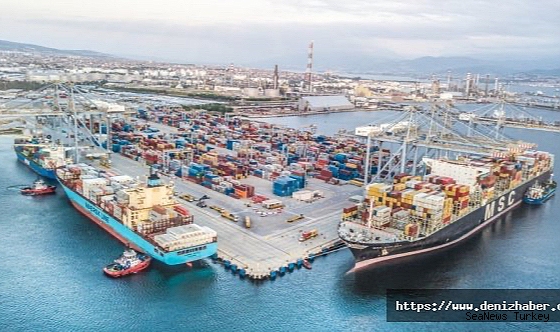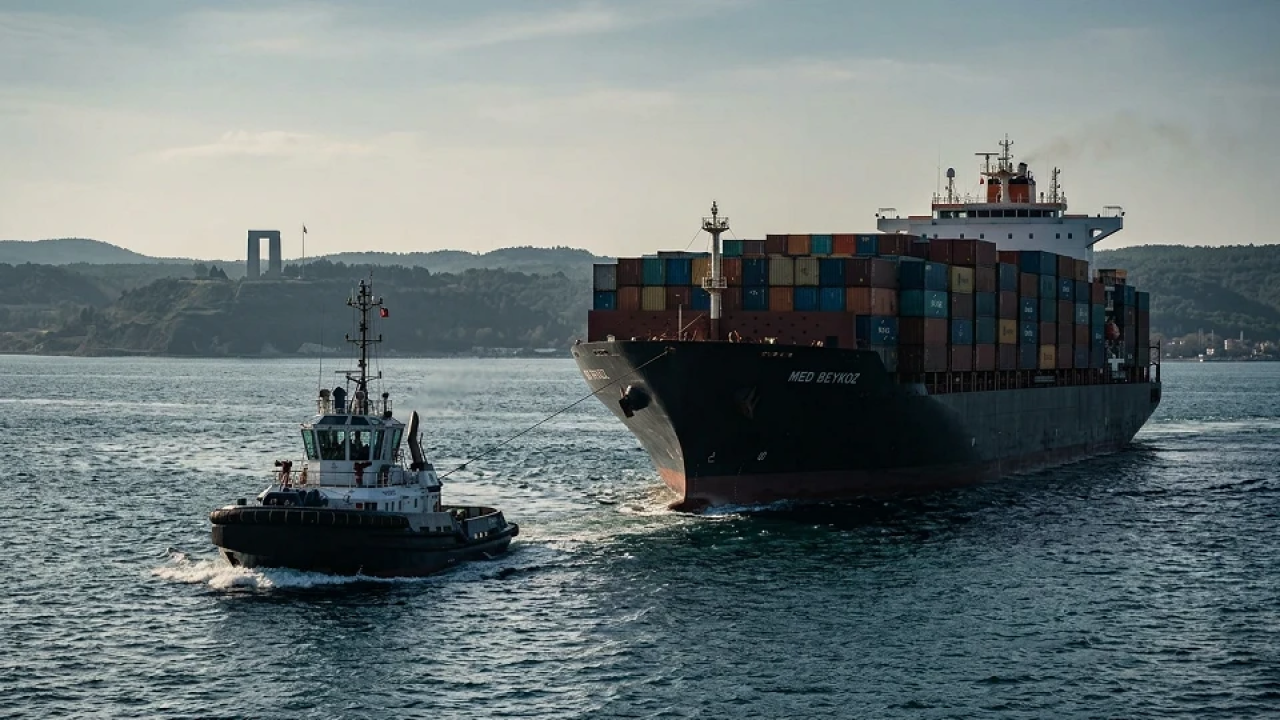
MSC drives a 78% increase in Mediterranean vessels over 8,000 TEU, reshaping intra-Europe shipping dynamics, reports Breakbulk News.
Container lines are deploying larger ships on intra-Europe services, with the Mediterranean seeing a sharp rise in vessels above 8,000 TEU, reports Amsterdam's Breakbulk News.
Alphaliner stated that the number of ships above 8,000 TEU trading in the region has risen from nine a year ago to 16 today, marking a 78 percent increase. The average vessel size in the trade remains much smaller, at 1,870 TEU.
This shift reflects carriers adjusting their networks and seeking lower unit costs on regional services. Larger ships, once reserved for long-haul trades, are now appearing on routes where sailing distances and cargo flows justify the increased capacity.
MSC is leading this trend, operating nine of the 16 vessels above 8,000 TEU, compared to six of nine a year ago. New additions to their fleet include the 9,411 TEU MSC Giselle, the 9,408 TEU MSC Elma, the 9,403 TEU MSC Lagos X, the 9,403 TEU MSC Nairobi X, and the 9,288 TEU MSC Brittany.
According to Alphaliner, 14 of the 16 larger vessels are deployed on North Europe-Mediterranean services, where longer voyage lengths make the use of bigger ships more justifiable. Most regional services still rely on smaller tonnage, with the average size at 1,870 TEU.
Maersk's 9,962 TEU Maersk Sirac has become the largest ship operating on an intra-European route, overtaking the MSC Aby, which has been redeployed to Asia-North America. The Maersk Sirac is expected to join the new Egypt-Turkey E8 service alongside the 8,850 TEU Maersk Lebu.
Other carriers are also active in this segment. Cosco has doubled its number of ships above 8,000 TEU in the region to two, while Hapag Lloyd continues to operate the 8,750 TEU Sofia Express.
Analysts have noted that the rise in larger ships affects more than just carrier slot costs. It shapes terminal workload, feeder reliability, and port call discipline. Ports with berth flexibility may gain efficiency, while those lacking capacity risk delays. For cargo owners, the impact may be less visible shipment by shipment, but the overall pattern could influence rates and reliability.