
The UK explores intervention strategies against Russian tankers evading monitoring, while Russia warns of a return to piracy.
The tankers transporting Russian oil to Asia via the Baltic Sea, referred to as the 'secret fleet,' have remained within the range of British military assets for days while passing near England. This situation has prompted the London government to consider a new intervention strategy. The British government's evaluation of a joint intervention and monitoring campaign in collaboration with European Union countries is not seen as a surprise in this context.
Strong Reaction from Moscow: 'Return to the Era of Piracy'
Russia has responded sharply to the statements from the UK. Andrey Kelin, Russia's Ambassador to London, warned that the secret fleet tankers could soon be escorted by Russian state vessels.
In an interview with Izvestia, Kelin stated, 'What the politicians in London are talking about essentially means returning to the era of the pirate Edward Teach, known as Blackbeard.' Kelin added, 'What they forget is that Britain has long ceased to be the master of the seas and that such actions will not go unpunished.'
According to experts, boarding and questioning stateless or legally ambiguous vessels could strengthen the rule of law on the 'secret fleet' side of tanker trade for the UK and EU member states, potentially limiting the return of oil revenues to Russia. Moscow, however, harshly criticizes this approach, labeling the proposed steps as a 'return to piracy.'
Increased Interventions on Russia-Linked Tankers
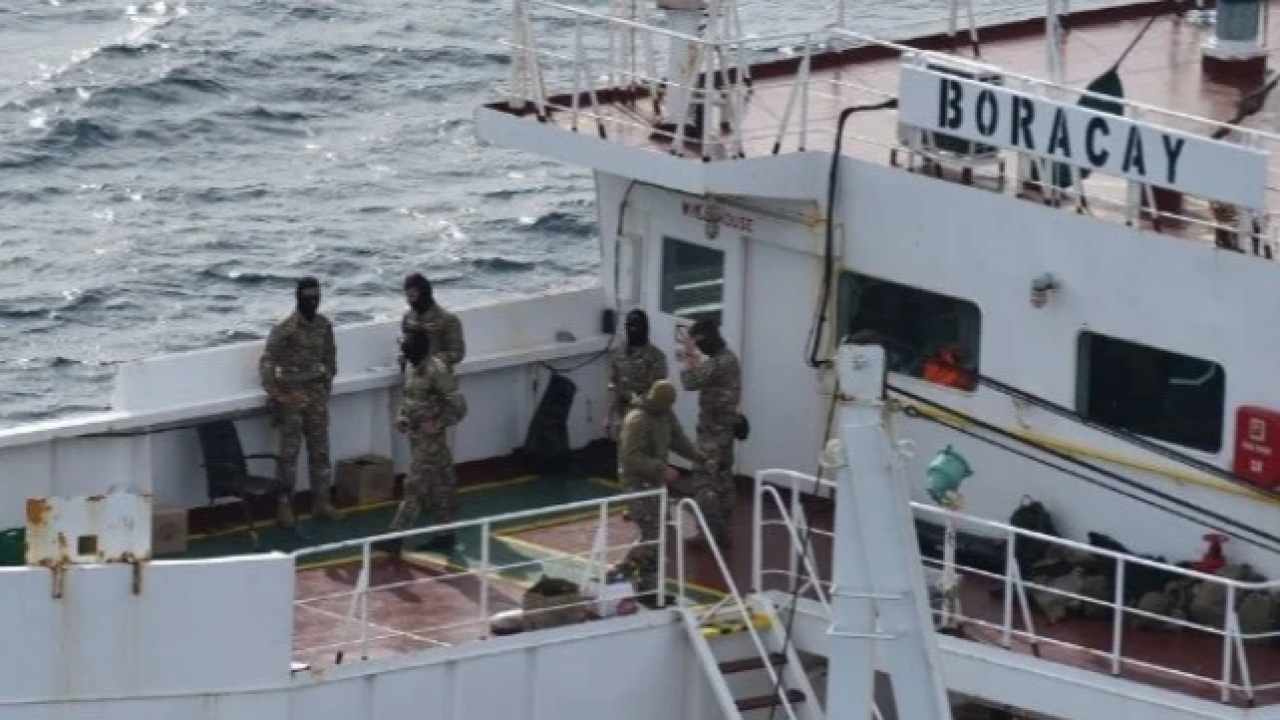
Interventions on Russia-linked tankers are not new. Finnish security forces seized the tanker Eagle S following a suspicious submarine cable break incident at the end of 2024. France also detained the Pushpa (Boracay) tanker in October 2025 due to suspicious activities.
Earlier this month, American forces seized the stateless Bella 1 (Marinera) tanker, which was reportedly attempting to obtain Russian flag registration. This incident led to a diplomatic protest from Moscow. According to Russia, two Russian crew members aboard the vessel are still being held in custody by the United States.
Germany Signals a Broader European Campaign
Germany has also recently indicated how a more comprehensive European blockade campaign could take shape. Last week, German officials questioned the insurance and flag status of the secret fleet tanker Arcusat, which was approaching Russia's western oil ports. Following this inquiry, it was reported that the vessel changed its route in the Baltic Sea to head towards the Russian Arctic region.
It is assessed that a joint European initiative, which would include the UK, could create a broader impact area that encompasses not only vessels in transit but also tankers approaching Russia's western oil ports.
UK Evaluating Joint Law Enforcement Options
Last week, UK Foreign Secretary Yvette Cooper participated in a boarding exercise conducted on the Turva vessel belonging to the Finnish Border Guard. The exercise was carried out by teams involved in stopping a suspicious cargo ship linked to Russia at the end of last month.
Observing the fast rope descent exercise, Cooper told Politico that the UK is ready to evaluate joint law enforcement actions with its allies. Cooper stated, 'We are prepared to work with allies on stronger law enforcement actions against the secret fleet,' but refrained from providing details regarding the scope of potential interventions.
Source: SeaNews Türkiye


