
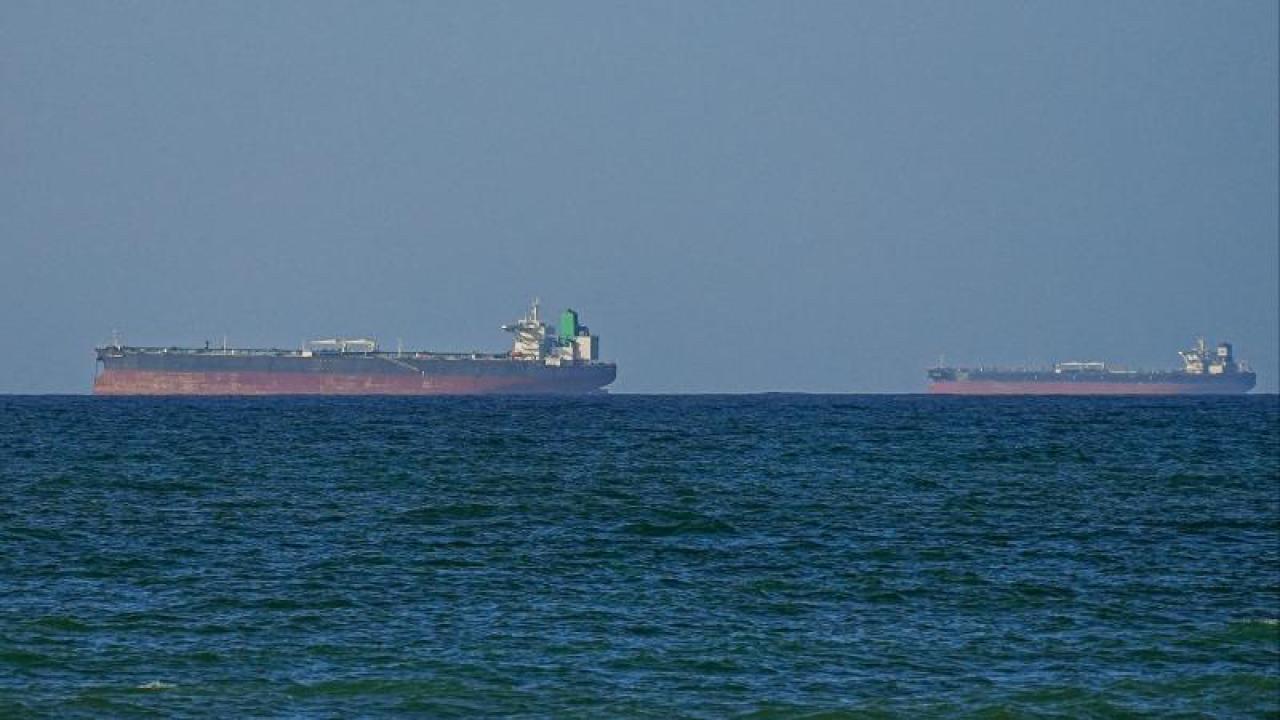
Despite a ceasefire, shipping traffic in the Strait of Hormuz is minimal, raising concerns over global energy supplies.
Despite the two-week ceasefire reached between the United States and Iran, ship traffic in the Strait of Hormuz, the world's most critical energy transit point, has not returned to normal. The Washington and Tehran administrations are accusing each other of violating the ceasefire agreement, while concerns about global energy supply continue.
According to ship tracking data, only a small number of vessels have been able to pass through the strait since the ceasefire was announced on Tuesday.
Data from Kpler shows that only 5 ships crossed the strait on Wednesday, and this number remained at 7 on Thursday.
Ship traffic, which was between 120 and 140 vessels daily before the war, has now fallen to symbolic levels.
Data from Lloyd’s List Intelligence reveals that more than 600 ships, including 325 tankers, are still stranded in the Persian Gulf.
Market analyses predict that even if the ceasefire continues, the capacity for safe passage will be limited to a maximum of 10-15 ships per day.
U.S. President Donald Trump stated on social media that Iran has not complied with the 'safe passage' clause of the agreement.
Trump noted that Iran has shown a 'humiliating' performance in allowing oil transit, expressing that the situation is contrary to the agreement.
Iranian Foreign Minister Abbas Arakchi, on the other hand, blamed the U.S., drawing attention to Israel's attacks in Lebanon.
Arakchi stated that the U.S. needs to make a choice; either it will support a real ceasefire or it will continue the war through its ally.
Pointing out that the massacres in Lebanon are happening in front of the world's eyes, Arakchi emphasized that the responsibility lies with the U.S. side.
Source: SeaNews Türkiye


