
Japan is set to explore deep-sea mud for rare earth elements, aiming to reduce reliance on Chinese imports for critical high-tech minerals.
Japan Attempts to Extract Rare Earth Elements from Deep-Sea Mud
While interest in underwater mining has largely focused on polymetallic nodules, Japan has turned its attention to alternative resources in the deep sea. The Japan Agency for Marine-Earth Science and Technology (JAMSTEC) has initiated a trial exploration project aimed at obtaining rare earth elements from seabed mud in the country's remote Pacific territories.
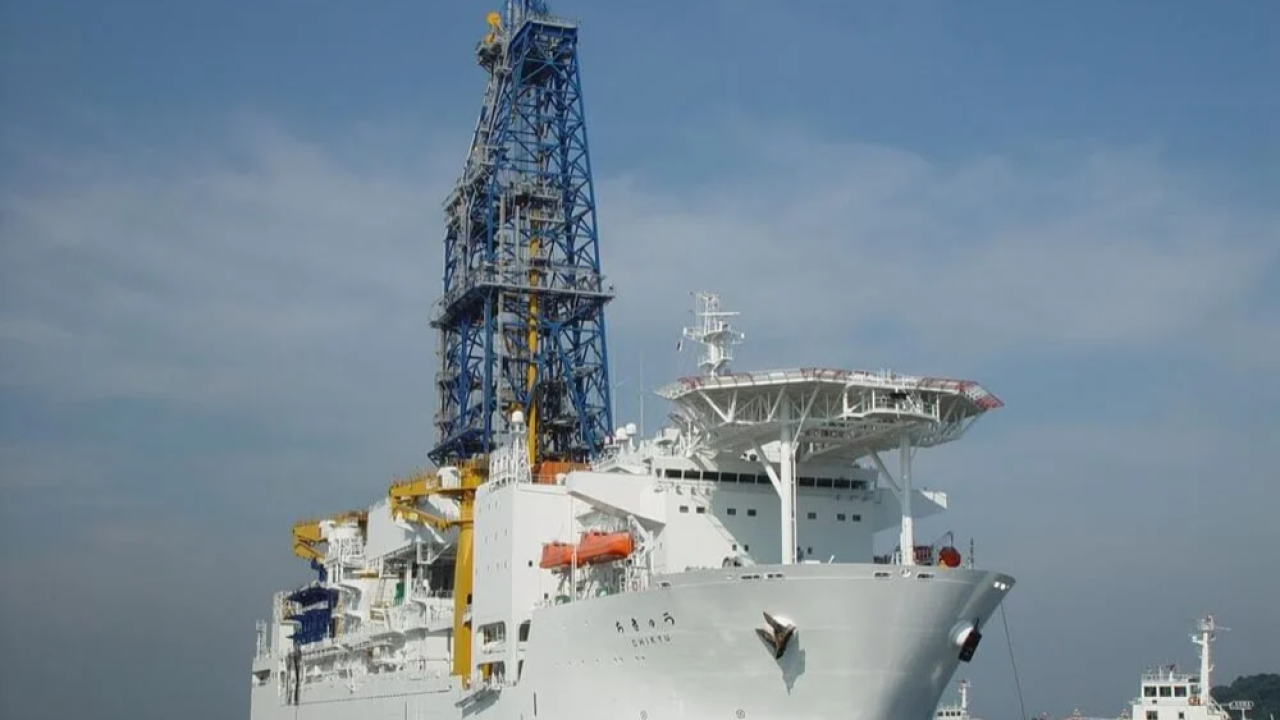
The Japanese research drilling vessel Chikyu set sail on Monday from Shizuoka Port towards the waters off Minamitori Island. It is known that rich deposits of rare earth elements, expressed in millions of tons, are located near the area in question. If these resources can be extracted on a commercial scale and refined in Japan, it may be possible for the country to meet its domestic needs for critical minerals used in high-tech manufacturing, which it currently imports largely from China.
National Security Dimension Comes to the Fore
Shoichii Ishii, an official from the Japanese Cabinet Office, pointed out in a statement to Reuters last year that the project carries strategic goals rather than commercial profit, stating, 'The aim is not for private companies to profit by selling rare earth elements; it is to secure domestic supply to strengthen national security.'
In the context of increasing geopolitical competition in East Asia, it is considered that such resources could provide Japan with greater economic and strategic maneuverability.
Low Radioactivity, High Difficulty
Japanese researchers discovered rare earth ore deposits concentrated in clay sediments in 2013. These sediments contain significant amounts of commercially valuable elements such as yttrium, europium, terbium, and dysprosium. Additionally, the low levels of radioactive compounds in the mud stand out as a factor that reduces the environmental impacts of extraction and processing processes.
However, the yield is quite limited: only about two kilograms (four pounds) of target mineral can be obtained from each ton of extracted mud. This necessitates a large-volume logistics and processing operation.
Special Technology Developed
The primary reason for the long duration before the discovery can be turned into production is that the technology to recover these resources has not been available until now. JAMSTEC has had to develop ultra-deep water drilling systems that can exceed the standard operational depths of 7th generation drilling vessels. Additionally, specially designed drill pipes are used to handle abrasive and viscous mud.
Environmental Concerns on the Agenda
Researchers and environmental organizations warn that deep-sea mining poses serious environmental risks. Extracting material from the seabed can lead to damage or complete destruction of benthic ecosystems. Furthermore, the amount of sediment returned to the water and the location where it is released can have negative effects on marine life.
In the Chikyu operation, mud will be collected using a cylindrical system at the end of the drill pipe and pumped onto the ship for processing. According to Japan Times, due to the thin layer containing rare earth elements, the ship will need to frequently change locations to collect sufficient amounts of material.
Target for Production in 2027
If the trial project is successful, JAMSTEC aims to transition to full-capacity production at the site off Minamitori Island by early 2027. Should the project succeed, Japan could gain a strategic advantage by reducing its dependence on foreign sources for rare earth elements.
Source: www.denizhaber.com


