
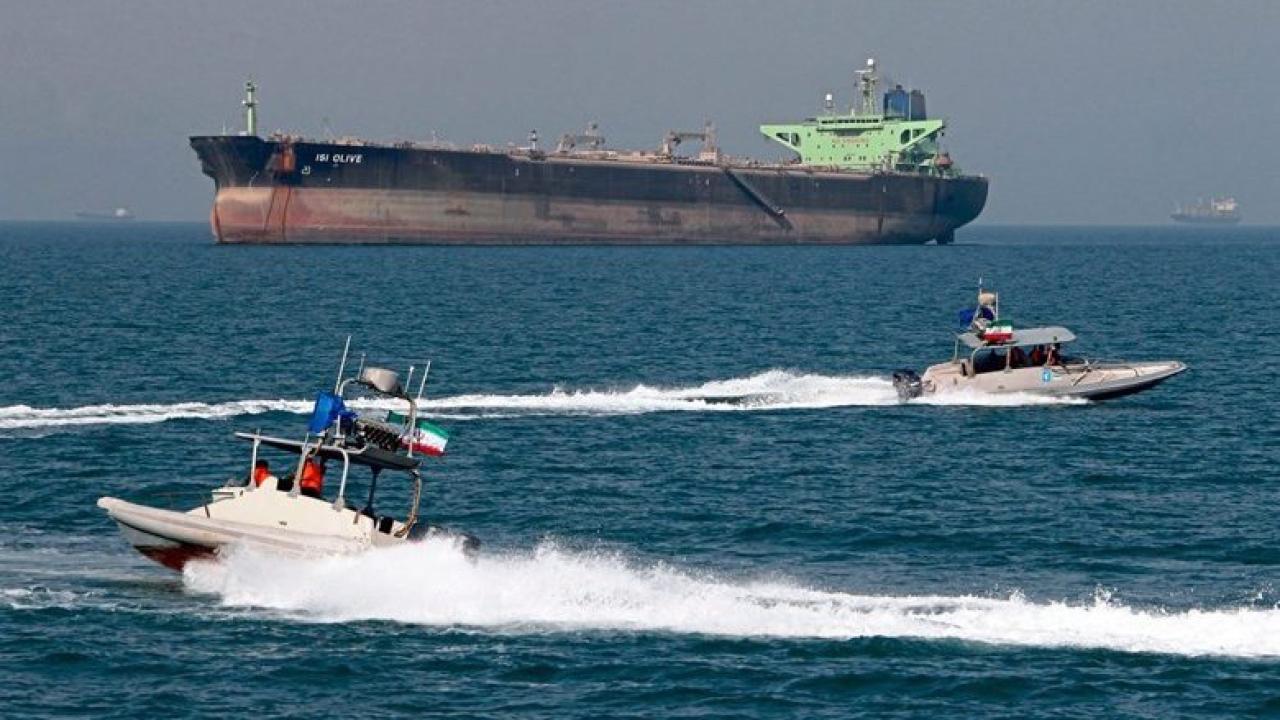
Iran's Parliament has approved transit fees for the Strait of Hormuz, impacting global maritime trade amid escalating regional conflicts.
The Iranian Parliament's approval of an official transit fee and access regime for the Strait of Hormuz has initiated a new turning point in global maritime trade. Concurrently, on the 32nd day of the war between the US/Israel coalition and Iran, an attack on a VLCC anchored off the coast of Dubai has further heightened the risks in the region.
A new era in Hormuz: Fee, restrictions, and sanction risks
According to Iran's state television IRIB, the Iranian Parliament's Security Committee has approved a comprehensive management plan for the Strait of Hormuz that goes beyond wartime measures. The plan includes:
- Implementation of a transit fee in Iranian rials,
- Introduction of new security and environmental regulations,
- A ban on vessels connected to countries imposing sanctions on the US, Israel, and Iran.
Xclusiv Ship Brokers, based in Greece, noted in their recent weekly report that Hormuz has now transformed from merely a 'bottleneck' into a 'controlled corridor' where access is becoming increasingly political and selective.
According to the company, temporary disruptions caused by the war have turned into an effort to institutionalize Iran's impact on one of the most critical lines of global energy trade. While the 'approved transit system' poses a challenge to the norms of free navigation, it is said to signify a transition from crisis to governance.
However, the implications of the rial-based transit fee on diplomatic and commercial fronts are noteworthy. It is assessed that shipowners and charterers who pay the fee may face the risk of violating Western sanctions, while those who do not pay may have their passage blocked.
Attack on VLCC off the coast of Dubai
The repercussions of the crisis are manifesting through increasing attacks. Kuwait Petroleum Company (KPC) announced that a second vessel in its fleet has been targeted.
The Kuwaiti-flagged VLCC Al-Salmi, built in 2011 and with a deadweight tonnage of 319,660, was attacked by Iranian forces around 00:10 local time on March 31 while anchored in the port area of Dubai, approximately 31 nautical miles northwest of the city. The attack resulted in damage to the ship's hull and a fire broke out.
KPC reported that emergency response and firefighting teams were quickly activated and that they are working in coordination with relevant authorities to bring the situation under control. It was stated that all 24 crew members aboard the vessel are safe.
During the attack, the ship reportedly indicated China as its destination via AIS, which has been noted as a common tactic recently employed to avoid being targeted by Iran.
Objects falling near the container ship
Another incident occurred off the coast of Saudi Arabia. It was reported that two unidentified objects fell near the Liberian-flagged container ship Express Rome, owned by the Greek company Danaos, while it was 22 nautical miles away from Ras Tanura port. There were no casualties or injuries reported in the incident.
Source: SeaNews Türkiye


