
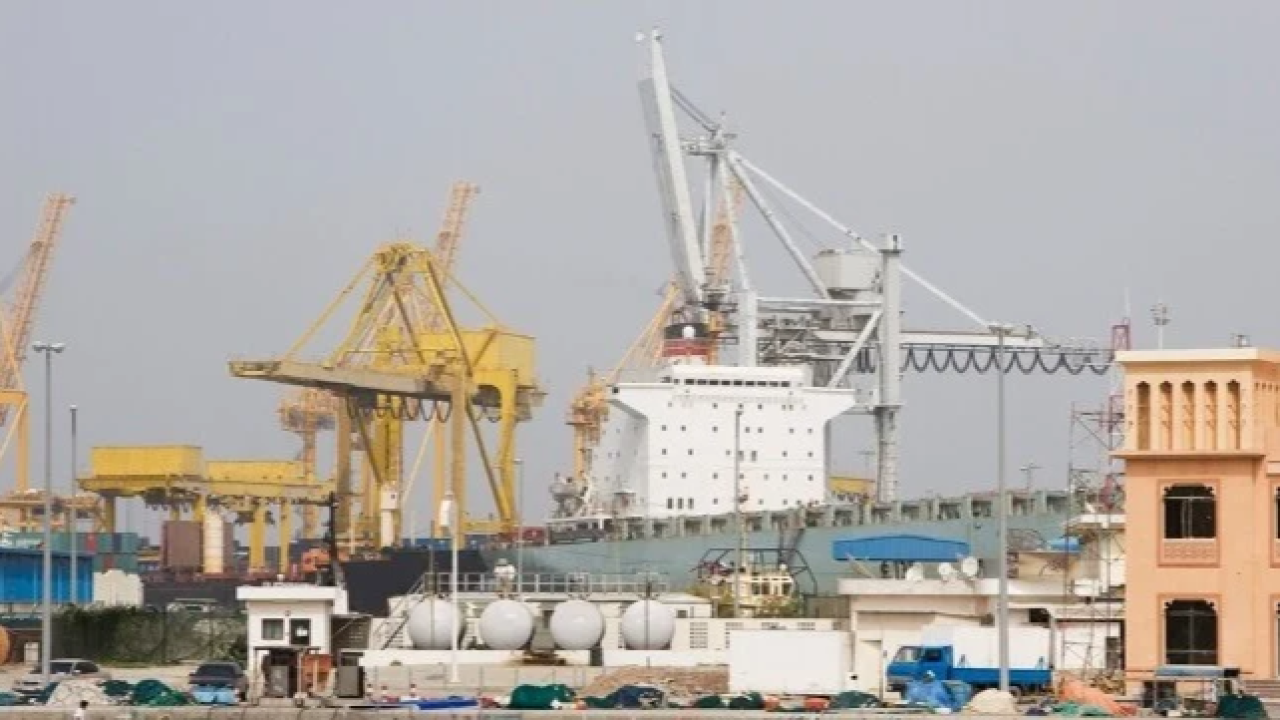
The closure of the Strait of Hormuz impacts global commodity flows, prompting alternative routes for essential food imports to the Gulf region.
The closure of the Strait of Hormuz has drawn the world's attention to the flow of commodities coming from the Arabian Gulf, including 20% of the world's oil and 30% of its fertilizers. More importantly, cargo shipments cannot enter, and the region is heavily dependent on imports for a significant portion of its food supply.
While there are alternative transportation options via road through Saudi Arabia and the United Arab Emirates, capacity is limited, and costs are at high levels.
"We are looking for other routes"
Maersk Chairman Robert Maersk Uggla stated in an interview with Reuters, "Since the Strait of Hormuz is currently closed, we are trying to find other ways to bring cargo to the Gulf." Uggla emphasized that there is an "urgent need" for food imports to the Gulf market, including cold chain deliveries.
China Cosco, the world's fourth-largest container shipping company, announced on Wednesday that it would begin accepting re-bookings for the United Arab Emirates, Saudi Arabia, Bahrain, Qatar, Kuwait, and Iraq, excluding Iran.
However, despite this announcement, it is reported that Cosco does not plan to send ships directly to Gulf ports. According to the map shared by the company, containers will be unloaded in Fujairah and then transported to regional countries by road. This model bears similarities to the road-supported transportation previously implemented by CMA CGM through ports connected to the Gulf of Oman, Arabian Sea, and Red Sea.
Cosco also emphasized that the service in question may vary depending on the security situation in the region.
Intermodal solutions are coming to the forefront
Alternative routes are increasingly relying on intermodal transportation solutions. In this context, an agreement between Gulftainer and the Saudi Arabian port authority Mawani is noteworthy. The agreement envisions the establishment of a feeder line extending from Khor Fakkan to Sharjah and then by sea to Dammam.
This model largely maintains the maritime route from the Indian Ocean to Saudi Arabia while utilizing a short land bridge to bypass the Strait of Hormuz.
The connection in question includes a short land crossing through the United Arab Emirates while largely continuing the transportation from the Indian Ocean to Saudi Arabia by sea, aiming to circumvent the Strait of Hormuz.
Source: SeaNews Türkiye


