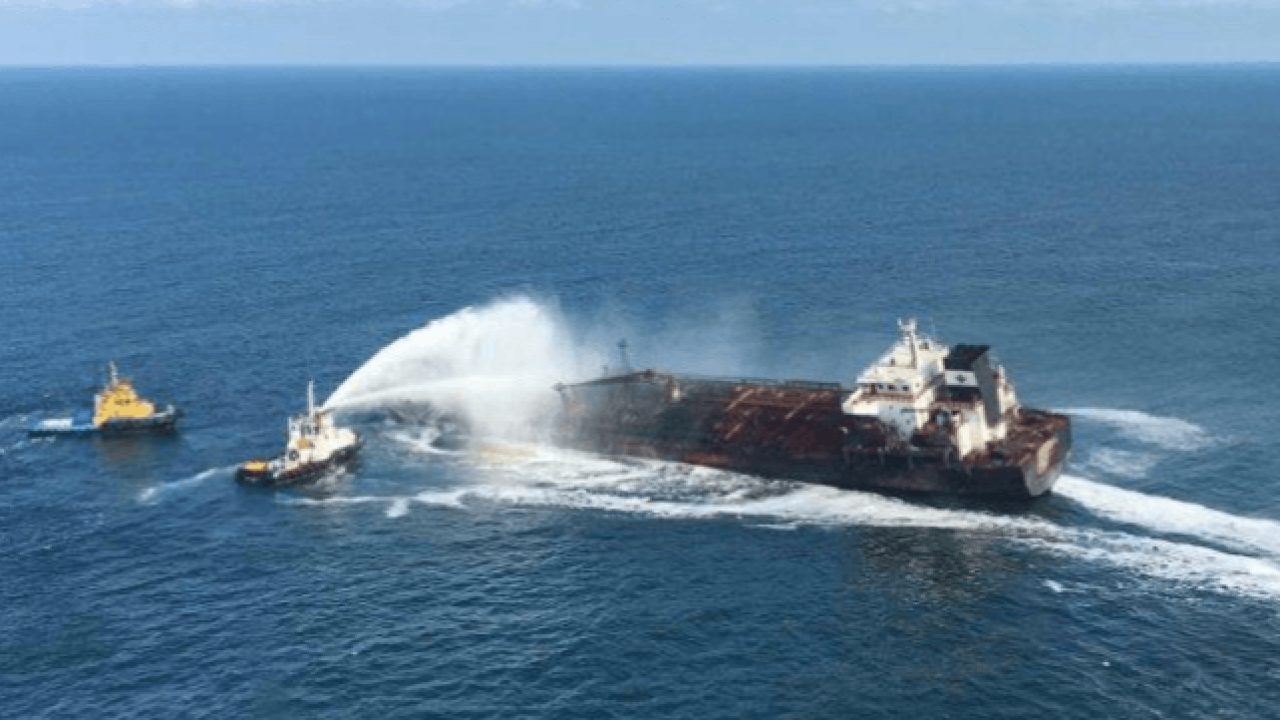
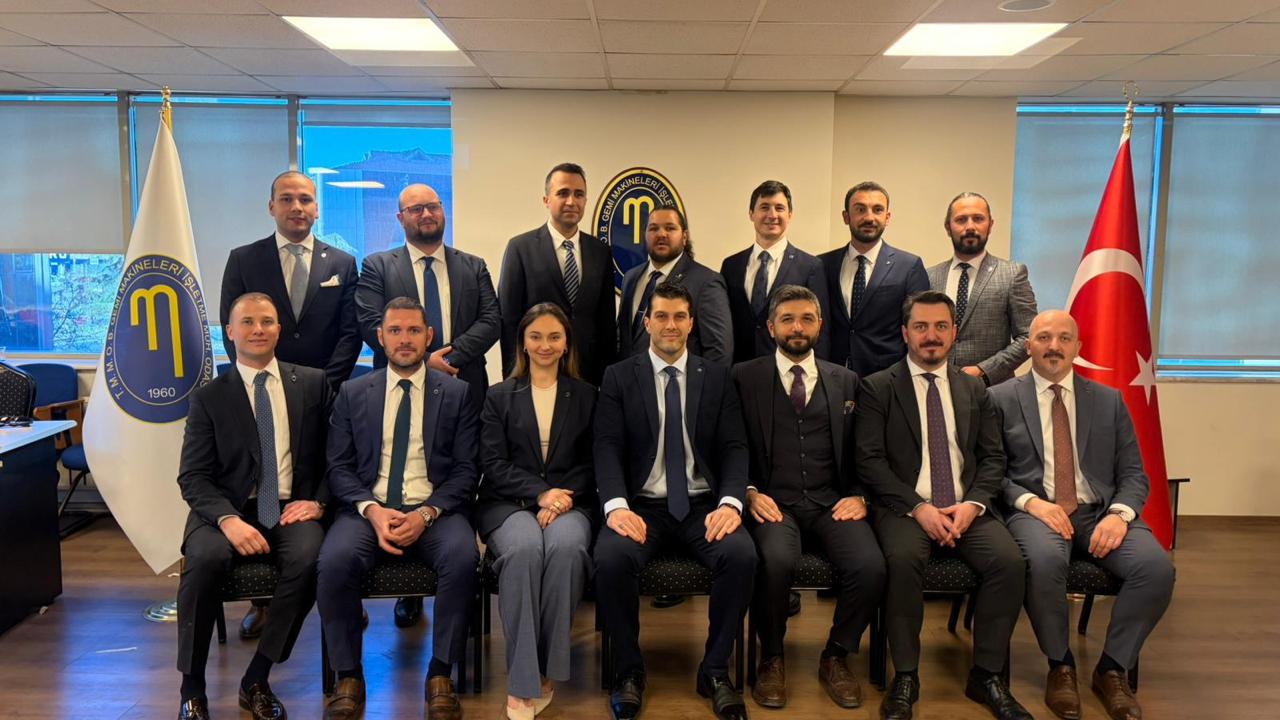
Hasan Ulubinar discusses the importance of proactive damage management at the Marine Insurance Turkey symposium, highlighting key challenges and solutions.
Hasan Ulubinar: 'Damage Management is Not an Administrative Task, It is an Active Project'
Hasan Ulubinar, the Damage Manager of Cambiaso Risso Group, evaluated the reasons for delays in maritime damages in his presentation at the Marine Insurance Turkey symposium held today in Istanbul. According to Ulubinar, the problem does not stem from technical disputes; rather, it arises from deficiencies in communication, coordination, and process management.
Ulubinar stated that the majority of delays in maritime damage processes are not due to technical disputes, but rather result from missing documents, delayed loss mitigation notifications, the absence of active file management on the broker and shipowner sides, and the complexities of multiple jurisdictions.
In his presentation, Ulubinar pointed to Turkey's position in global maritime trade, emphasizing that damage management is still a deeply human-centered process, unlike many other sectors:
'Each party comes to the table with its own language, legal system, and commercial priorities. The biggest problem in this multilayered structure is that damages are treated reactively, like an administrative task. However, each damage file must be managed as an active project from its opening to its closing.'
Turkey's Weight: 54 Ports, 20.5 Million TEU, 84 Thousand Ships
Ulubinar shared concrete data regarding the scale of Turkish shipping in his presentation:
- There are over 54 major commercial ports in Turkey; these are accompanied by dozens of private industrial terminals supporting oil, LNG, steel, chemicals, mining, and container operations.
- Approximately 20.5 million TEU of container traffic is handled annually at Turkish ports.
- Five Turkish ports are among the world's top 100 busiest container ports.
- More than 84,000 ships pass through the Turkish Straits each year.
Ulubinar emphasized that this scale has transformed Turkey from merely a transit country into a central component of global damage management.
'The Problem is Not the Disputed Damage, But the Payment Going Through Sanctions'
One of the most critical observations highlighted by Ulubinar was the indirect effect of sanction regimes on damage payments. He noted that delays of tankers in the Straits often do not lead to a damage claim, but their operational impact is felt immediately:
'In a sanctions environment, payment must pass through sanction compliance checks, banking audits, and reinsurance processes. Even if the damage is not disputed, the process is prolonged. Local authorities prioritize safety at sea and the protection of life and property over damage assessment or evidence collection. This differentiation creates an additional coordination burden in international files.'
Volatility of the Turkish Lira and Three Legal Systems Simultaneously
Ulubinar expressed that the volatility of the Turkish lira has made damage estimates two-layered — first, a preliminary estimate, followed by a 'surprise bill.' He stated that repair costs change rapidly, proposals become outdated quickly, and negotiations between insurers and insured parties have thus become much more complex. Regarding jurisdictional complexity, he noted that a single incident often activates three different legal systems simultaneously: Turkish law, English law, and international treaties.
'Negotiation is Not a Moment, But a Natural Part of the Process'
Ulubinar's message, particularly to the international side, was related to the Turkish damage negotiation culture:
'In Turkey, negotiation is not a moment, but a natural part of the process. It is common for parties to revise their positions and seek a middle ground before discovering a compromise. The international side often interprets this as hesitation or a lack of progress. However, the path to a solution actually goes through this negotiation discipline.'
Proactive Damage Management: Three Fundamental Principles
In the final section of his presentation, Ulubinar proposed concrete solutions:
Early intervention. 'Do not wait for the damage notification. A structured incident summary prepared in the early stages of the event can be even more valuable than a comprehensive expert report in the subsequent process.'
Continuity of communication. The fundamental parameters agreed upon at the beginning of the damage — shared database, key contact points, reporting format — should be preserved even if personnel change. Ulubinar summarized this as follows: 'This is not only about building trust but is also a critical discipline for maintaining the momentum created at the beginning of the file.'
Compliance thinking from day one. Sanctions, banking, and consulting processes should be integrated into the file from the very beginning of the damage. Ulubinar emphasized this point:
'A well-prepared file proves the damage; however, a file that has gone through the compliance process proves its insurability. This is the exact difference between a policy damage and an insurable damage.'
'Damage Management Ultimately Relates to Trust'
Ulubinar concluded his presentation by reminding that approximately 90% of global trade is transported by sea, thus maritime damage management is not just a sector issue but part of the backbone of the global economy:
'Damage management ultimately concerns not the processes at the final stage, but trust. And trust only gains its true value when tested at the moment of damage.'
Source: SeaNews Türkiye