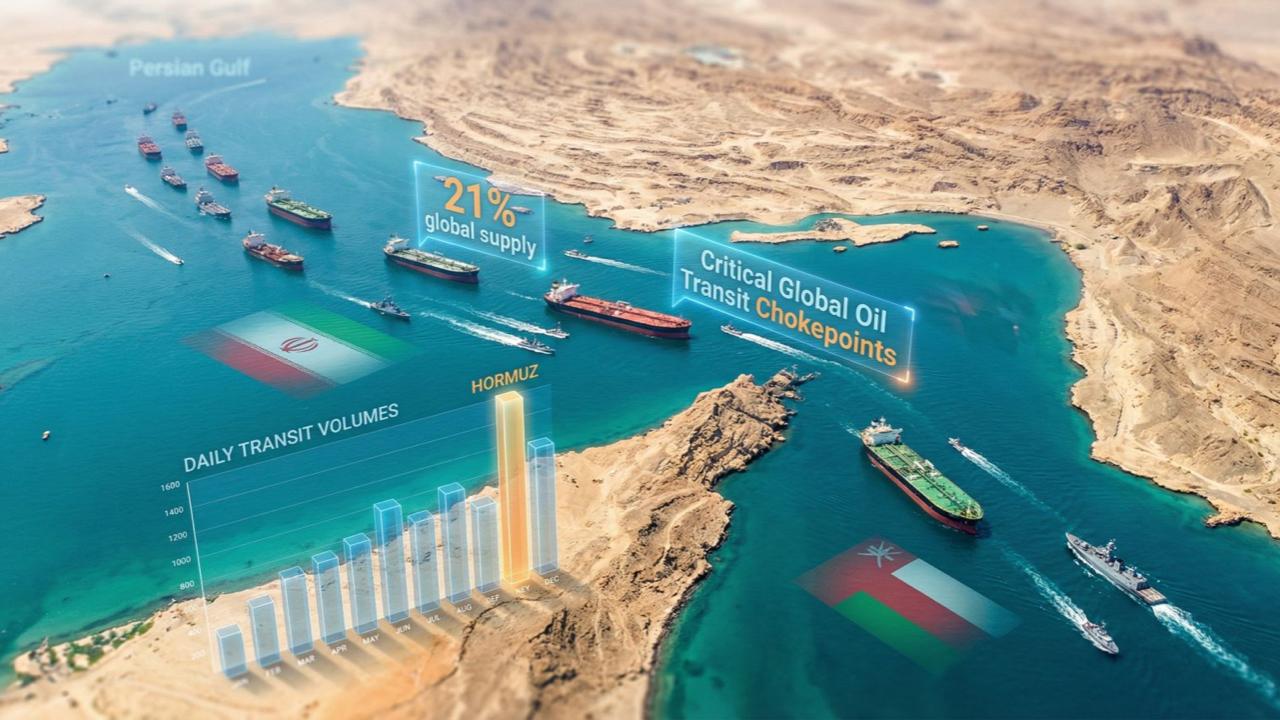
With the Strait of Hormuz closed for two months, Gulf alternatives fall short, impacting global oil and gas supply chains significantly.
Two months into the Iran war, the Strait of Hormuz remains largely closed, with vessel traffic at a fraction of pre-war levels, reports Hyderabad's Hans of India.
The strait normally carries 20 million barrels of crude and oil products daily, along with a fifth of global LNG exports, making it one of the world's most critical trade chokepoints, reported the Hans of Hyderabad.
Gulf states have long planned alternatives to Hormuz, but current bypasses provide only 3.5 million to 5.5 million barrels per day of crude capacity, far below demand. Saudi Arabia's East-West Pipeline, expanded to a seven million barrel ceiling in 2019, has faced limits at Yanbu's Red Sea terminals and was hit by an Iranian drone strike in April that temporarily cut 700,000 barrels per day.
Oil bound for Europe must also cross Egypt via the Sumed pipeline, which has surged 150 percent since the war began but remains constrained at 2.5 million barrels per day. The United Arab Emirates' Adcop line, with capacity just under two million barrels per day, offers direct access to the Indian Ocean but has been repeatedly targeted by Iranian drones at Fujairah.
Iraq's exports have been crippled, with 3.4 million barrels per day once flowing through Basra and Hormuz. A reopened northern pipeline to Ceyhan in Turkey now carries only 250,000 barrels daily. Kuwait, with no pipeline alternative, declared force majeure in March and extended it in April, stating it cannot meet contracts even if Hormuz reopens.
Qatar's vulnerability lies in gas. Its Ras Laffan terminal handles 77 million tonnes of LNG annually, about 19 percent of global trade, all of which must pass through Hormuz. Iran's own bypass, a 1,000-kilometre pipeline from Goreh to Jask, was designed for one million barrels daily but has delivered only minimal volumes due to sanctions and incomplete infrastructure.
Analysts note that replicating Hormuz's capacity through pipelines would cost hundreds of billions of US dollars and take a decade to build, while new terminals would remain vulnerable to drone strikes.