The Dongguan Port Shatian Port Area Phase IV Project hits a major milestone with the arrival of automated cranes, enhancing operational efficiency.
The Dongguan Port Shatian Port Area Phase IV Project - a key port development within the Guangdong-Hong Kong-Macao Greater Bay Area - has reached a critical milestone. Automated rail-mounted gantry cranes (RMGs) manufactured by Shanghai Zhenhua Heavy Industries (ZPMC) have arrived at the project terminal, marking the formal transition of the project into the intensive phase of large-scale core equipment installation and commissioning, and laying the groundwork for on-schedule completion and commencement of operations.
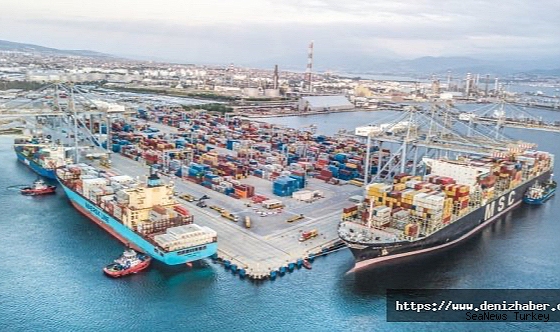
The Dongguan Port Shatian Port Area Phase IV Project carries a total investment of approximately RMB 4.63 billion and is constructed to accommodate 100,000-tonne-class container vessels, with a designed annual throughput capacity of 1.8 million TEUs. The project represents the largest and most capable deepwater container terminal in Dongguan, as well as the city's first fully automated container terminal. Upon completion, the project is expected to significantly enhance the specialised and large-scale deepwater container throughput capacity of Dongguan Port, while further developing multimodal transport systems encompassing river-sea combined transport and road-water combined transport.
The automated RMGs delivered to the terminal carry a rated lifting capacity of 41 tonnes under spreader, a rail gauge of 34 metres, and a lifting height of 21.5 metres. Equipped with an advanced automated control system, the cranes are characterised by a high degree of intelligent functionality, stable and reliable operation, and strong automation compatibility. These equipment specifications align closely with the project's strategic positioning as a smart terminal, unmanned yard, and high-efficiency operation hub, providing the core hardware support necessary to elevate the port area's automation, standardisation, and green operation capabilities. For freight forwarders and export enterprises, the deployment of automated equipment is expected to improve terminal operational efficiency and yard turnover capacity, though actual performance outcomes will be assessed in conjunction with subsequent integrated commissioning and trial operations.
The project construction team will strictly implement safety production and quality control requirements, systematically coordinating the sequential stages of equipment unloading, positioning, precision installation, system integration, and specialised acceptance inspection, advancing the phased arrival and orderly commissioning of subsequent equipment to the highest standards of quality and efficiency. Upon the full deployment of the complete suite of automated loading and unloading equipment, Dongguan Port is positioned to achieve a substantial uplift in its comprehensive service capabilities and hub-level influence, reinforcing its development as a short-sea hub port and deep-sea feeder port, and continuing to drive the upgrading and efficiency gains of the shipping and logistics industry across the Guangdong-Hong Kong-Macao Greater Bay Area. As equipment deliveries continue, the project moves progressively closer to its formal operational launch - a timeline that warrants sustained attention in the period ahead.