Tianjin Port launches a direct shipping route to Southeast Asia, enhancing trade efficiency for exporters and importers alike.
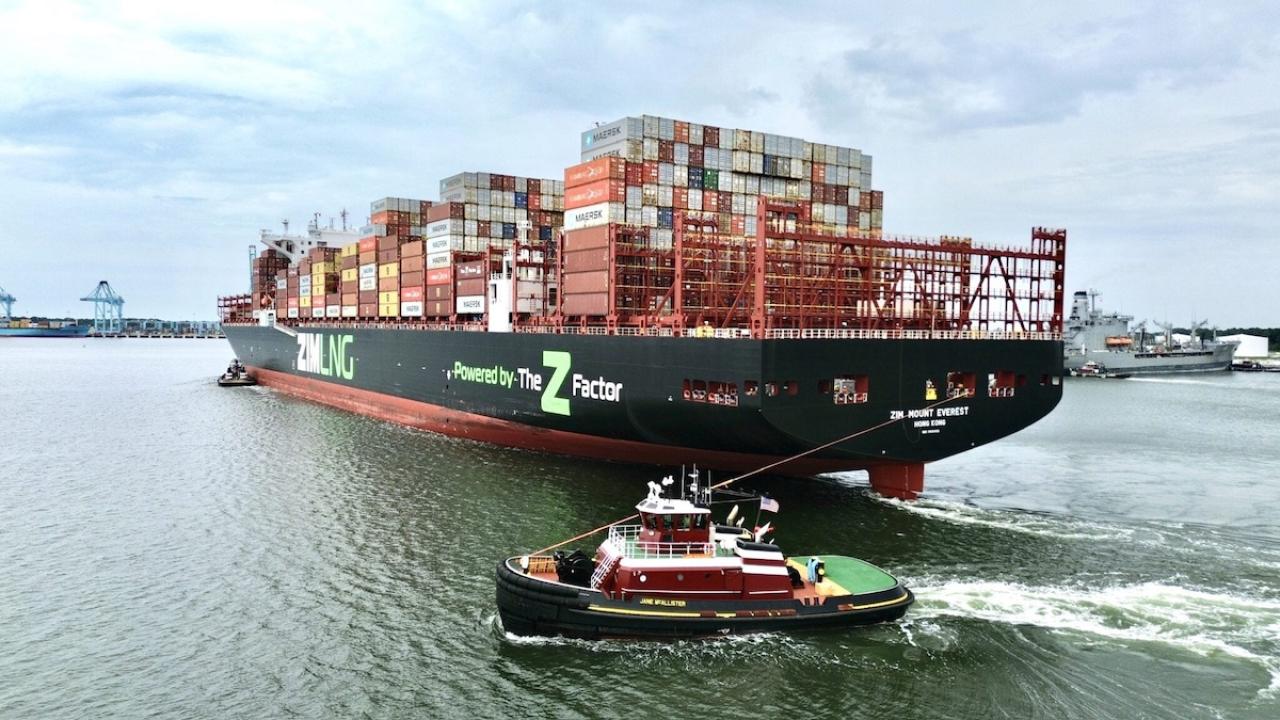
Under the supervision of Tianjin Xingang Customs, the vessel 'MYD ZHANGZHOU' recently departed Tianjin Port fully laden with furniture, building materials, and light industrial goods bound for Malaysia. This sailing marks the inauguration of a new direct shipping route from Tianjin to Southeast Asia, establishing an efficient, stable, and cost-effective maritime corridor linking China to the region in direct service of foreign trade enterprises across the Beijing-Tianjin-Hebei area and beyond.
The route is jointly operated by Sinokor Merchant Marine, Pacific International Lines, and Plimitless Shipping, with four container vessels deployed on a weekly rotation. Calls are made in sequence at Tianjin, Qingdao, Xiamen, Singapore, Port Klang, Penang, Nansha, and back to Tianjin, forming a closed-loop circuit that connects North China, South China, and the Singapore-Malaysia corridor. Tianjin serves as the originating port; Qingdao and Xiamen feed cargo from East China into the network before the vessels proceed through Singapore, Port Klang, and Penang to serve the Singapore-Malaysia market, with the return leg via Nansha completing the circuit.
Previously, cargo moving from Tianjin to Singapore and Malaysia was predominantly routed via Busan, South Korea, with the complexity of transshipment operations and unreliable scheduling driving up logistics and warehousing costs for shippers. The new direct service delivers a measurable improvement in transit performance, reducing sailing time by five to ten days and positioning the route among the fastest maritime options currently available from North China to Singapore and Malaysia. For freight forwarders, the elimination of a transshipment call reduces one additional handling cycle, lowering the risk of cargo damage and schedule delays inherent in relay operations.
The route connects three major hub ports - Singapore, Port Klang, and Penang - enabling multi-port coordination and rapid cargo distribution. Leveraging the established feeder networks linking Singapore and Malaysia to India and Pakistan, the service extends its logistical reach further across the region, strengthening cargo accessibility throughout Southeast Asia as well as the Indian Subcontinent. The multi-port call structure also allows cargo to be discharged at the port closest to its final destination, reducing the need for additional inland transfer.
Liu Yumin, Chief Representative of the Tianjin Representative Office of Sinokor Merchant Marine Co., Ltd. of South Korea, noted that the route operates on a stable sailing schedule designed to serve the trade requirements of both China and Southeast Asia with precision. Northbound exports from the Beijing-Tianjin-Hebei region - including furniture, building materials, light industrial goods, and chemical products - can be delivered directly and efficiently, reducing logistics costs for exporters. The route simultaneously supports the import of high-quality Southeast Asian commodities such as rubber, woollen goods, and bicycle components, creating a balanced bidirectional cargo base. Schedules, capacity availability, and freight rate policies remain subject to formal announcements from the operating carriers and confirmed booking information.