COSCO Shipping Ports achieved 11.04 million TEUs in September, marking a 15.7% year-on-year increase and strong growth across global terminals.
COSCO Shipping Ports handled 11.04 million twenty-foot equivalent units (TEUs) across its global terminal portfolio in September 2026, up 15.7% from the same month last year. The result extends a year of steady volume growth for the terminal operator. Overseas terminals and several major Chinese port clusters posted double-digit monthly gains.
September's performance lifted the company's total container throughput for January to September to 93.91 million TEUs, up 8.5% year on year. Third-quarter throughput reached 32.60 million TEUs, up 9.2% year on year.
Quarterly growth running ahead of the year-to-date pace shows that momentum across the portfolio built through the third quarter rather than leveling off. September's 15.7% gain was well above both the quarterly and nine-month rates, pointing to a strong close to the period.
The company's overseas terminals, excluding Container Terminal Tollerort, handled 3.56 million TEUs in September, up 20.7% from September 2025. Their cumulative throughput for the first nine months reached 31.48 million TEUs, up 18.9% year on year. Overseas operations now account for roughly one-third of the company's total nine-month volume.
Three key international gateways highlighted the breadth of this growth:
* Piraeus Container Terminal in Greece handled 366,600 TEUs in September, up 15.3% year on year. Its nine-month throughput rose 1.7% to approximately 3.09 million TEUs.
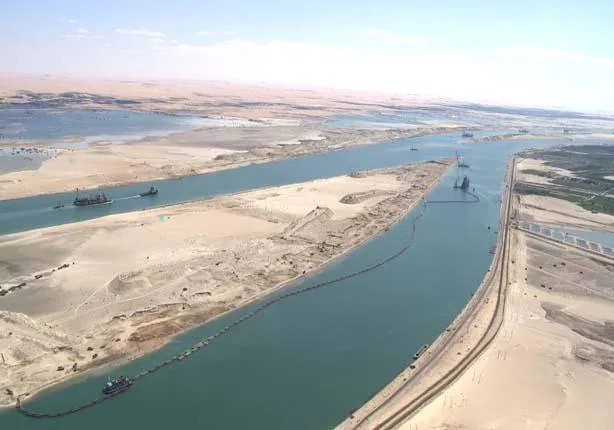
* Suez Canal Container Terminal in Egypt processed 540,300 TEUs during the month, a growth of 4%. Its cumulative volume reached 4.70 million TEUs, up 17.3%.
* CSP Chancay Terminal in Peru handled 46,700 TEUs in September, an increase of 25% on the same month last year. Throughput for the first nine months reached 341,400 TEUs, up 47.3%.
These terminals serve distinct trade corridors: Southern Europe, the Suez Canal route linking Asia and Europe, and the west coast of South America. Their combined performance shows that the company's international growth is spread across multiple regions rather than resting on a single market. For shippers and logistics providers balancing cost, routing, and reliability, broader gateway capacity across several corridors offers more options when planning global supply chains.
Within China, most regional portfolios delivered strong September gains, though results varied by region.
* Pearl River Delta: 2.77 million TEUs in September, up 22.6% year on year. Nine-month throughput increased 6.9% to 23.88 million TEUs.
* Southwest Coast: 1.05 million TEUs in September, annual growth of 24.9%. Cumulative volume remained broadly stable at 7.24 million TEUs.
* Southeast Coast: 556,100 TEUs in September, an increase of 23.6%.
* Yangtze River Delta: 1.55 million TEUs in September, up 6.8%.
* Bohai Rim: 1.55 million TEUs in September, a decline of 2.4%. Its nine-month volume remained 3.9% higher at 14.06 million TEUs.
Together, the company's Chinese regional portfolios handled close to 7.48 million TEUs in September. The Pearl River Delta remained the largest contributor by volume. The Southwest Coast and Southeast Coast recorded the fastest monthly growth rates. The Bohai Rim was the only region to post a monthly decline, though its year-to-date figures remained positive.
The September results reinforce a pattern of expanding throughput across COSCO Shipping Ports' global network. Overseas terminals are growing faster than the portfolio average, and most Chinese port clusters posted strong monthly gains. For cargo owners, freight forwarders, and importers, the figures provide a data-driven view of where container capacity is being used most intensively. That insight can inform routing decisions, carrier selection, and contingency planning heading into the final quarter of 2026.