
Charterers eye 2027 capacity as New Contex Index shows gains despite geopolitical risks and port congestion.
VHBS analysts report that charterers have begun evaluating 2027 capacity arrangements in order to secure appropriate tonnage well in advance, even as the New Contex Index records moderate gains.
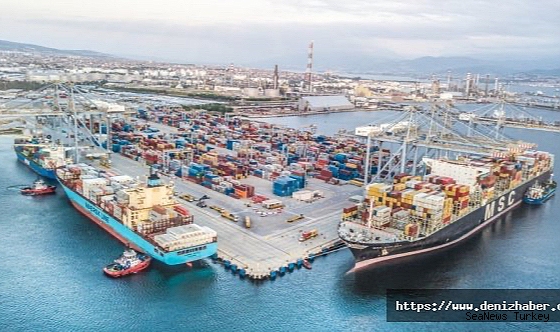
The global container shipping market continues to operate under the dual shadow of Strait of Hormuz disruption and Red Sea security risks, with only a limited number of vessels having resumed transit. Port congestion remains at an exceptionally elevated level, with approximately four million TEUs of capacity currently locked up globally - a figure that already surpasses the scale recorded during the pandemic period. The prevailing assessment is that the container shipping charter market will sustain its positive trajectory, underpinned by limited available tonnage, robust demand, persistent geopolitical uncertainty, and ongoing operational inefficiency.
On 25 August, the 1,740-TEU feeder vessel Jonathan P, built in 2006, was fixed for a two-year charter extension at a daily rate of $26,000 - representing an increase of $1,000 per day over its previous fixture - with delivery anticipated following a scheduled drydock in late November 2026. Euroseas Chairman and CEO Aristides Pittas characterised the container vessel charter market as remaining active despite the typical summer slowdown and continued geopolitical uncertainty, citing strong operator demand, limited available tonnage, and firm rates and durations. Independent container shipowner MPCC Co-CEO Constantin Baack further noted that conventional supply-and-demand analysis no longer adequately captures current market conditions, pointing to Maersk's decision to recharter seven feeder vessels nine months ahead of schedule as evidence of further tightening in available container vessel supply.
US East Coast Spot Rates Breach $10,000
China's export container shipping market has maintained broad stability, with rate increases across the majority of trade lanes driving the composite index higher. As of 28 August, the Shanghai Export Container Freight Index stood at 3,509.53 points, representing a week-on-week increase of 2.9%.
On the Europe trade lane, transport demand has remained relatively stable, with spot market rates recording a modest decline. On 28 August, the market rate from Shanghai to European main ports - inclusive of ocean freight and surcharges - stood at $2,716 per TEU, a decrease of 4.4% from the previous period. Rates to Mediterranean main ports reached $3,557 per TEU, declining 5.6%.
North American trade lanes demonstrated stable demand with firm supply-and-demand fundamentals. The US East Coast corridor continued to experience the effects of declining Panama Canal water levels, with reduced vessel efficiency and tighter capacity sustaining upward rate pressure. On 28 August, the Shanghai to US West Coast rate rose 2.6% to $6,940 per FEU, while the Shanghai to US East Coast rate advanced 3.6% to $10,046 per FEU - widening the differential between the two corridors to $3,106.
On the Persian Gulf trade lane, conditions in the Middle East have stabilised to a degree, though the resumption of direct services remains distant. The rate index continued its upward movement this week, with the Shanghai to Persian Gulf main port rate reaching $6,139 per TEU on 28 August, an increase of 7.1% over the prior period.
As of 27 August, the Drewry World Container Index stood at $4,473 per FEU, a week-on-week decline of 1%, weighed down primarily by rate softness on the Asia-Europe and US East Coast trade lanes. The Shanghai to Los Angeles spot rate held steady at $6,818 per FEU; the Shanghai to New York rate declined 2% to $9,333 per FEU; the Shanghai to Rotterdam rate fell 3% to $4,287 per FEU; and the Shanghai to Genoa rate eased 2% to $4,866 per FEU.
Drewry notes that the east-west container freight market continues to navigate a complex combination of geopolitical and operational headwinds. Uncertainty persists around the Strait of Hormuz, while select carriers have begun cautiously resuming Red Sea and Suez Canal transits as security assessments improve. Asian port congestion and low Rhine water levels continue to disrupt cargo flows, and the Panama Canal is set to reduce its transit capacity further from September onwards against a backdrop of ongoing water resource constraints. As carriers adjust capacity through blank sailings, Drewry advises shippers to book early and allow additional lead time in their delivery schedules to mitigate the risk of transit delays.
Peter Sand observes that Mediterranean Shipping Company has recently reintroduced its premium 'Diamond Quote' service offering - a product that carries particular appeal in heated market conditions where customers are willing to pay a premium to secure cargo space. He notes that, since the pandemic, the market position carriers currently occupy has not been seen before - one that is, by any measure, exceptionally favourable to the lines.