
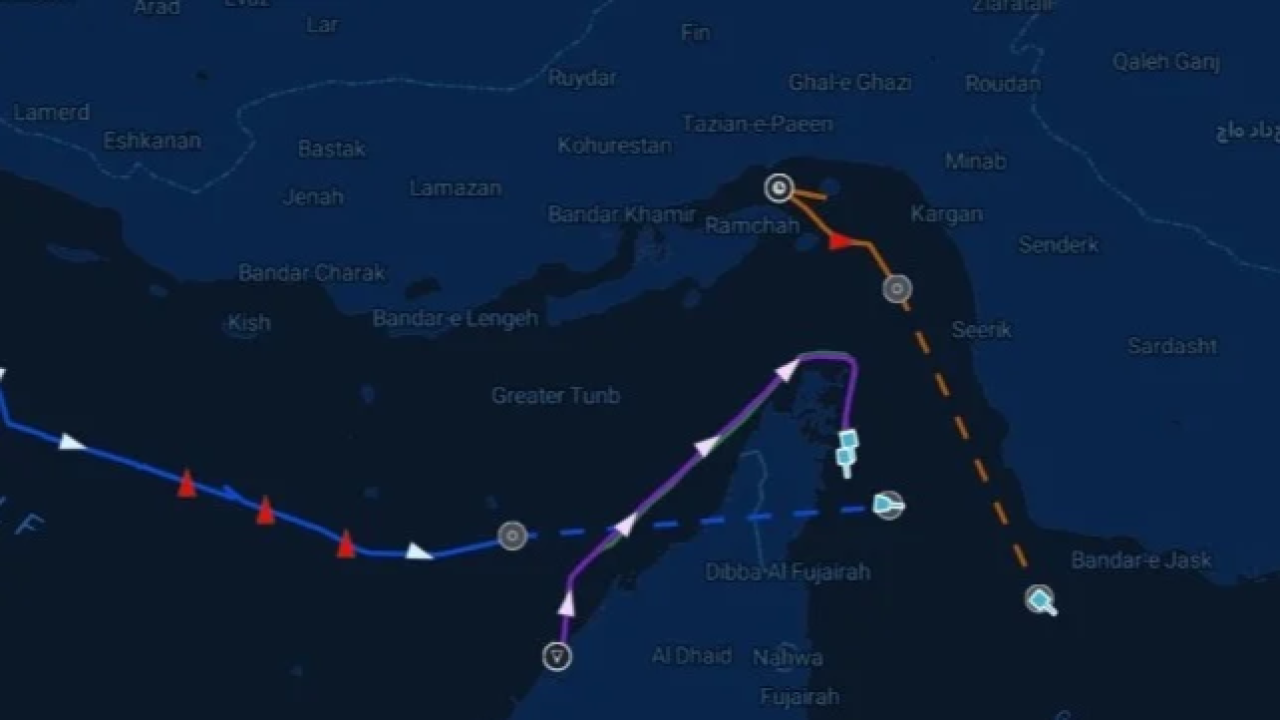
Ship traffic in the Strait of Hormuz has sharply decreased following Iran's threat to close the vital waterway, impacting global shipping routes.
According to an analysis by maritime data company Windward, there has been a significant decrease in ship traffic in the region following Iran's decision to close the Strait of Hormuz again. The company reported that on June 21, a total of 12 transits were detected, mostly consisting of Iranian-flagged and sanctioned vessels. Meanwhile, it was noted that activities in the southern U.S.-controlled transit corridor have largely come to a halt.
This figure indicates a sharp decline compared to the 21 vessels recorded on Saturday before Iran announced it would close the strait again. MarineTraffic data shows that some vessels altered their routes and turned back during transit following the closure news.
Windward stated that the recovery process, which began on June 18, came to a halt within 24 hours after Iran's announcement, expressing that the current traffic profile 'resembles the final stages of a blockade period rather than an open sea passage.'
On the other hand, U.S. Central Command (CENTCOM) announced on Saturday that commercial ship traffic in the Strait of Hormuz has increased, with 55 commercial vessels transporting over 17 million barrels of oil and various cargoes to global markets. However, the recent observed ship movements indicate that the situation on the ground does not fully align with the picture presented by CENTCOM.
On the diplomatic front, Iranian and U.S. delegations have belatedly begun negotiations in Switzerland. The Iranian side has linked the course of the talks to developments in Lebanon, while regional tensions remain high due to ongoing Israeli attacks on Hezbollah.
Iran's semi-official Tasnim News Agency reported that if the provision in the first article of the Islamabad Memorandum, which calls for 'the permanent cessation of hostilities on all fronts,' is not implemented, Tehran will suspend negotiations with Washington on other issues.
These developments come as the U.S. administration increases pressure on Israel, while Israeli Prime Minister Benjamin Netanyahu's government emphasizes its inclination to continue military operations in Lebanon.
U.S. President Donald Trump, in a statement last week, criticized Israel in rare terms, noting that the ongoing conflicts with Hezbollah have lasted a long time and civilian casualties have increased.
While it has been reported that the U.S.-Iran talks in Switzerland have started off difficultly, Iranian news agency IRNA announced that the first round of direct contacts has been completed and that the negotiations will continue in a different venue with the mediation of Pakistan and Qatar.
Source: SeaNews Türkiye


