
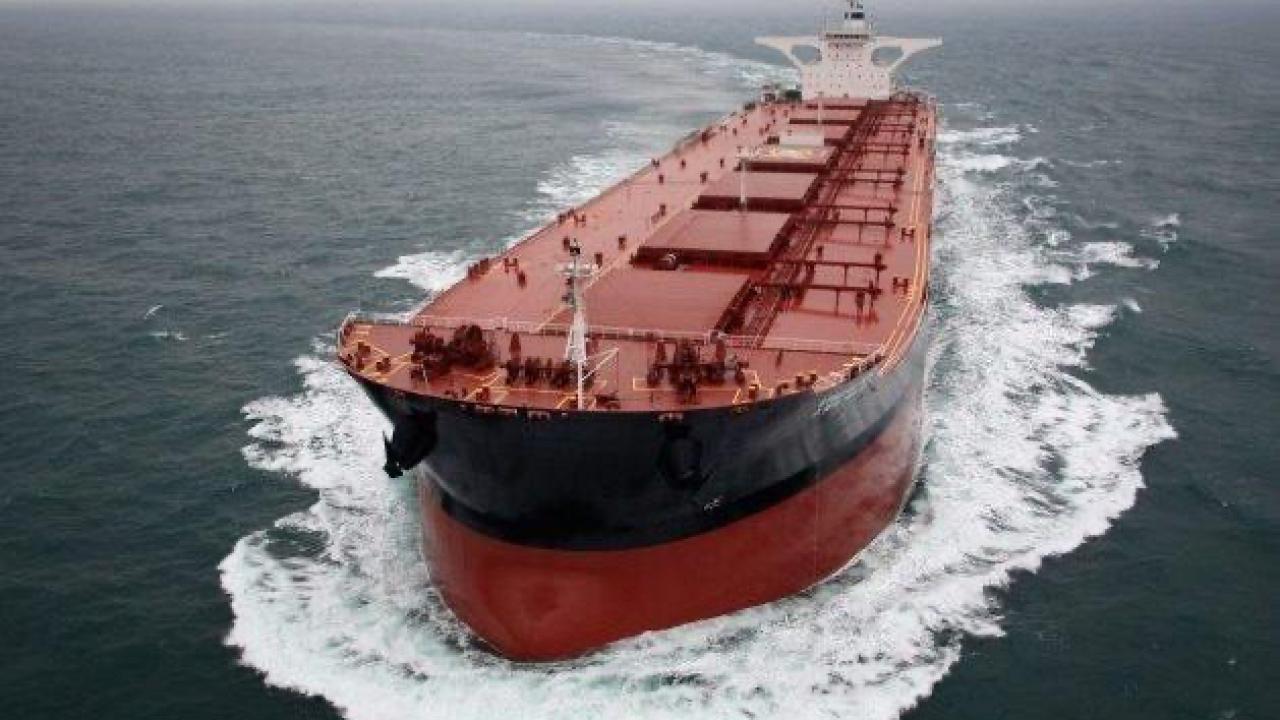
ABS, Polaris Shipping, HHI, and AVIKUS unite to develop an autonomous navigation system for temporary unmanned bridge operations on VLOCs.
As work on autonomous navigation technologies in the maritime sector accelerates, ABS, Polaris Shipping, HD Hyundai Heavy Industries (HHI), and autonomous navigation solutions developer AVIKUS have signed a four-party Concept Study Agreement aimed at bringing the 'Conditional Unmanned Bridge' concept to life.
Under the agreement, the parties will jointly develop an autonomous navigation concept that will enable the temporary unmanned operation of the bridge on one of the Very Large Ore Carriers (VLOC) in the Polaris Shipping fleet, which has a capacity of 325,000 DWT, provided certain conditions are met during open sea voyages.
Complete Unmanned Operation is Not the Goal
The system to be developed does not foresee the vessel operating unmanned throughout its entire journey. The concept involves a phased approach to autonomous navigation that relies on temporarily leaving the bridge unmanned during low-risk operations, such as open sea transits.
It was noted that the model is expected to be compliant with the ongoing development of the IMO Maritime Autonomous Surface Ships (MASS) Code and is considered the most realistic autonomous maritime solution that can be applied in the short term.
Safety Analysis to be Conducted by ABS
Patrick Ryan, ABS Senior Vice President and Chief Technology Officer, stated that the greatest challenge of the concept arises not from a single system, but from the interactions between autonomous navigation, ship design, and unmanned bridge operations.
Ryan expressed that ABS would conduct a structured safety review through hazard identification processes, functional safety analyses, and compliance assessments with the IMO MASS Code.
Real Operational Data to be Used
Polaris Shipping Operations Director DoHoon Kim emphasized that the high open sea sailing rate makes the 325,000 DWT VLOCs a suitable platform for the unmanned bridge concept.
Kim stated that the boundaries between human and automated operations would be quantitatively defined using data obtained from real crew operations, including human intervention times.
Changes in Ship Design to be Examined
HHI Senior Vice President Sangsik Yoon noted that the implementation of the unmanned bridge system requires an integrated assessment of all systems on the vessel, adding that the study would contribute to determining a new ship design approach suitable for autonomous navigation concepts.
AVIKUS Co-CEO Jaeho Kang also mentioned that the first autonomous maritime application expected to enter the market under the IMO MASS Code is anticipated to be the unmanned bridge concept. Kang stated that the operational concepts and technical requirements obtained from the study would guide the development of the company's autonomous navigation systems.
Technical Publication to be Prepared
According to the agreement, Polaris Shipping will provide operational data, AVIKUS will define the concept and technical requirements of the autonomous navigation system, HHI will assess necessary changes in ship design, and ABS will conduct independent reviews from safety and regulatory perspectives.
The parties will work together in the fields of safety, design, and operations to address identified deficiencies and further develop the concept. The results obtained will be compiled into a technical publication, and the emerging technology requirements will be integrated into the parties' future autonomous navigation and ship design roadmaps.
Through this conceptual study, the four companies aim to establish the technical and operational infrastructure for the 'unmanned bridge' concept, which is expected to be one of the first autonomous maritime applications to be commercially launched.
Source: SeaNews Türkiye


