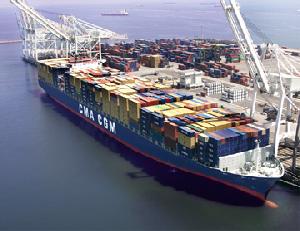
Ship design evolves with the needs of ship owners and operators, who themselves react to a range of external pressures and circumstances. Container ships are no different from any other type in this respect, but they have in recent times been greatly affected by changing economic circumstances and environmental pressures. The latest generation of container ships reflect these changes.
Ship design evolves with the needs of ship owners and operators, who themselves react to a range of external pressures and circumstances. Container ships are no different from any other type in this respect, but they have in recent times been greatly affected by changing economic circumstances and environmental pressures. The latest generation of container ships reflect these changes.
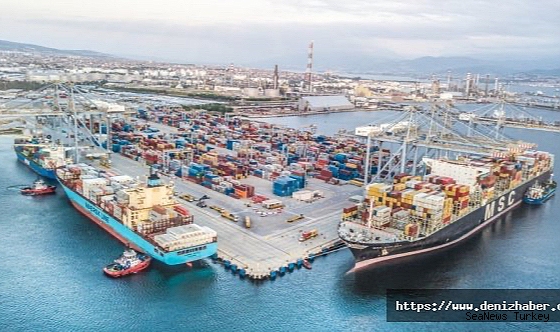
With the economic slump in 2008, a rapid decline in demand for container ships caused a huge reappraisal of the operating pattern of these ships, which had hitherto been designed for fast passages. Cost saving was essential for survival, and most container ship operators drastically reduced their speed, which had the effect of hugely reducing operating costs through the reduction in fuel consumption. This also had a dramatic effect upon the emissions and, at a stroke, provided owners with an environmental rationale to “sell” slow steaming to their customers, who may not have otherwise have been convinced that they should see their goods travel far slower than before! It is now suggested, largely for environmental reasons, that slow steaming should become the norm, so that the latest generations of containership to be designed and even ordered will have a smaller, less powerful, engine and a lower service speed. The concerns of shippers at their longer passage times will be addressed by offering greater frequency, with perhaps one or two extra ships on the longer trade routes. Meanwhile, scale economies that point to the advantages of larger containerships remain compelling, and in every size sector, cargo capacities are increasing. A growing number of major carriers are taking delivery of ships with a greater capacity than 10,000 TEU, and there are indications that at least one major line will order ships in excess of 16,000 TEU shortly. It is argued that every extra box that can be carried reduces the unit cost, and while there may have to be a sacrifice in flexibility because of the reduced number of ports able to take these monster vessels, this may not be too much of a problem, as there is a tendency to use a few major “hub” ports, thence distributing in smaller ships. There is also a not too subtle pressure upon ports and terminals to expand their capacity to take larger vessels. Other features of the latest designs of containerships include improved safety and anti-pollution features, a need for less ballast to be carried, lower harmful emissions and fuel tanks installed well clear of the bottom and ship’s side. Operational improvements include better designed hulls offering lower resistance.