
On November 19, Trump, Xi, and Putin were photographed together in Shenzhen, discussing peace in a 90-minute meeting, described as "historic" by the media.
On November 19, the above photo taken in Shenzhen shows Trump, Xi, and Putin in the same frame. A ninety-minute meeting, a four-point "peace declaration," and plenty of smiles. Trump told the Chinese leader, "you are my friend." The world press described the photo as "historic." Some of my readers posed a valid question to me: You have been writing for years that these wars are conducted from a single center and with a single purpose. What would your thesis be if three major powers sit at the same table and talk about peace? In this article, I will attempt to find an answer to this question.
First of all, let me say this: the question is very pertinent and hits the nail on the head. However, it is necessary to correctly understand what my thesis was, because the reader reflects it somewhat differently. The thesis I defend is that Washington uses the energy and financial outcomes of these conflicts to maintain its superiority. This does not mean that it gathers all the profits or controls developments entirely. However, it may be directing them. I made the same distinction in my book: the existence of a strategy does not require that all developments are managed from a single center and flawlessly. However, a strategy may have been made, and directives may have been channeled accordingly. This is what I am saying. I also state that the results confirm this, which we will look at now. Additionally, benefiting from a development, initiating it, and managing its entire course are separate claims. My thesis asserts the first claim as certain, the second partially, and the third not at all. So, let me first remind you what I said, and then I will compare it with the summit.
On February 27, 2022, on the third day of the war, I published an article titled "The Montreux Convention... Questions... and the Bear Trap Putin Fell Into" in this column. I wrote that Russia's attack clearly violated international law, and I stand by that today. I also wrote: As the Normandy Format approached peace, the US and the UK were left out of the table, NATO declared it would not fight, Zelensky was encouraged, and Putin walked into this contradiction. I listed the US-UK bloc that binds Europe to itself in security and energy as winners, along with energy exporters including shale gas producers. The losers were Ukraine and Russia, and Turkey's shield was Article 19 of the Montreux Convention. When the Iran war begins in the spring of 2026, I expanded the thesis. In my article "Is the US Losing Its Hegemonic Power?" I described aircraft carriers as the floating guarantors of the dollar, used the term "Weapons-Dollar coalition," and interpreted Iran's announcement that it would collect transit fees in yuan as a de facto declaration of the collapse of the petrodollar system. In "The Bankruptcy of the Paradigm," I explained how cheap drones rendered expensive platforms helpless.
In the programs I participated in with Gürkan Zengin, I stated that the blockade was imposed not to open the strait but to keep it closed, and I named this "controlled closure." I counted three levers: the oil price that keeps energy expensive for China and Europe, a permanent military presence in the Gulf, and the petrodollar. I added that Russia, locked into Ukraine, could not freely use the high prices. I interpreted Trump's phrase about the "world's strongest reset" shared on April 10 as not a reset but a repositioning of powers in the world order, stating that this change was taking place through maritime passages. In my article "Saving the Dollar" published in SeaNews in October, I connected the pieces into a single picture: Hormuz sets the price, Bab-el-Mandeb extends the route, the Black Sea neutralizes the rival, and the common product of the three is fear, which drives the world to the dollar. In the fourth edition of my book "The Eastern Mediterranean Issue," which was published recently, I addressed the Ukraine war, the Gulf war, the closure of Hormuz, and petrodollars as squares on the same board. This is the thesis. Now, let's look at the summit.
What happened and what did not happen in Shenzhen?
The trilateral declaration consists of four points: UN reform, increasing the production and supply of refined petroleum products, ensuring that the International Criminal Court does not abuse its authority, respecting the immunity of state officials, and dialogue to reduce nuclear risks. What is not in the declaration is more instructive. There is no mention of Iran, no mention of Hormuz, no mention of Ukraine, no mention of the dollar, no mention of sanctions, no mention of frozen Russian assets. The bilateral meeting between Trump and Xi did not extend the trade truce that will end on January 10. Washington had expanded chip export controls three days before the summit. The blockage in rare earth elements continues, and Taiwan remains unresolved. Trump stated that the two countries have a "very strong commitment" to "maintaining the flow of energy from Hormuz and preventing Iran from acquiring nuclear weapons." There is no recorded commitment from China. On the same day, Trump praised the blockade as "the most effective thing we did" in an interview with Fox, described the Islamabad agreement he personally signed five months ago in Versailles as a "waste of time," and said, "we will finish it soon" regarding Iran.
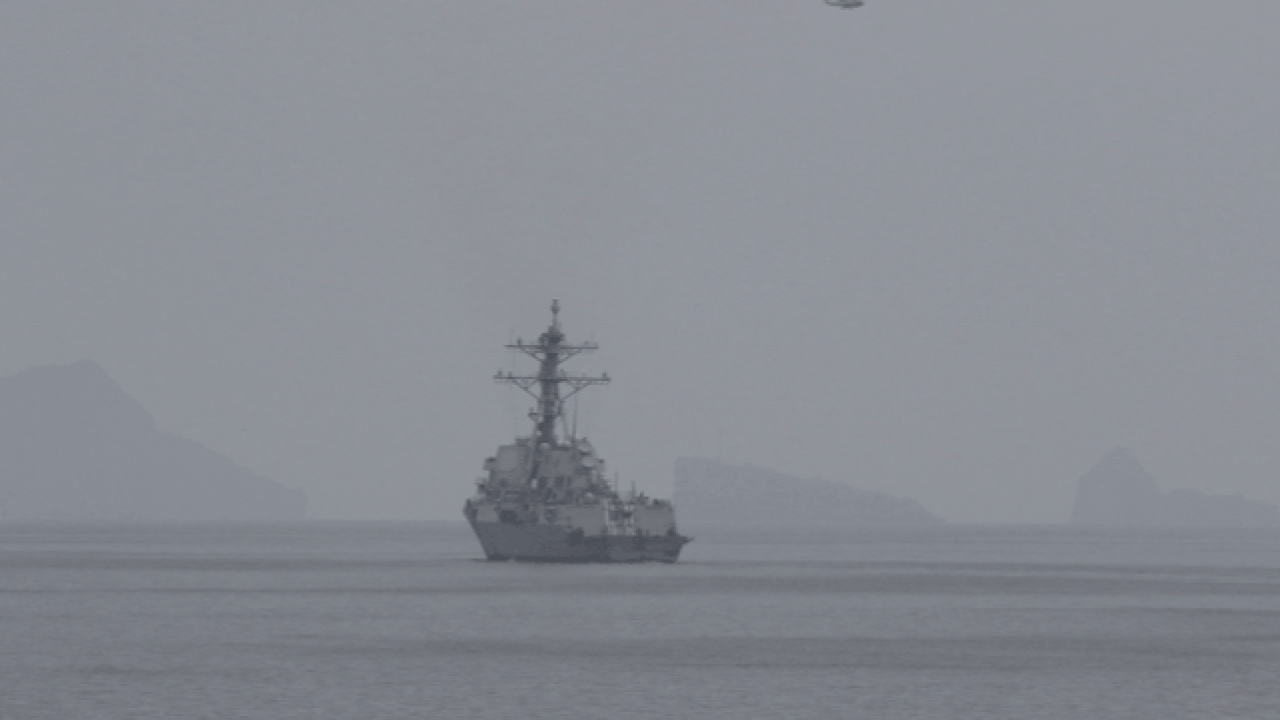
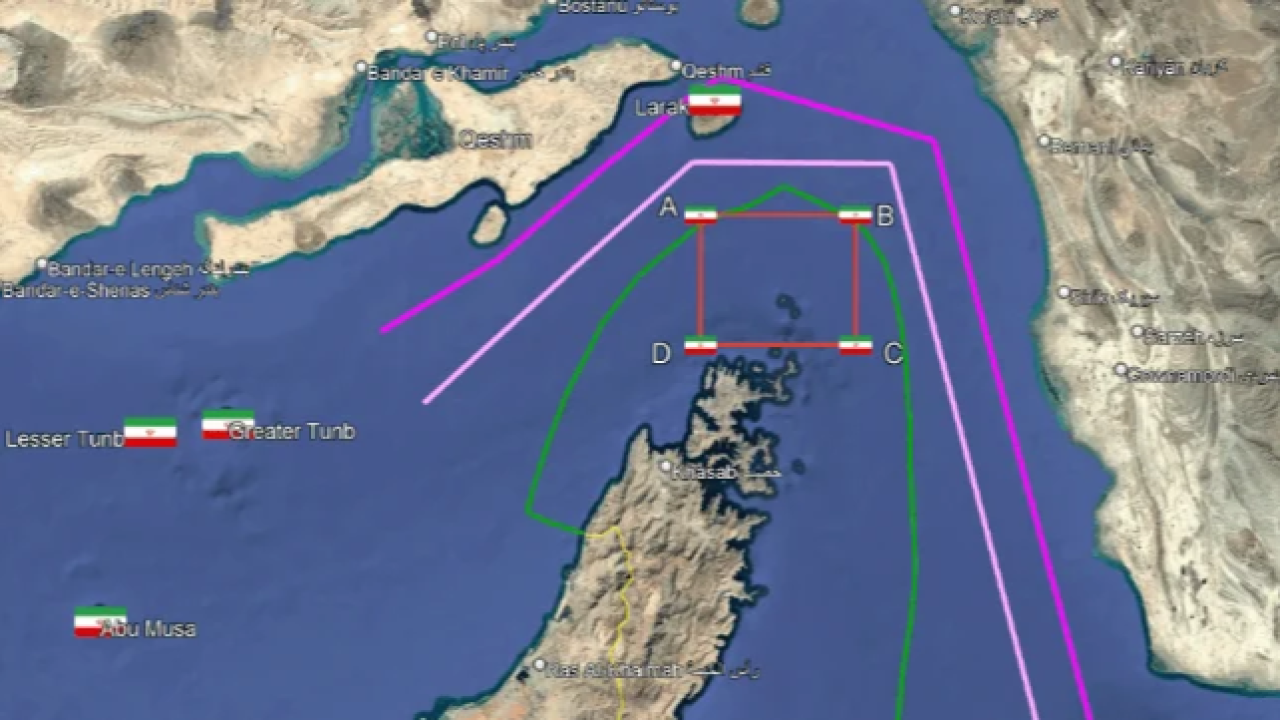
During the summit days, there was no ceasefire at sea either. On November 16, the BETUL 8, with eight Turkish sailors, capsized due to a marine drone attack off the coast of Bulgaria. The next day, the GAS HUSKY, carrying 3,400 tons of LPG, sank after being hit four times in the same area, and 19 Filipino sailors were rescued by helicopters. The LARISSA 1, which was hit off the coast of Romania, was towed to Inebolu for repairs. On the evening of November 17, the ADNOC's NAVIG8 MESSI tanker was hit off Khasab in Hormuz: 11 injured, one missing. The number of confirmed attacks around Hormuz in November rose to 18. On November 18, Iran struck Bahrain and Kuwait for the first time in two months. Ukraine targeted the Crimean bridge three nights in a row. Parts of a Houthi missile heading towards Riyadh fell on the tower of the Public Investment Fund. While leaders smiled, ships were burning on three fronts.
Did it refute the thesis?
The only fixed rule of the thesis is this: even if the photo changes, the money tap remains untouched. Let's test the summit with this rule.
The blockade in Hormuz was not reflected in the joint text. The only thing China obtained from the summit for the strait was a single sentence. There is no timeline, no mechanism. On the Russian front, it can be said that Putin came out ahead. He took a photo and emphasized the immunity of state officials in the declaration. This gain is political, not financial. There is no easing of sanctions; the frozen 300 billion dollars remain in place, and Ukraine is not mentioned even in a single word in the declaration. The first half of the formula "it will not collapse but will not win" is functioning, while the second half—which I will show with data below—is being tested. On the Chinese front, there is no concession on chips, rare elements, or tariff headings. As for the dollar front, the three major powers sat at the same table and did not mention the currency at all.
In 2022, I wrote that Europe would be condemned to US-UK leadership. The absence of Europe at this summit strengthens my concern that the continent's diplomatic weight is weakening. This is not a validation but an observation. The continent is not invited to the table for discussions directly related to its security and is not called to the table where the war on its own soil is being discussed.
The main challenge to my thesis from the summit is not the friendly photo. The joint stance of the three powers on UN reform and the immunity of state officials shows that major powers with conflicting interests can act together in certain areas. It would be simplistic to dismiss this as merely a matter of Putin gaining prestige. What is agreed upon is not a peace order but a search for common political protection against international justice, and the UN reform item does not indicate the direction of the reform. Nevertheless, the ability of the three powers to take a joint stance in one area does not fully align with my thesis of "using conflict." However, it is also true that great power diplomacy cannot resolve these wars over a lunch. The photo has not disproven the thesis, but neither does it prove it on its own.
As for the tension among my own writings, I had interpreted Iran's announcement that it would collect transit fees in yuan as a declaration of the de facto collapse of the petrodollar. While this process continues, I may have acted a bit prematurely in explaining it. Today, I am writing that the same process has raised the dollar. The two articles measure different indicators. The judgment in April was related to the norm in the payment system and military deterrence, while today's observation pertains to the exchange rate and reserve share. To put it more narrowly today, the connection between oil and the dollar has not been dissolved; it has been clearly strained. Deterrence, the weight in payment systems, reserve share, and exchange rate are separate indicators, and today they point in different directions. The erosion of military deterrence has not automatically ended financial superiority, just as the rise in the exchange rate does not close the crack in the payment system. What I wrote in "The Bankruptcy of the Paradigm" is also valid here. When there are actors who can make great powers pay with cheap drones, the question of how "controlled" Washington can keep the closure is clear. The fact that voters may hold the cost of living accountable in November suggests that the limits of control may have been exceeded.
There are three more points that challenge the thesis. The first is the refined product item and sanctions. The three countries promised to increase the supply of refined petroleum products. I consider the high oil price to be a lever for Washington. This item indicates that there is an internal ceiling for that lever. Moreover, Washington has felt this ceiling before. Ten days after Hormuz was closed, on March 12, OFAC issued a temporary license allowing the sale of Russian oil loaded onto ships until April 11 and suspended its own ceiling price for these cargoes. It was temporary and limited to cargo. However, if such licenses turn into a permanent exemption covering new loadings, the "internment of Russia" aspect weakens.
The second is Russia's income. The sentence "Russia cannot benefit from expensive oil" seems to have become a determination that needs to be somewhat relaxed in light of October data. According to CREA, Russia's crude oil export revenue rose to 449 million euros per day in October, the highest level since June 2022. The monthly average of Urals is at 101.7 dollars, the peak of the series that started in October 2021. CREA estimates that high oil and gas prices provided Russia with approximately 36 billion dollars in additional export revenue in the six months following the Iranian attacks. I had constructed a more careful sentence in my book: Russia could not use this opportunity as freely as Western producers. That is the correct sentence. The 23-dollar discount per barrel, the cost of sanctioned shadow tankers carrying 60% of maritime oil in October, frozen reserves, and income flowing into the war fill the meaning of the word "freely." But deprivation is one thing, and restriction is another. If income remains at this level, I will need to reconsider the term "internment."
The third is the trilateral format. The UK was not at the table. Yet I referred to "US and UK leadership" in my writings. My answer is this: The City’s place is not at the summit table but in the infrastructure. This is not a metaphor; it is a mechanism. The G7 ceiling price is implemented through London-based P&I clubs and Lloyd's war risk market. The UK has placed hundreds of shadow fleet vessels on the sanctions list and announced that it will begin to stop shadow fleet tankers in its waters this year. The cameras show Washington, not the treasury. Yet I must admit this: these mechanisms prove the weight of the financial infrastructure, not that the British state manages the wars.
False displays of friendship
The main point to be read from the summit is not the hugs but the record of the hugs. Trump staged this choreography against Iran repeatedly. Three examples are enough. In June 2025, he said, "I will decide in two weeks," and a few days later, Fordo was hit. In February 2026, while indirect talks were ongoing in Oman and a technical meeting was scheduled in Vienna, bombs fell on the negotiation table on February 28. He signed an agreement in Versailles on June 17, brought back the blockade on July 14, and declared the same agreement a "waste of time" on November 19. The cycle repeated in the same order during the months in between: announcement of an agreement, ceasefire, blockade, new agreement, canceled signature, rejected offer, and the day after the statement "the war is essentially over," a tanker was hit.
The same choreography was applied to Putin. In August 2025, a red carpet was rolled out in Alaska, and two months later, Rosneft and Lukoil were placed on the sanctions list. In the declaration that came out from the table of Putin, who was called "my friend" in Shenzhen, the word Ukraine was not mentioned. The week when Xi was told "you are my friend," chip controls were expanded. In this theater, hugging is the intermission. When the curtain rises, the play is the same play. Therefore, looking at the Shenzhen photo and saying "the three powers agreed" is as accurate as looking at the Versailles photo and saying "the war is over." Five months have passed since that photo.
If the thesis is correct, in the coming months
If the current balance of interests continues, here is what I expect. The trade truce will be extended at the last minute in December's Florida G20 or until January 10, as tariffs are not the core of the thesis but bargaining material. I do not expect a comprehensive solution to the blockade in Hormuz. Trump's statement "we will finish it soon" keeps the possibility of a new operation on the agenda but does not show a decision for a standalone operation. When the strait opens, I anticipate it will come with a framework that institutionalizes the American naval presence and transition regulations. I expect attacks in the Black Sea to continue and the CPC exemption to be maintained. The origin of the cargo is decisive for sanctions in CPC. Oil documented as Kazakh origin is excluded from the US import ban on Russian oil, although it also carries Russian oil. According to a report by the FT citing officials, Ukraine has agreed not to target CPC infrastructure and non-Russian vessels meeting certain conditions. Bab-el-Mandeb will remain isolated for Saudi Arabia. On the dollar side, the IMF reserve data to be announced at the end of December and central banks' gold purchases should be monitored. The fate of the refined product item should also be observed. However, non-implementation does not automatically strengthen the thesis; it can also arise from capacity issues, disputes, or reluctance. If it is applied as a permanent exemption for Russian products, the thesis will be wounded.
Fear drove the dollar, gold fell: is it permanent?
The numbers are before us. Gold, which set a record at 5,627 dollars in January, fell below 3,900 dollars in mid-November, reaching its lowest level in thirteen months. The dollar index is at a nineteen-month high. The yield on the US ten-year bond is above 5%. Inflation fueled by the oil shock rose to 6.5% in producer prices, and the market almost certainly expects the Fed to raise interest rates in December. The chain is established as follows: war oil, oil inflation, inflation interest, interest raised the dollar. Fear fed the dollar in two ways: as a safe haven and as a yield. The "elevated dollar" I referred to in "Saving the Dollar" is precisely that, and Russia is excluded from this yield because it cannot freely use its reserves and cash flows under sanctions.
So, will this be permanent? Those who want to speak definitively here will be mistaken. In the fall of 2008 and March 2020, fear first rushed to cash dollars, gold was sold, and months later gold set new records. This time there is a different element: the dollar is rising along with yield, and the Fed is preparing to raise interest rates in the midst of a war. As long as oil remains expensive and the Fed stays tight, the pressure on gold, which does not yield interest, may continue. On the other side of the coin, there are central banks that continue to buy while prices fall. In the second quarter, gold lost 16% of its value, while official purchases reached a record 289 tons for second quarters. Short-term funds determine the price, while ownership shifts to central banks. Additionally, a bond yield exceeding 5% is as much a success for Washington as it is a burden: the interest on 40 trillion in debt grows every quarter. A strong dollar may eventually turn from a solution into the problem itself.
Therefore, the answer depends on three unknowns. How long will the war and blockade last? How long can the Fed carry this debt burden with high interest? Will Washington use the dollar as a weapon once again, or will it maintain its role as a safe haven? Can the same currency serve as both a weapon and a safe haven for a long time? That is the real question. It cannot be known from today. The only thing we know is that the bill is sent to the same addresses at both ends of this uncertainty.
The test of my predictions
If a thesis cannot be disproven, it is not a thesis but a belief. The indicators below will test my predictions that the current balance of interests will continue in the coming months. A change in policy in 2027 will not erase the finding that Washington benefited from these conflicts in 2026, but it will weaken the forward-looking claims of the thesis.
The first is Hormuz. If the blockade is lifted before the end of the first quarter of 2027 and the strait opens according to a timeline that does not institutionalize the current American military presence and does not leave transition control to Washington, my prediction that the opening will be tied to a permanent American control gain weakens. The second is Russia. If a general license covering new loadings of Russian crude oil and products is issued within the same timeframe, if the ceiling price is lifted, or if the main body held in Euroclear is resolved, my prediction that Russia will be kept under restrictions will diminish. The third is the dollar. Here, a single number does not disprove the thesis, as reserve share also plays with exchange rates and asset prices. Still, I set a monitoring threshold. If the dollar's reserve share in the IMF data falls below 55% by the end of 2027 and stays there, it would be the lowest level of this series to date and would weaken my expectation that the dollar will maintain its weight
Source: SeaNews Türkiye