
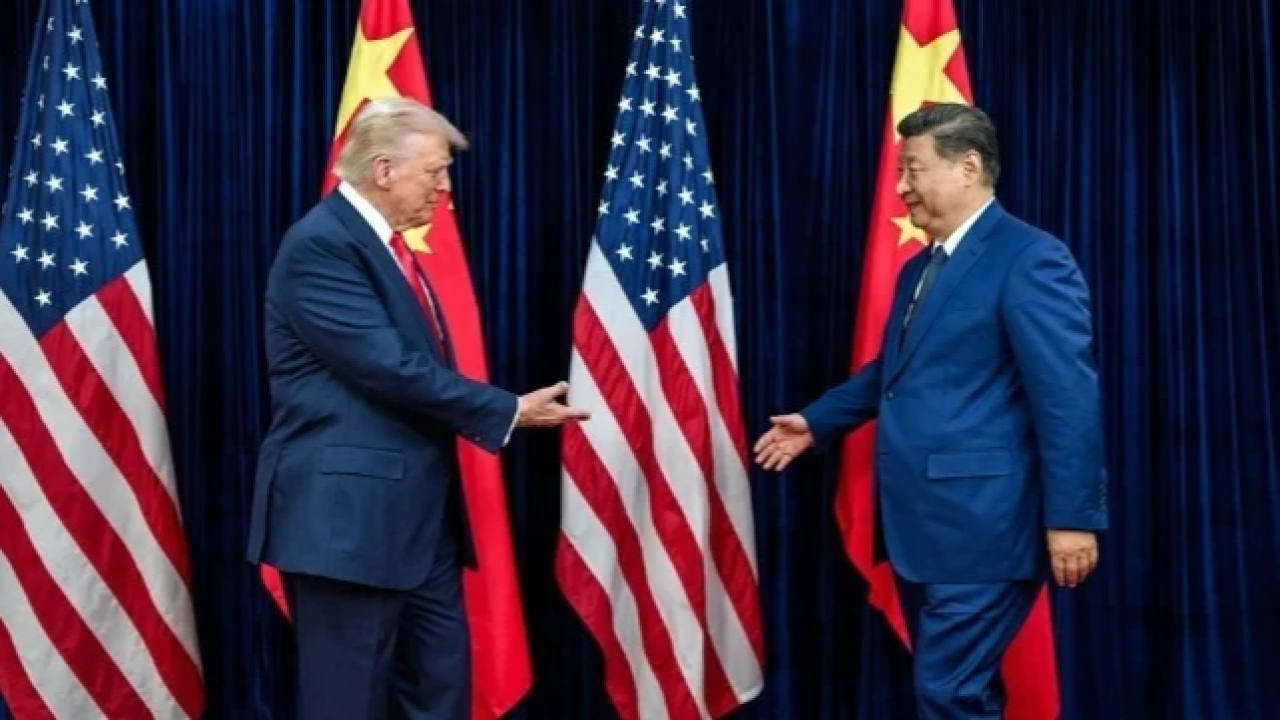
Ali Wyne explores the U.S. shift towards coexistence in China policy, emphasizing the need for a pragmatic approach amid rising tensions.
Ali Wyne discusses a pivotal opportunity to transition from a 'victory' mindset in U.S.-China policy to a focus on coexistence.
In his article, Wyne, a senior research and advocacy advisor on U.S.-China relations at the International Crisis Group, argues that Washington is undergoing a discursive and strategic transformation in its China policy. This shift is progressing slowly but steadily, influenced by two main factors: the increasing impact of President Donald Trump on China policy and the growing recognition that the U.S.'s ability to halt China's rise is more limited than previously thought.
Wyne emphasizes that, contrary to popular belief, the second Trump administration has adopted a narrower and more pragmatic understanding of competition in its China policy rather than a complete break. He notes that Trump's core objections to China have been primarily focused on the trade deficit and the export of fentanyl precursors, viewing Chinese leader Xi Jinping not as an ideological or existential threat but as a 'business competitor' with whom a sustainable relationship can be established.
Wyne points out that Trump's respect for Xi has increased despite recent tariff tensions, indicating that Washington effectively considers Beijing an equal power through the 'G2' rhetoric. This approach has also created political space for lawmakers seeking high-level dialogue with China within Congress.
The article highlights that China has demonstrated a greater-than-expected capacity for compliance and resilience against U.S. sanctions, export controls, and tariffs. Wyne indicates that China's dominance in the production and processing of rare earth elements provides it with significant leverage over U.S. industry, suggesting that decoupling from China will be a lengthy process in both the industrial and pharmaceutical sectors.
Recalling former U.S. Secretary of Commerce Gina Raimondo's example of Huawei, Wyne references academic assessments suggesting that export controls could accelerate innovation rather than hinder it. He argues that the notion of the U.S. and its allies forming a bloc to 'mathematically' outpace China remains weak in practice due to political and strategic insecurities.
According to Wyne, the Overton window in discussions of U.S.-China policy is widening. An increasing number of academics and commentators are questioning the assumption that China will inevitably replace the U.S. and are more openly discussing a competitive coexistence model. However, Wyne warns that this window could easily close.
He notes that a post-Trump administration could revert to a 'new Cold War' rhetoric or that increased pressure from Beijing on sensitive issues like Taiwan could provoke strong reactions in Washington, highlighting the dangers of the current uncertainty. Wyne expresses that despite Trump's pursuit of stability and dialogue, this approach has not been supported by a consistent institutional framework, arguing that the emerging paradigmatic gap could encourage China to behave more assertively.
In conclusion, Wyne emphasizes that it is both an opportunity and a necessity for the U.S. to clarify a strategy of competitive yet stable coexistence in its China policy, rather than pursuing unrealistic goals like 'victory.'
Source: www.denizhaber.com


