The Vincent Thomas Bridge will close for 16 months starting November 7, 2026, impacting cargo traffic and commutes in the Los Angeles area.
According to the latest plans from the California Department of Transportation (Caltrans), the Vincent Thomas Bridge - which connects the Port of Los Angeles, Port of Long Beach terminals, and the San Pedro area to Interstate 110 - will close completely on November 7, 2026 (local time) for a deck replacement project. The closure is expected to last approximately 16 months, with the target reopening date set for early March 2028.
The bridge serves as a critical corridor for cargo movement and employee commutes across both ports. According to Caltrans project data, the bridge handles approximately 53,000 vehicle crossings per day, of which heavy trucks account for 8.8%, representing roughly 4,700 port-related truck trips. During the closure, this traffic will be required to reroute, placing significantly greater pressure on roads surrounding the port complex. Caltrans has stated that traffic control personnel will be deployed at 18 key intersections in the surrounding area to manually manage traffic flow, with additional enforcement resources assigned to address heavy truck violations and ease the congestion caused by detour traffic.
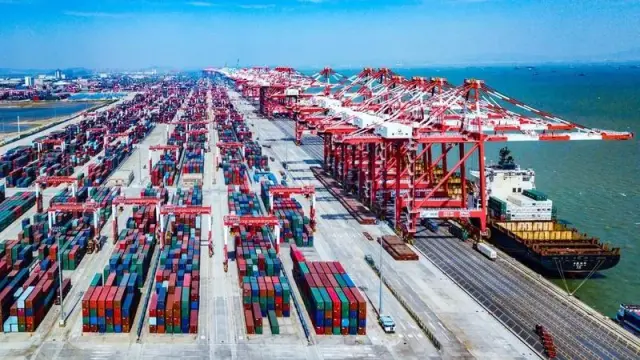
Notably, the San Pedro Bay port complex has already been experiencing an increase in container dwell times ahead of the bridge closure. Data from the Pacific Merchant Shipping Association (PMSA) shows that the average terminal dwell time for truck-picked-up containers at the two ports rose to 3.18 days in September, up from 2.95 days in August, while the average dwell time for rail containers increased from 6.75 days to 7.19 days over the same period. The association noted that record-breaking peak season volumes have driven dwell times higher. The Port of Los Angeles processed 1,042,700 TEUs in September - a single-month record - including 545,700 TEUs of import loaded containers, representing a 19% year-over-year increase. The Port of Long Beach handled 997,200 TEUs in the same period, a 25% year-over-year increase and likewise a single-month record, with import loaded containers reaching 509,400 TEUs, up 31.3% year-over-year.
From an operational standpoint, if detour-related delays prevent trucks from reaching terminals as scheduled, downstream activities - including warehouse unloading, empty container returns, and subsequent pickup appointments - may all be disrupted. For shipments with limited free time remaining or tight warehouse booking windows, insufficient time buffers could increase the risk of additional charges. Empty container returns will also require advance confirmation; should return locations or receiving windows change, the time chassis and vehicles remain in use may extend, reducing downstream transport efficiency. In addition, slower chassis turns may create a cascading effect on port yards, intensifying operational pressure at terminal pickup and return points.
Shippers and freight forwarders with cargo moving through the Los Angeles-Long Beach port complex in the near term are advised to confirm trucking routes and capacity arrangements in advance, review free time, free detention periods, and warehouse appointment windows, and adjust container pickup, return, and final delivery schedules accordingly. For time-sensitive shipments or those with limited free time remaining, building in additional buffer time is advisable. Maintaining close communication with trucking companies, warehouses, and terminals will be essential to managing the risk of additional costs arising from detours and congestion.