A massive medieval cog shipwreck discovered in Denmark reveals insights into European trade and maritime history.
A massive medieval shipwreck has been discovered off the coast of Denmark. Archaeologists have uncovered a 'cog' trading vessel, which could be the largest example of its kind ever found, in the depths of the Øresund Strait between Denmark and Sweden.
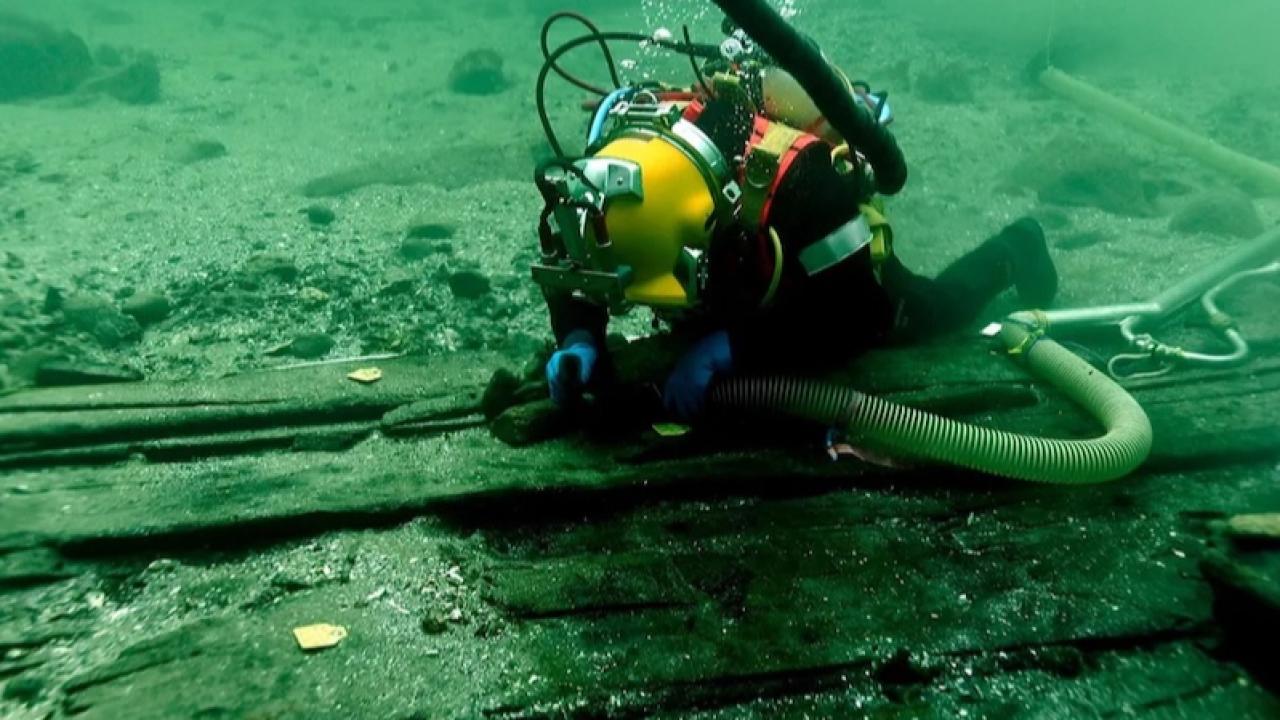
According to information reported by Arkeofili, the wreck, estimated to be around 600 years old, sheds light on a period when trade was rapidly expanding in medieval Europe. Researchers from the Viking Ship Museum state that the ship, measuring 28 meters in length and 9 meters in width, holds the distinction of being the largest cog discovered to date. Divers uncovered the skeleton of the ship by clearing away the sand and mud that had covered it for centuries.
Researchers named the wreck 'Svælget 2' due to its location in the channel called Svælget. The ship was found at a depth of 13 meters on the seabed and is in an extraordinarily well-preserved condition. Excavation leader Otto Uldum described the discovery as a turning point in maritime archaeology, stating, 'This ship offers a unique opportunity for us to understand how the largest trading vessels of the Middle Ages were constructed and how life was sustained aboard them.'
During the research, a brick-built cooking area was identified in a medieval ship in Danish waters for the first time. This area indicates that the crew was able to cook hot meals over an open fire. The wreck also contained kitchen utensils such as pots and bowls, as well as personal items like combs and prayer beads.
It is noted that the ship was not used for military purposes and was most likely a trading vessel. While its cargo has not yet been reached, researchers speculate that cargo barrels may have surfaced when the ship sank.
Analysis conducted through dendrochronology revealed that the ship was built in 1410. It was determined that some of the timber came from Poland, while the skeletal parts originated from the Netherlands. This suggests the existence of a complex and international timber trade network in medieval Northern Europe.
Experts believe that a cog of this size revolutionized trade by enabling the transportation of bulky goods such as salt, timber, bricks, and staple food items over long distances.
Uldum summarizes the significance of the discovery by stating, 'Cog ships fundamentally changed trade in Northern Europe. They enabled the transportation of goods on a scale that was previously impossible.'
Source: SeaNews Türkiye