
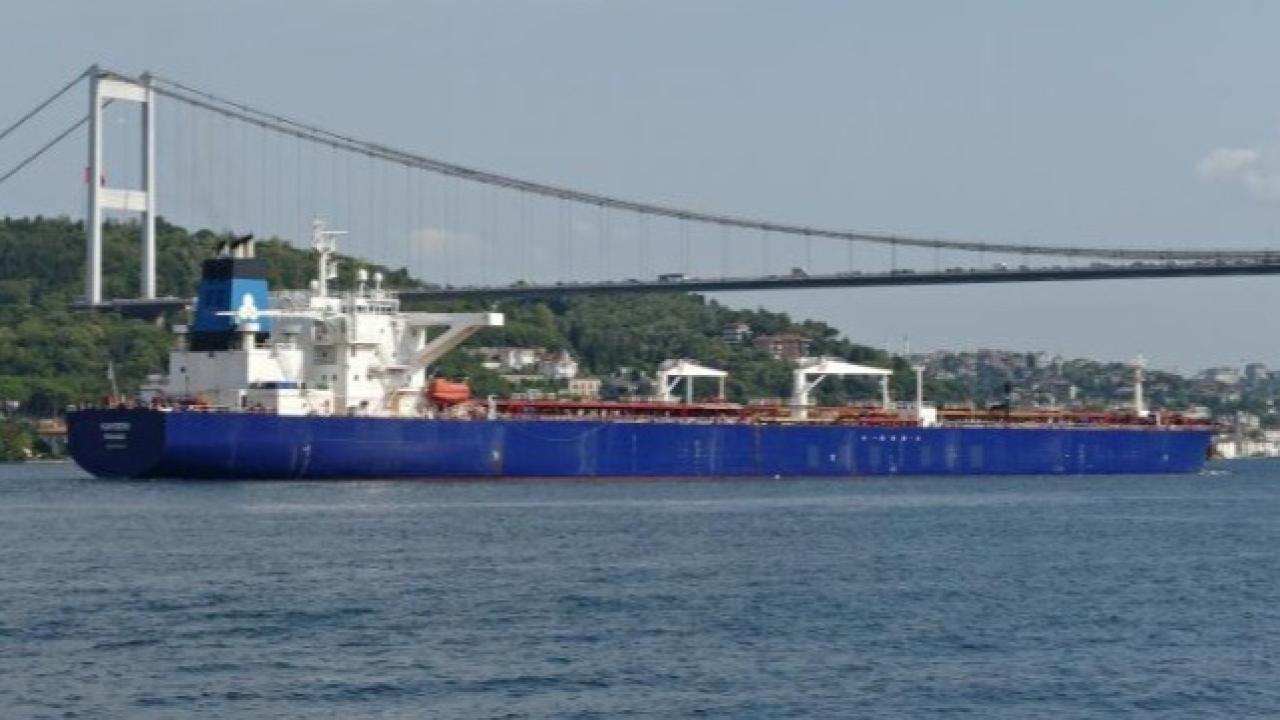
Ukraine has not claimed the Altura attack, while Turkey warns of international law violations as tensions escalate over Russian oil infrastructure.
Ukraine has not claimed responsibility for the attack on Altura. So far, neither Kiev nor Moscow has made an official acknowledgment regarding the attack, while the Ukrainian side has not made any statements claiming 'we did it' specifically regarding Altura, despite recently increasing its operations targeting Russian oil infrastructure.
Turkey, on the other hand, announced that the attack occurred within its Exclusive Economic Zone (EEZ). Foreign Ministry Spokesperson Öncü Keçeli stated that the incident constitutes a violation of international law and emphasized that they are in contact with the parties to prevent the war from spreading to the Black Sea.
Meanwhile, Russian military experts and some media outlets suggest that Ukraine is behind the attack. Evaluations published in media outlets such as Rossiya-1 indicate that Altura could be one of the vessels considered part of the 'Russian shadow fleet' and listed in sanctions, which may explain why it was targeted.
Although Ukraine has not claimed responsibility for the attack on Altura, it has significantly increased the tempo of attacks on Russian oil infrastructure in the past week. According to an analysis by Reuters, Ukraine's attacks on Russian oil ports and pipelines have incapacitated approximately 40% of the country's crude oil export capacity.
Russia delivers its oil through pipelines to China, Hungary, and Slovakia, and via tanker shipments to global markets, primarily China, India, and Turkey. Ukraine is systematically targeting the western part of this export network. Deep attacks have been carried out with drones against energy facilities located hundreds of kilometers away from Ukrainian territory.
While the Pacific terminal in Kozmino remains outside the attack range, the Black Sea terminals in Tuapse and Novorossiysk, as well as the Baltic terminals in Primorsk and Ust-Luga, have become targets for Ukraine. Multiple attacks have been conducted on these four terminals.
According to Reuters, following the recent attacks, loading activities at the inland port terminal in Novorossiysk are below normal levels. The Ust-Luga and Primorsk terminals have been severely affected by this week's attacks. It has been reported that firefighting and damage assessment efforts are ongoing, and the terminals have been temporarily closed.
Images shared on social media indicate that significant damage has occurred at the Novatek natural gas condensate terminal in Ust-Luga, which may have also affected two tankers at the dock.
Ukrainian officials claim that, in addition to disruptions at the ports, a section of the Druzhba oil pipeline passing through Ukraine has been damaged due to Russian attacks. It is noted that the pipeline remains closed nearly two months after the initial damage report. Hungary and Slovakia view this situation as a deliberate intervention by Ukraine.
According to Reuters, the closed ports and pipeline together account for approximately 40% of Russia's export capacity.
Another reason for Ukraine targeting energy infrastructure is the West's tendency to ease sanctions against Moscow. Following the rise in oil prices, it has been reported that the White House decided to temporarily lift some restrictions on Russian and Iranian oil, a move that has faced criticism.
Oleksii Riabchyn, a senior executive at the Ukrainian natural gas company Naftogaz, stated in an interview with Politico, 'This is a wrong approach. The more resources they have, the more drones or missiles they can provide to Iran, or they can increase their attacks against us.'
According to the New York Times, some Republican figures, including Senator Jerry Moran, Senator Roger Wicker, Senator Chuck Grassley, and Representative Don Bacon, are also opposing the easing of sanctions.
Source: SeaNews Türkiye


