
The US introduces financial security for Gulf shipping after insurers withdraw coverage, aiming to stabilize energy prices amid rising tensions.
Following the withdrawal of war risk coverage by leading marine insurance companies for the Persian Gulf and the Strait of Hormuz, the U.S. administration has prepared a new financial security plan for vessels passing through this strategic waterway.
Donald Trump announced that he has instructed the U.S. International Development Finance Corporation (DFC), the U.S. development finance institution, to provide political risk insurance and financial guarantees for maritime trade passing through the Gulf region.
Trump stated that this step was taken specifically to ensure that oil and energy trade is not disrupted, saying, 'No matter what happens, the United States will ensure the free flow of energy to the world.'
Objective: To Prevent Increases in Energy Prices
It is noted that the White House's move aims to keep rising energy prices under control due to increasing military tensions in the Middle East.
The price of Brent Crude Oil, a benchmark type of oil, has risen by approximately 14% since the onset of conflicts in the region. Experts warn that prices could increase further if significant export terminals remain closed.
A source close to the White House indicated that energy markets could come under more pressure, especially if military operations in the Gulf expand. The Strait of Hormuz was emphasized as a critical transit point, particularly for LNG shipments from Qatar and crude oil shipments from Saudi Arabia.
U.S. Navy May Escort Tankers
Trump also mentioned that the United States Navy could escort oil tankers passing through the Strait of Hormuz if necessary.
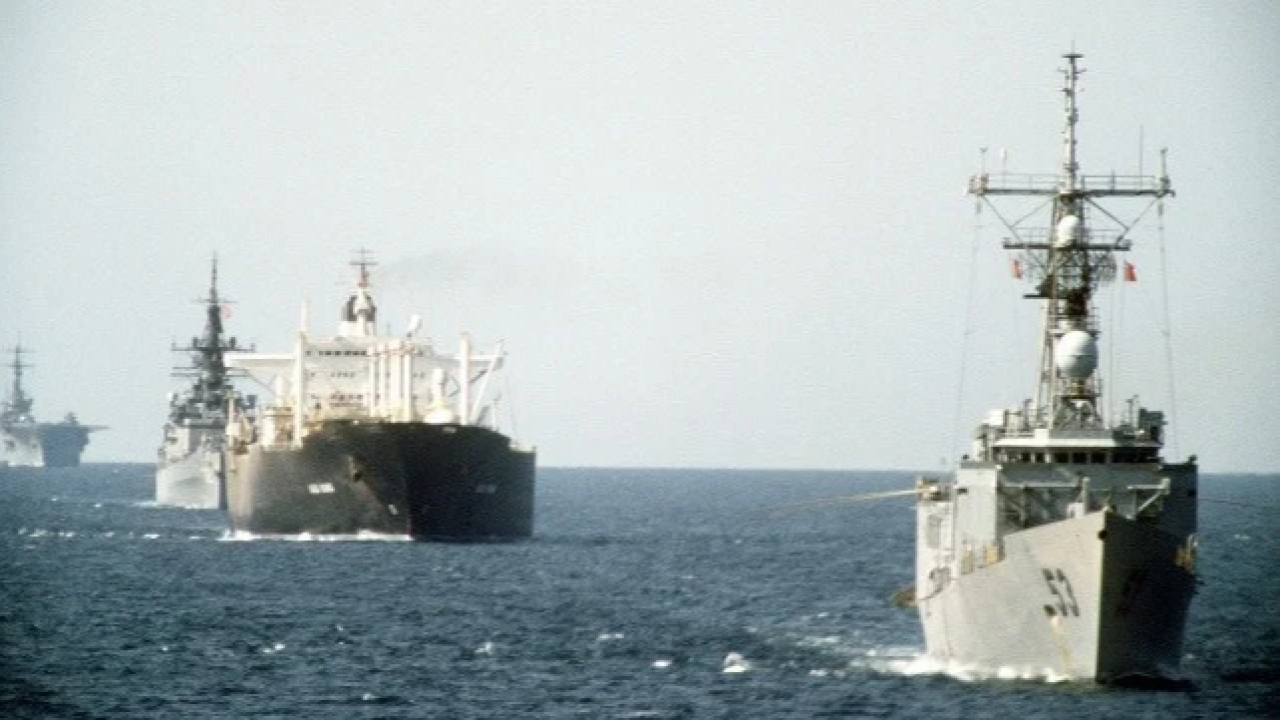
This plan recalls Operation Earnest Will, conducted during the late 1980s amid the Iran-Iraq War, which aimed to protect tankers. In that operation, foreign tankers were re-flagged under the U.S. flag and placed under naval protection.
New Burden for the Navy
However, there are questions regarding the feasibility of such an escort operation. A significant portion of U.S. naval assets stationed in the region is currently engaged in missile strike and air defense missions.
Experts indicate that a risk area extending approximately 1,000 nautical miles from Kuwait to the port of Duqm in Oman has formed, complicating logistics for escort operations.
According to the maritime publication Lloyd's List, U.S. Navy officials have stated in closed meetings with tanker companies that there are currently insufficient capabilities for escort missions and that such guarantees cannot be provided in the future.
Experts believe that while Washington's plan aims to prevent disruptions in global energy supply, the military and logistical conditions on the ground could complicate the implementation of the plan.
Source: SeaNews Türkiye


