
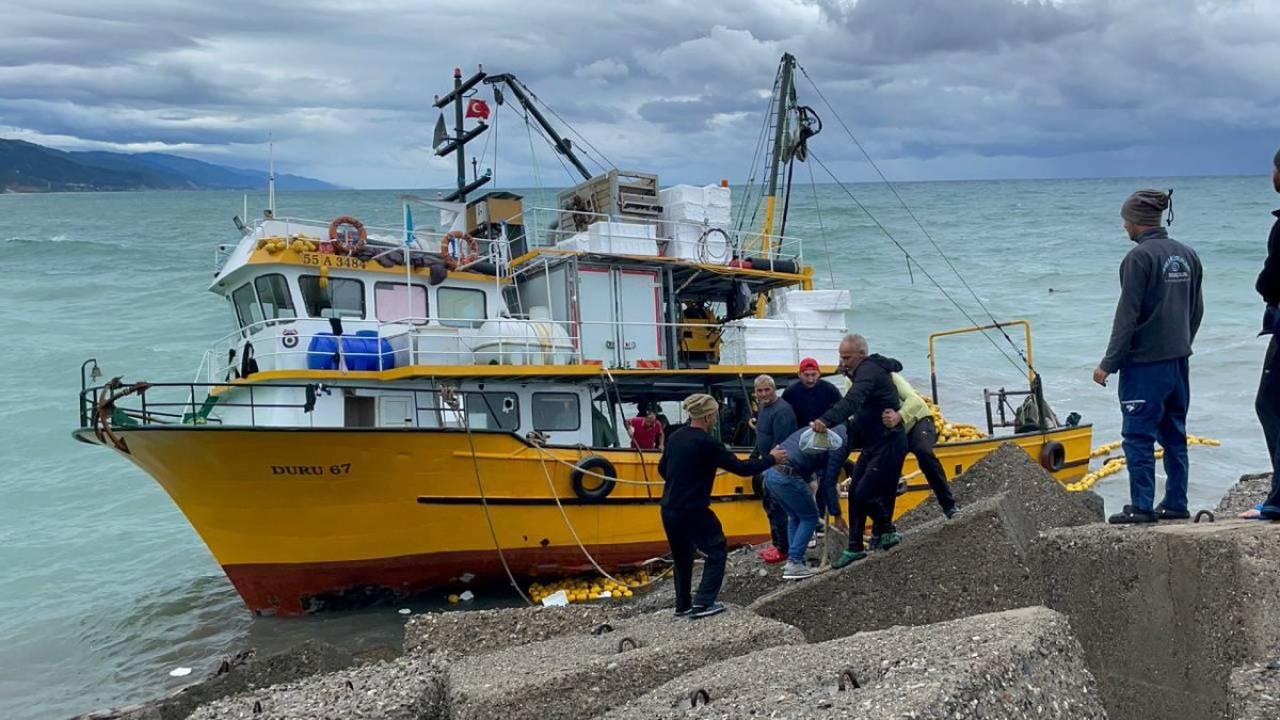
The Turkish fishing vessel 'Duru 67' sank near Sevastopol after an attack, resulting in one death and four injuries among the crew.
The Turkish-flagged fishing vessel 'Duru 67' sank after being attacked off the coast of Sevastopol, in the west of occupied Crimea. One fisherman, Cüneyt Varlık, lost his life, and four others were injured. The injured were rescued from the sea by the nearby fishing vessel 'Burak Kaya,' while the Coast Guard intervened at sea. While Turkish authorities did not disclose the perpetrator, the Ukrainian Navy attributed the attack to a Russian drone.
The Black Sea is increasingly becoming a front where the war is drawing more civilians into its fold. According to a written statement from the Coast Guard Command of the Ministry of Interior, on June 5, 2026, the Turkish-flagged fishing vessel 'Duru 67' was attacked in the northern Black Sea, in the waters west of the occupied Crimea — off the coast of Sevastopol. The vessel, which sustained damage from the attack, sank.
The fishing vessel 'Burak Kaya,' located nearby, promptly rescued five injured fishermen from the sinking 'Duru 67' and headed towards İnebolu. However, during the transfer, one fisherman in critical condition lost his life. Thus, the toll was recorded as one dead and four injured.
What was expected to be a routine fishing trip turned into a nightmare for the sailors. A single hit not only sank the vessel but also left the crew stranded in icy waters, waiting for help that was hours away.
WHERE and WHEN? The west of Crimea, in the midst of war.
The incident occurred on June 5, 2026, in the northern part of the Black Sea, in the waters west of the Crimean peninsula, which is under Russian occupation, and Sevastopol. This area is one of the hottest zones of the maritime aspect of the Russia-Ukraine war; it is a high-risk area for commercial and civilian vessels, with intense use of unmanned aerial and maritime vehicles.
The key meeting point of the rescue operation took place much further south: The Coast Guard vessel TCSG-96 reached the 'Burak Kaya' vessel carrying the injured, approximately 115 nautical miles (about 213 kilometers) north of the Turkish Search and Rescue Area, near İnebolu Port. This distance meant that the vessel had to make a return journey of about 15 hours.
WHO? The deceased: Cüneyt Varlık.
The fisherman who lost his life in the attack was reported to be Cüneyt Varlık; his body was taken to the morgue for autopsy examination. The treatment of the four injured fishermen is ongoing. Kastamonu Provincial Health Director Fevzi Yavuzyılmaz stated that the injured had severe shrapnel wounds and reported that the health team on the vessel had to perform an emergency surgical intervention at sea to stabilize one of the patients.
The first link in the rescue chain once again demonstrated the fundamental principle of maritime tradition: The nearby 'Burak Kaya' vessel pulled its endangered colleagues from the sea. Then, the Coast Guard Command of the Ministry of Interior intervened; the TCSG-96 vessel departed from İnebolu Port at 12:35 with a total of 19 specialized medical personnel, including four doctors and 15 UMKE/nurses and auxiliary health staff.
The injured fishermen were transported to İnebolu after a challenging return journey of about 15 hours, and then to a hospital in Kastamonu. For the families anxiously awaiting news from the sea, this period felt like an eternity, with minutes stretching into years. This tragic tale of a fishing trip ending in death brought deep sorrow to the fishing towns of the Black Sea.
HOW? Shrapnel wounds and surgery at sea.
The Coast Guard's statement did not specify the type of weapon used in the attack or the perpetrator; however, the severe shrapnel wounds identified in the injured suggest a hit from an explosive-laden vehicle. The TCSG-96 reached the 'Burak Kaya' vessel at 19:20; the body of the deceased fisherman and the injured were transferred to the Coast Guard vessel, and medical intervention began as the return to İnebolu commenced. The injured were subsequently transferred to a provincial hospital in Kastamonu.
The rescue turned into a scene resembling a 'floating intensive care unit' in the middle of the sea. The team on the Coast Guard vessel began their intervention as soon as they received the injured; emergency surgery was performed at sea for the most severely injured. It was painfully evident once again that every minute is vital in such long-distance evacuations.
An interesting detail regarding the vessel's history: Records show that 'Duru 67' ran aground in 2022 in the Bozkurt district of Kastamonu.
WHO DID IT and WHY? Conflicting claims.
As of the time these lines were written, the identity of the perpetrator of the attack remains unclear. The official statement from the Turkish Coast Guard Command did not mention the attacker or the weapon used. In contrast, the Ukrainian Navy claimed that the attack was carried out by a Russian drone. There has been no direct statement from Russia regarding the incident.
The answer to the 'why' question lies in a broader context: The Black Sea has been the scene of a war of attrition targeting commercial, civilian, and logistical vessels for years. A fishing vessel operating so far north, in waters close to occupied Crimea, seems to have placed it right in the middle of this dangerous 'gray zone.'
Identifying the perpetrator is often not easy in such incidents. In a maritime area where parties blame each other, radars are turned off, and vessels' identities are concealed, independently verifying which side and which vehicle the hit came from requires a technical examination. Therefore, the cautious language of Turkish authorities can be interpreted as a sign of an ongoing assessment.
The broader picture: On the same day, another sea incident.
The attack on 'Duru 67' is not an isolated incident. On the same day, June 5, in a separate attack, two bulk carriers named 'Natra' and 'Zircon' in the Taganrog Bay of the Sea of Azov were struck by unmanned aerial vehicles; five Azerbaijani sailors lost their lives, and four others were injured. The fact that 'Natra' was operated by a Turkish company based in Istanbul further highlighted the risks faced by Turkish maritime operations.
Targeting Turkish elements is not new. On March 26, three tankers named James II, Altura, and Velora, linked to Russia's 'shadow fleet,' were struck by explosive-laden drones off the coast of Türkeli; by the end of 2025, vessels operated by Turkish companies, Midvolga 2 and Mersin, had also been targeted by Ukraine's long-range aerial and maritime drones. The fate of 'Duru 67' adds a new link to this chain, directly impacting civilian fishermen.
The same 24 hours were extraordinarily active for the entire Black Sea basin. In Romania's Constanța Port, a maritime drone, reportedly belonging to Ukraine, exploded after going out of control due to Russian electronic jamming, sounding alarm bells on the shores of a NATO member. With five casualties in the Sea of Azov and this fisherman’s death in the Black Sea, June 5 has been recorded as one of the heaviest days in terms of the civilian cost of the war's maritime front.
Legal dimension: when fishermen become targets.
The attack on a civilian fishing vessel and its crew raises serious questions under international maritime law and the law of armed conflict. The safety of civilians not involved in the conflict, the obligations for search and rescue at sea, and the protection of freedom of navigation highlight not only the security aspect of the incident but also its legal dimension. The nature of fishing, which is conducted over vast areas and sometimes near risky waters, poses a permanent threat to Turkish fishermen in the Black Sea; this will bring discussions about navigational safety warnings and fishing grounds to the forefront.
What’s next? A judicial process (autopsy and investigation) is underway for the deceased Cüneyt Varlık; the treatment of the injured fishermen continues. The results of the technical examination regarding the perpetrator of the incident and the weapon used, along with the diplomatic steps to be taken by Turkish authorities, will clarify the situation in the coming days. These lines are subject to updates as verified new information becomes available.
Habertürk — 'One fisherman dead in the attack on the Duru 67 vessel in the Black Sea' (Coast Guard statement; victim: Cüneyt Varlık), June 5–6, 2026.
Kyiv Post — 'Turkish Fishing Vessel Sunk After Apparent Black Sea Attack, One Dead', June 6, 2026.
APA (from Daily Sabah) — '1 dead after attack on Turkish fishing boat in Black Sea', June 5, 2026.
Sözcü — 'Attack on Turkish fishing vessel in the Black Sea; 1 dead, 4 injured', June 5, 2026.
Sabah — 'Attack on Turkish fishing vessel in the Black Sea: 1 person dead', June 5, 2026.
T.C. Ministry of Interior Coast Guard Command — official written statement, June 5, 2026.
Source: SeaNews Türkiye


