At thirteen, Arda Güler left Ankara for Istanbul, driven by dreams and family responsibility, embodying hope for future generations.
Arda Güler was just thirteen years old when he left Ankara for Istanbul, chasing his childhood dream of becoming a footballer. Before setting off, his eight-year-older sister looked him in the eyes and said one sentence: 'Arda, you need to fill the refrigerator.' Years later, Arda recounted this memory in a letter published on May 8, 2025, titled My Letter to the Children of My Country.
What a heavy sentence for a child to carry.
At that age, a person thinks of friends, games, and the jersey they want to wear. The responsibilities of life still belong to the world of adults. However, sometimes the anxiety of a household’s livelihood knocks on the door of childhood too early. A football, in addition to being a game, begins to carry hopes for a family’s future.
When looking at Arda’s story, one must also consider the child who heard that sentence beneath the Real Madrid jersey. Perhaps this is part of the closeness we feel when watching him today. We see a young man who has stepped onto a grand stage, drawn attention with his extraordinary talent, yet continues to remember the people from his journey.
This is what calls me to reflect on Arda Güler. It is a story that begins with what his left foot can do and extends to what a person can do for others…
Because in Arda’s game, there is a quality that helps us think about how a better society can be built: recognizing another’s talent and preparing the conditions for that talent to emerge.
Sometimes, within a pass, there is much more than that. There is attention, there is trust, there is the ability to put oneself in a friend’s shoes. There is the will to see an unexecuted move and to desire that success be completed by another person’s foot.
Let’s remember the match on May 4, 2025, where Real Madrid defeated Celta Vigo 3-2. Arda first scored a beautiful goal. Then, in the 48th minute, he assisted Mbappé with a pass sent between the defensive lines. He was both the finisher and the preparer in the same match.
The most striking detail came after the match. When asked about the assist, Arda highlighted his friend’s contribution. In his own words: 'He made a fantastic run; I found him very well.' While describing his own success, he made space for Mbappé’s effort.
This sentence makes me think that a person’s greatness can also be seen in the space they allocate for others. He is the one who provides the beautiful pass; yet he also sees the condition that makes that pass possible. He does not exclude his friend from the story while narrating success.
How much we need such people in our lives. Managers who mention the names of those beside them after achieving something together, teachers who do not stop at sharing their own part in a student’s success but acknowledge their effort, colleagues who take pleasure in the visibility of the people they work with…
On July 5, 2025, we also witnessed Arda’s enabling game in the quarter-finals of the Club World Cup against Borussia Dortmund. First, he assisted Gonzalo García with a measured cross for a goal. In the extra minutes, he provided the pass for Mbappé’s acrobatic finish. In the match that Real Madrid won 3-2, the skills of two different teammates reached a result in the positions he prepared.
The value of playmaking becomes clear here. A good player knows what they can do. A good playmaker also takes into account what their friends can do. When looking at the field, they do not only see empty spaces; they also see the people who can create value in those spaces.
Moreover, this contribution is not always found in statistics.
The second goal against Monaco on January 20, 2026, was a beautiful example of this. In an attack that started with Camavinga’s backheel pass, Arda sent the ball to Vinícius’s run. Vinícius passed it to Mbappé with his outside foot, and the goal came. The final touch was credited to Mbappé, the assist to Vinícius. Arda was an important link in the game that connected these two.
There are such people in society as well. They do not appear in the last photo; yet they are involved in the work that allows that photo to be taken. A teacher who encourages a young person, a worker who quietly solves a difficult task, a manager who carefully listens to and develops another’s idea… When we read success solely through the final touch, we overlook a significant part of the effort that makes life possible.
We must also place the Vinícius comparison on a fair ground here. A footballer choosing a difficult shot instead of passing to a better-positioned teammate can be criticized. When this choice is repeated, it can harm the team’s collective production. However, it would not be right to explain a person’s entire personality through selfishness based on this. In fact, in the same Monaco match, Vinícius made two assists, scored one goal, and was named player of the match. He was one of the founders of the shared success along with Arda.
Therefore, the subject of our discussion should not be about elevating one at the expense of diminishing the other. What we need to focus on is a choice that presents itself to all of us: Are we enhancing our own visibility, or are we expanding what we can achieve together?
Taking a shot is also taking responsibility. Sometimes the right decision is to courageously strike at the goal. To understand Arda’s value, we do not need to transform him into a player who constantly passes, relinquishing his own claim. The principle we can defend through him is the convergence of personal talent and the desire to win with a common purpose.
This thought has strong counterparts in the history of philosophy.
Aristotle considers whether governments are oriented towards the common good as one of the fundamental criteria when evaluating administrations in Politics. Without mixing the boundaries of his ancient world with today’s understanding of equal citizenship, we can carry his question into the present: Whose lives does the power to govern improve?
We can ask this question in a company’s board of directors, in a municipality, or when discussing the future of a country. How does a manager’s success reflect in the lives of the people around them? Can they produce more people? Is the knowledge of individuals valued? Is the opportunity to participate in success widening?
The pass that puts Arda’s friend in position can be read as a small metaphor for these questions on the field. Using one’s advantage in a way that enables another person’s contribution…
Émile Durkheim’s concept of 'organic solidarity' opens a different door as well. In modern society, people need each other while doing different jobs. Specialization increases mutual dependence. However, Durkheim also shows that not every division of labor creates healthy solidarity spontaneously; unjust and unregulated relationships can produce problems.
Not all players on a team can do the same job. The contributions of the goalkeeper, defender, playmaker, and striker are different. In society, the knowledge of teachers, doctors, farmers, engineers, and seafarers cannot replace one another. The task of good governance is to establish a fair order where these differences can complement each other.
Therefore, leadership that empowers people is not just a matter of goodwill. It is also a management competency: seeing who knows what, assigning the right responsibility to the right person, circulating knowledge, and delivering the rewards of effort.
The approach of management thinker Mary Parker Follett is particularly meaningful here. Follett thinks of power as a capacity that can be developed together in relationships among people. When we bring people together in a common endeavor, a power to achieve beyond what each individually possesses can emerge.
The effect of Arda’s pass does not end when it leaves his foot. It continues in his friend’s run, in their strike, in the result the team achieves. In management, creating space for another does not have to diminish one’s own impact. The influence of a good manager can continue to live in the decisions and accomplishments of the people they have nurtured.
For this, one must establish a certain peace with oneself. Being able to rejoice when an employee finds a better idea than one’s own, not seeing a young person surpassing oneself as a threat, being able to admit when one does not know… These are the concrete manifestations of humility in management.
In the closeness I feel towards Arda, there is also a part that remembers the people from his past while narrating his success. In his own letter, he mentions that he started writing down the names of the people who helped him at his father’s suggestion and that he has expanded this list. He also states in the same text that his mother still wants him to tidy his room. Next to the grand football stage, there stands a small family scene that maintains the measure of everyday life.
How beautiful it is that the notebook where a person writes their dreams also contains the names of others.
That notebook can be read as a memory held against turning success into a one-person story. When a person rises, the effort of the teacher who first noticed them, the coach who took the time, the supportive friend does not get lost. Remembering keeps their contributions alive in life.
Arda’s saying, 'Whoever you are, you cannot succeed alone,' occupies the heart of this article in this regard. In the same letter, he also expresses the desire to open the way for a new generation of footballers. This thought, which extends from his journey to the journeys of others, is, in my opinion, one of the strongest reasons to see him as a valuable social example.
Yet, it is not enough to read this story with mere emotion. His sister’s refrigerator sentence confronts us with a more difficult question: Why should a family’s future have to hinge on a child’s extraordinary potential for success?
While appreciating Arda’s sense of responsibility, we must also see the weight of such a burden. A better society should ensure that not only talented children who bring their families to prosperity are celebrated but also that children without extraordinary talent can grow up in safety. Not every child will go to Real Madrid. But every child should have the right to healthy nutrition, good education, and to look to the future without fear.
Amartya Sen’s approach guides us at this point. Sen thinks about development as the expansion of real opportunities people have to live lives they value. The opportunities here are broader than innate talent; they relate to education, health, freedom, and the ability to direct one’s own life.
From this thought, we can say that good governance is a kind of opportunity preparation work. Providing education to a talented child, creating an environment for a researcher to work, giving an employee the chance to utilize their knowledge… Each of these can be thought of as a well-placed pass in social life.
Turkey also needs such an understanding. Managers who do not measure people’s value by their proximity to themselves; who recognize knowledge, effort, and talent. People who listen to a young person’s good idea, allow expertise to speak, share success, and take responsibility in failure.
However, we cannot link this expectation solely to the emergence of good people. Rules that preserve merit, open decision-making processes, accountability, and the right to appeal are also necessary. The order on the field must work so that a beautiful pass can be followed.
Moreover, society is more complex than a football team built around a single goal. Citizens have different dreams, values, and life choices. Management must make it possible to live together without suppressing these differences. One of the most important tests of leadership that empowers people is being able to protect the rights of those who do not join them.
Maritime shows the vital counterpart of all this every day.
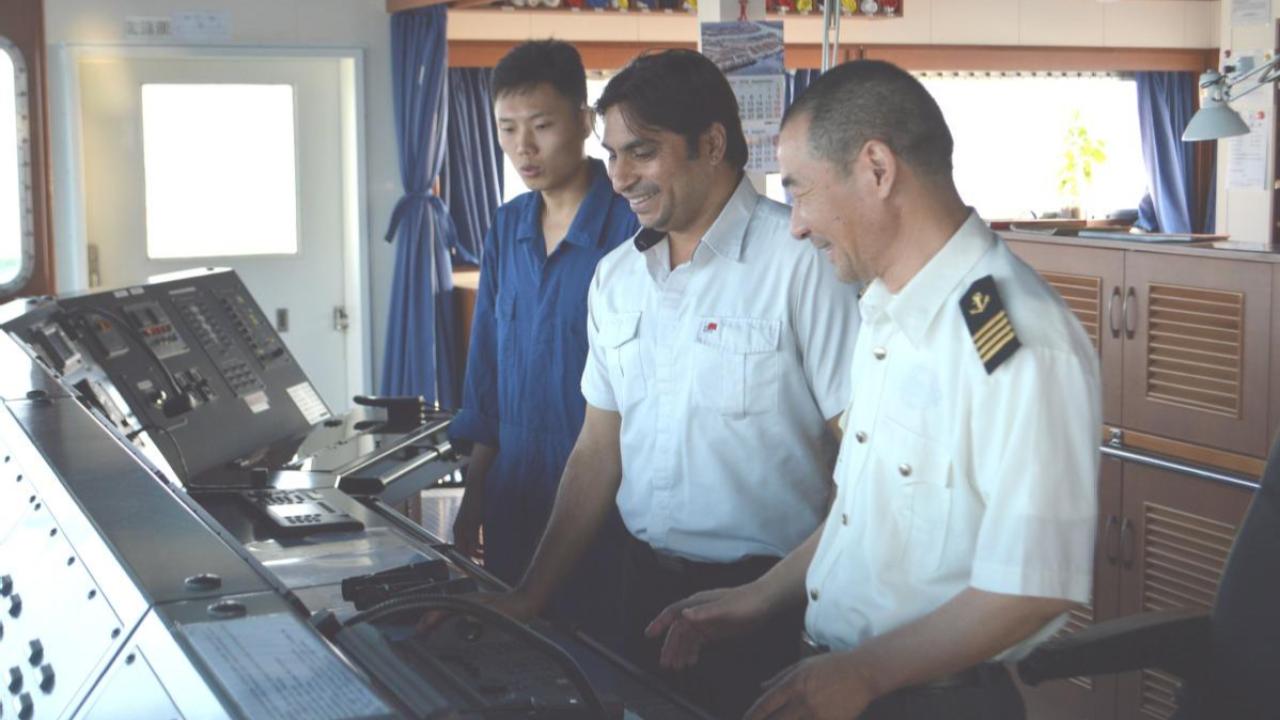
A ship sails with the knowledge and effort of many people. The assessment on the bridge, the work in the engine room, the attention on the deck, the preparations on the shore are all parts of the same voyage. The captain’s experience turns these contributions into collective safety to the extent that they can be brought together at the right time.
At the center of bridge resource management is the effective use of personnel, equipment, and knowledge for safe navigation; communication, collaboration, and coordination. The International Maritime Pilots’ Association’s guide clearly outlines this approach.
Sharing critical information at sea in a timely manner can sometimes be as decisive as the most accurate pass on the field; the consequences can be much heavier. A young officer must be able to comfortably express the danger they see, and an experienced captain must carefully listen to that warning. A trustworthy authority creates an environment where people’s knowledge can be included in a common assessment.
For this reason, teamwork at sea is a professional necessity beyond a pleasant wish. The fact that the IMO included leadership and teamwork training in the STCW with the 2010 Manila amendments shows this.
There are many unseen correct decisions that ensure a ship safely arrives at port. Families waiting on land will never learn most of those decisions. Yet, a person’s ability to return home depends on the careful work of others. This is one of the simplest, most human responses of solidarity: to ensure that we reach each other and our loved ones safely.
On a global scale, we are also faced with a similar responsibility. Protecting the seas, ensuring people’s safety, reducing poverty, and leaving a livable life for future generations requires the ability to act collectively. We must think about the limits of an understanding that builds its success on the loss of others. We cannot measure the world we will live in solely by the results written in our own household.
Arda Güler is undoubtedly a young footballer. He will continue to develop, make mistakes, and face criticism for some decisions. It would be unfair to place the burden of being a perfect person on him. The thought we advocate here is not a judgment of personality that explains all his behaviors; it is a social ideal constructed from his game and words.
Time will show what kind of leadership role he will take on at Real Madrid in the future. However, his ability to notice his friend’s run, to acknowledge another’s share in his success, and his desire to open paths for new generations are already worthy of reflection.
His extraordinary talent may earn him admiration. In my view, what transforms that admiration into a warmer love is his ability to make space for others within his success. It is a reminder that rising together is possible.
When I say the world needs more Arda Gülers, this is exactly what I mean. We need teachers who open paths for their students, captains who trust their young colleagues, managers who evaluate their employees’ knowledge, and politicians who bring the opportunities of society into the lives of more people.
Once, a sister asked her little brother to fill the refrigerator.
If we are to transform Arda’s story into the idea of a better world, we must rethink that sentence for all children. In a world built by people who share success and fair institutions, children should be able to dream without having to save their families’ future.
They should be able to run after the ball simply because they are children.