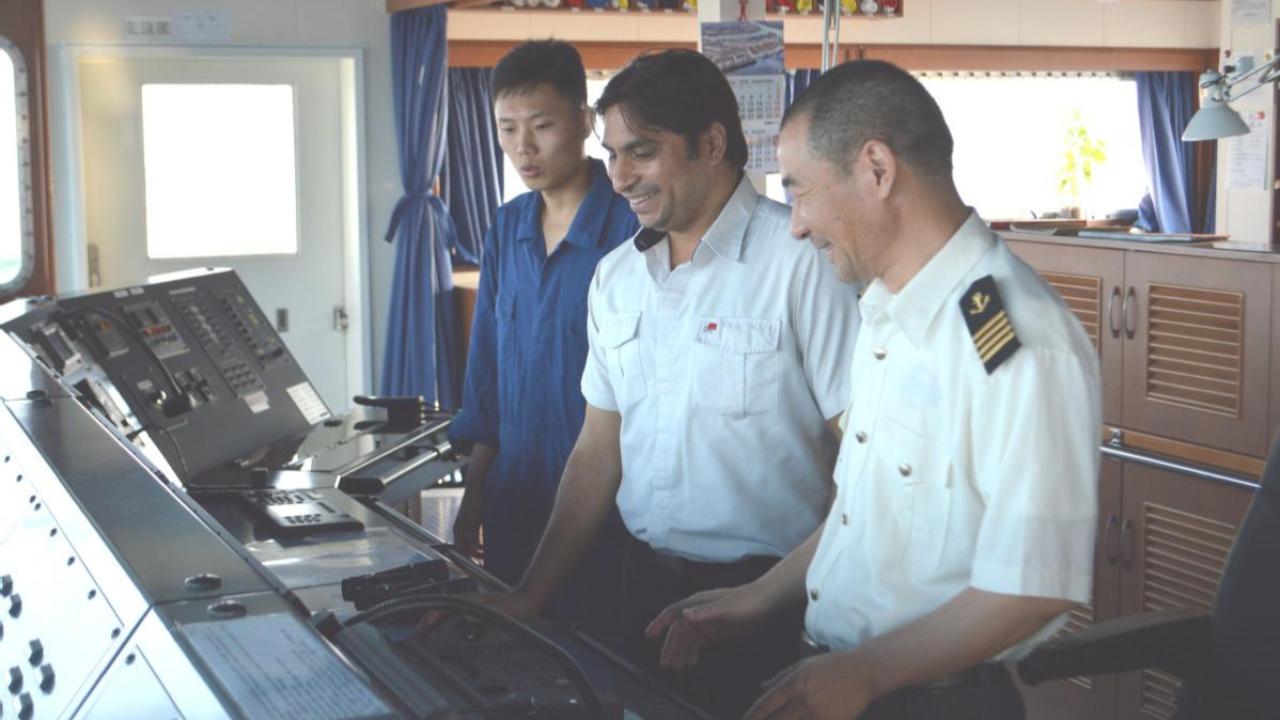
The maritime sector requires 113,735 new officers by 2030, highlighting a critical workforce crisis, warns a new report.
The shortage of officers in global shipping is growing: 113,000 additional officers will be needed by 2030.
The global maritime sector is facing a workforce crisis that is expected to deepen in the coming years due to the inability of certified officer supply to keep pace with fleet growth. A newly published report warns that without necessary measures, the personnel shortage will continue to grow.
The 2026 Seafarers' Workforce Report published by the shipping group BIMCO and the International Chamber of Shipping (ICS) highlights that in a period where the sector requires more qualified seafarers than ever, investments in recruitment, training, and employee retention need to be increased.
According to the report, the global maritime sector will need an additional 113,735 officers by 2030 to meet the needs of the world trade fleet. In the previous assessment, the 2021 report projected a need for 90,000 additional officers by 2026. This indicates that the workforce shortage in the sector is growing faster than expected.
The workforce shortage is increasing.
The report reveals that the imbalance between the supply and demand of certified seafarers continues, emphasizing that structural issues such as high personnel turnover, an aging workforce, and insufficient gender diversity persist. It is also noted that geopolitical developments have deepened the crisis, particularly highlighting the pressure on the sector due to more than 11,000 seafarers being stranded in the Strait of Hormuz.
ICS Secretary General Thomas A. Kazakos stated that the maritime sector continues to grow and emphasized the importance of directing young people towards maritime professions. Kazakos stressed the critical need to strengthen the talent pool that will form the future workforce, as well as retaining existing employees in the sector.
According to the report, approximately 2.57 million seafarers are serving on 85,148 commercial vessels worldwide. More than one million of these are officers, while 1.51 million are crew members.
Despite a 22% increase in the number of officers and a 47% increase in crew members in recent years, the sector still faces a significant imbalance. The report indicates that in 2026, there will be a shortage of 39,100 officers against a surplus of 56,890 crew members.
The need for new officers will increase.
With the continued growth of the fleet, it is estimated that an average of 22,747 new officers and 8,475 crew members will need to be added to the sector each year by 2030. This translates to an annual increase of approximately 2% in the number of officers and 0.5% in crew members. However, this growth rate is considered insufficient given that demand for certified seafarers has risen by 35% in the last five years.
The report also indicates that general cargo ships, bulk carriers, and passenger ships will be the main segments that will increase demand for both officers and crew members in the upcoming period.
BIMCO Secretary General and CEO David Loosley stated that it is critical for the sector to prepare for the future by recruiting, training, and retaining the seafarer workforce.
On the other hand, the report indicates that by 2026, 56.2% of the global seafarer workforce will be supplied by the Philippines, India, China, Russia, and Indonesia. In terms of officer nationalities, the Philippines, Ukraine, India, Romania, and Poland are among the leading countries.
The report reveals that age and diversity issues are also significant problems in the sector. While there has been a limited decrease in the average age of officers in management positions, the average age of operational officers and support staff has remained stable in the 31-40 age range. It was noted that the increase in the number of female seafarers has predominantly occurred in officer positions.
Source: SeaNews Türkiye