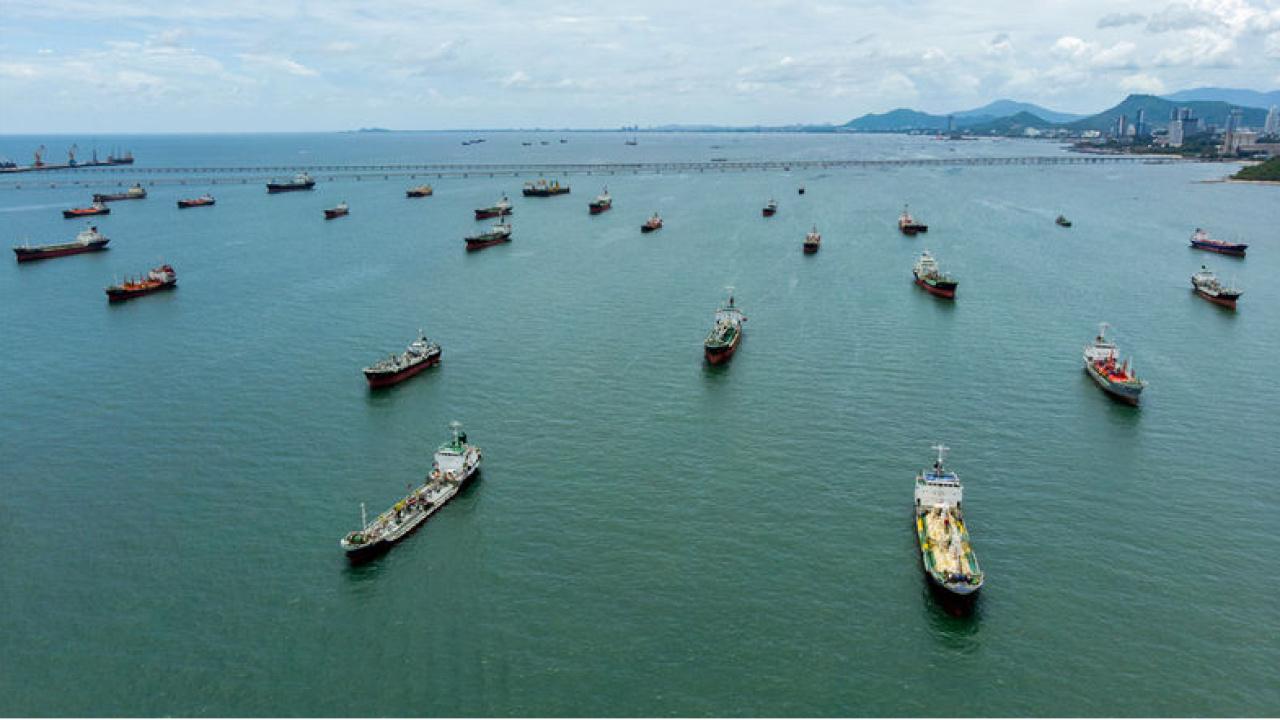
Brent crude and WTI prices rise due to tanker disruptions in key shipping routes, with geopolitical tensions impacting market stability.
Brent crude rose 24 pc in July, and West Texas Intermediate gained 21 per cent as tanker disruptions in the Strait of Hormuz and threats in the Bab el-Mandeb strait rattled markets, reported Reuters.
Brent futures closed at US$90.12 a barrel, up US$1.09, while WTI settled at US$84.67, up US$1.08. Analysts noted that the market is now trading shipping data rather than war headlines, with Iran blocking vessels and its allies menacing Red Sea traffic.
Iran's Revolutionary Guards stopped two tankers and forced four others to divert, while two very large crude carriers exited the strait on Friday. Ship-tracking firm Kpler reported that traffic remains sparse, with twenty-nine commodity vessels passing Bab el Mandeb on Thursday.
The Energy Information Administration reported US crude stocks at their lowest since 2018, reinforcing the geopolitical risk premium. Domestic output fell 2 per cent in May from April's record, although exports hit new highs.
A drone strike on two gas carriers in Egypt's Damietta port raised fears for the Suez Canal, while Saudi Arabia announced its intention to seek a coalition to defend Bab el Mandeb and the Gulf of Aden. Additionally, Ukraine claimed a strike on Russia's Volgograd refinery.
A Reuters survey of 31 economists forecast Brent to average US$85.22 a barrel in 2026, up from June's US$84.50 estimate, suggesting that prices will remain elevated as shipping risks persist.