
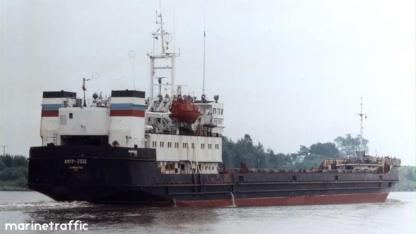
Drone attacks on cargo ships in the Sea of Azov result in 5 Azerbaijani sailors dead and 4 injured, heightening international tensions.
What happened? On the night of June 5, 2026, in the Taganrog Bay of the Sea of Azov, the cargo ships 'Natra' (flagged in Belize) and 'Zircon' (flagged in Palau) were struck by drones an hour apart.
Casualties: Five sailors were killed, and four sailors were injured. There were a total of 25 Azerbaijani citizens on board the ships; the identities of two victims have been confirmed.
Responsibility: The Commander of the Ukrainian Unmanned Systems Forces, Robert Brovdi, stated that they struck five 'illegally waiting ships' during the night. Russia (Zaharova, Galuzin) linked the attack to Ukraine.
Turkish connection: The operator of the 'Natra' is Efem Ship Chartering, based in Kadıköy, Istanbul; the owner is Natra Shipping located in Tuzla.
Context: On the same night, it was reported that 123 Ukrainian drones were shot down in numerous regions, including the Sea of Azov; St. Petersburg and Romania's Constanța port were also in the spotlight.
Unanswered questions: The names of the victims, the fate of the fire on the 'Zircon,' and the status of a third ship (a tanker) have yet to be clarified.
Two ships caught fire an hour apart
In the shallow inland sea of Azov, which opens to the Black Sea through the Kerch Strait, sailors experienced nightmarish hours on the night of June 5, 2026. According to the first report from the Taman Sea Search and Rescue Coordination Center, received at 03:04 Moscow time, the 'Natra' and 'Zircon,' which were en route to load grain from Turkey to Rostov-on-Don, were struck by unmanned aerial vehicles approximately an hour apart.
The first target was the 'Natra,' which was hit by four drones at local time 00:45. The fire was extinguished by the crew; however, two sailors lost their lives at the scene. There were 12 crew members on the Belize-flagged ship; the heavily damaged vessel remained afloat, and two tugboats were dispatched to the area for towing. At 01:55, four drones struck near the superstructure of the Palau-flagged 'Zircon'; three sailors died, and when the fire could not be controlled, the crew abandoned the ship using lifeboats. The survivors were rescued from the sea by three passing commercial vessels and were taken to Russia's Yeysk Port by dawn.
The attacks that occurred after midnight turned into a trap for the sailors with no escape: two burning ships, a crew forced to jump into cold waters, and a rescue operation continuing in the dark… The intervention of commercial ships passing the scene demonstrated that the obligation to assist those in danger at sea operates despite all risks; however, this solidarity was not enough to save five lives. According to Russian authorities, the first aid to the injured was provided by a Russian ship and an FSB border unit.
Official statement from Baku: 25 citizens, five coffins
The Azerbaijani Ministry of Foreign Affairs, in an official statement made during the day, reported that five Azerbaijani citizens lost their lives in the drone attack on the two cargo ships, and the initially reported number of three injured rose to four by the evening. According to the ministry, there were a total of 25 Azerbaijani citizens on board the ships at the time of the attack. The injured were taken to hospitals in Yeysk; personnel from the Azerbaijani embassy were dispatched to the region.
Baku emphasized in its statement that the ships did not belong to Azerbaijan and that the citizens were working on the ships as contracted sailors individually and voluntarily, not in any official capacity. Azerbaijan refrained from making a direct reference to the perpetrator of the attack. In the evening, it was announced that the identities of two of the five deceased sailors had been confirmed; the identification of the other casualties and the notification of their families are ongoing.
Kiev took responsibility, Moscow blamed Ukraine
The most striking aspect of the incident occurred in the responsibility debate. Robert 'Madyar' Brovdi, the Commander of the Ukrainian Unmanned Systems Forces, stated that they struck 'five illegally waiting ships' in the waters of Mariupol and Berdyansk and the occupied coastal waters throughout the night. Brovdi claimed that these ships were carrying grain from occupied Ukrainian territories; however, he did not directly mention the Azerbaijani dead and injured. Kiev did not confirm the reported casualties.
On the Russian side, the blame was directed straight at Ukraine. Foreign Ministry Spokeswoman Maria Zaharova expressed condolences, stating that current information indicated that the ships were attacked by Ukrainian drones; she noted that the incident was under investigation, that a Russian ship and an FSB border unit assisted the injured, and that Moscow was in close contact with Baku. Russian Deputy Foreign Minister Mikhail Galuzin confirmed that he was referring to Ukraine when he stated, 'We know very well who attacks civilian ships in the Black Sea and Mediterranean waters with drones from both the air and the sea.' The Russian Ministry of Defense also announced that 123 Ukrainian drones were shot down in numerous regions, including the Sea of Azov, throughout the night.
There is also a contradiction between the parties regarding the location of the incident: while Russian and Azerbaijani sources place the attack in Taganrog Bay, the Ukrainian statement described the incident within the framework of the Mariupol–Berdyansk line and the occupied coastal waters. This discrepancy complicates the independent verification of the incident.
One of the targeted ships is operated by a Turkish company
The aspect of the incident that closely concerns Turkey is tied to the operation of the targeted ship 'Natra.' According to international registry records, the registered owner of the ship is NATRA SHIPPING CO LTD, registered in the Private Sector Shipyards Area of Aydıntepe Neighborhood in Tuzla, Istanbul. The ISM management responsible for the safe operation of the ship, as well as the ship management and commercial management, has been undertaken by EFEM GEMİ KİRALAMA VE DENİZ, based in Kadıköy, Istanbul, since March 13, 2026. Although the ship flies a foreign flag (Belize), the daily operational responsibility lies with a Turkish operator.
This situation gains particular significance when evaluated in light of the repeated targeting of Turkish-owned or Turkish-operated ships in the Black Sea and Azov basin in recent months. The fact that the management of the operation has only recently passed to this Turkish company, on March 13, 2026, raises questions regarding the distribution of responsibility between the owner and the operator, as well as the employment relationship of the crew.
The shadow of a third ship and 'shadow fleet'
While the official operational report mentions the two ships — 'Natra' and 'Zircon' — the situation may be more complex than that. Russian media reported that a tanker and two cargo ships were damaged in the Taganrog Bay area, and there were conflicting reports regarding casualties. The Ukrainian commander’s mention of 'five ships' and a tanker also reinforces initial field reports suggesting that multiple vessels may have been involved in the incident.
In this context, the possibility of the Russian-flagged tanker named 'Bavly' (built in 2013; ISM manager Rostov-based Conaro Shipping, owner Kazan-based Nafta-Invest, operator St. Petersburg-based Petrotanker) mentioned in the initial reports still requires confirmation. The connection of the ship to the attack has not been verified by official authorities.
The maritime front of the grain war
The fact that both targeted ships were heading to load grain in Rostov-na-Donu from Turkey summarizes the background of the attack. Ukraine is targeting Russia's grain and fuel exports conducted by sea — particularly the tanker network referred to as the 'shadow fleet' and the grain shipments it claims are made from occupied territories — with both aerial and unmanned maritime vehicles. This campaign has extended far beyond the front lines.
Indeed, the June 5 attack was just one part of a busy night. During the same period, attacks on Ukraine's oil infrastructure in St. Petersburg and Russian naval assets were on the agenda; a naval drone, claimed to belong to Ukraine, exploded in Romania's Constanța Port. Previously, on April 3-5, the Russian grain ship 'Volgo-Balt 138' was struck and sunk in the Sea of Azov, and on May 30, a tanker and a fuel depot were set on fire at Taganrog Port. Turkish shipping has also been among the targets of this line: on March 26, the tanker 'Altura' of Pergamon Shipping was attacked near the Bosphorus, and on May 28, the Turkish-owned ship 'Ant' was struck off the coast of Odessa.
Experts indicate that this trend points to a maritime war increasingly involving civilian commercial vessels and seafarers from third countries. The narrow and shallow geography of the Sea of Azov permanently raises the risk of 'collateral damage' by squeezing military targets and commercial ships into the same.
SOURCES
APA — Azerbaijani Ministry of Foreign Affairs statement: 25 citizens, 5 dead, June 5, 2026.
APA — 'Zakharova: Moscow and Baku are in close contact over attack on Natra and Zircon ships,' June 5, 2026.
Kyiv Post — 'Five Azerbaijanis Killed In Azov Sea Drone Strike As Moscow Blames Kyiv,' June 5, 2026.
Trend News Agency — Drone attack on two ships in the Sea of Azov (UPDATE), June 5, 2026.
AzerNews — 'Five Azerbaijani seafarers die after drone attacks on Natra and Zirkon,' June 5, 2026.
Euronews — 'Five sailors killed as cargo ships struck in Sea of Azov,' June 5, 2026.
International ship registry / management records (Natra, Zircon, Bavly identification information).
Source: SeaNews Türkiye


