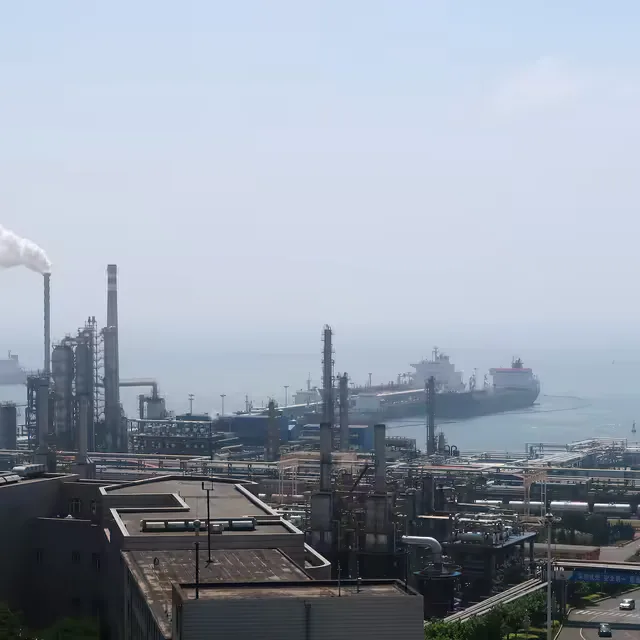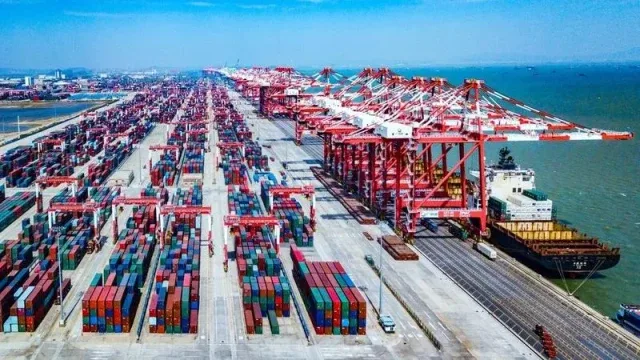
A potential strike by port security personnel at Long Beach and Los Angeles has been temporarily averted with a new negotiation deadline set for November 5.
A potential strike by port security personnel at two of the United States' largest container hubs - the Port of Los Angeles and the Port of Long Beach - has been temporarily averted. On October 30, the Pacific Maritime Association, representing port employers, reached an agreement with ILWU Local 26 to extend the negotiating deadline from November 1 to November 5, thereby forestalling the immediate risk of a work stoppage. As of the time of publication, no final agreement has been announced, and the labour dispute remains unresolved, leaving uncertainty over subsequent port operations.
The labour dispute did not emerge suddenly. ILWU Local 26 and the Pacific Maritime Association have been engaged in negotiations for more than a year, with the original contract expiring in July 2025 and work continuing under extension arrangements since that date. The Pacific Maritime Association has indicated that negotiations are proceeding with the assistance of the Federal Mediation and Conciliation Service, with both parties seeking a negotiated resolution that avoids disruption to port operations. No final agreement has been announced, nor has any resolution of the dispute been declared. Whether the parties extend negotiations further or reach an interim arrangement following the November 5 deadline will serve as a critical indicator of operational risk at the ports.
It is important to note that the security personnel represented by Local 26 are covered under a separate labour agreement, distinct from the 2023 master contract covering approximately 22,000 dockworkers across the US West Coast - a contract that remains in effect until 2028. This contractual distinction means that the resolution pathway for the current dispute does not operate in full alignment with the broader West Coast longshore labour framework.
The dispute involves approximately 250 port security personnel - marine guards - responsible for container terminal access control, management of truck and employee ingress and egress, internal terminal security patrols, and the monitoring and safeguarding of high-value cargo. While these individuals represent approximately 2% of the ILWU workforce at the ports of Los Angeles and Long Beach, their positions are distributed across multiple critical container terminals. According to data provided by the Pacific Maritime Association, the terminals at which these personnel are stationed handle approximately 85% of total cargo volume at the Port of Long Beach and 33% of total cargo volume at the Port of Los Angeles.
Should a strike materialize, the operational impact could extend well beyond the 250 security personnel directly involved. The Pacific Maritime Association has previously cautioned that other dockworkers, vessel operations personnel, and affiliated union members may decline to cross picket lines, potentially bringing vessel loading and discharge operations, yard activities, and truck gate operations at affected terminals to a halt. In this respect, while security positions do not directly encompass cargo handling, a work stoppage could propagate through union solidarity mechanisms across the full terminal operating chain, generating systemic disruption risk. Should the November 5 negotiations fail to produce a clear resolution, affected terminals' issuance of interim operational notices warrants close monitoring.
The labour dispute is unfolding against a backdrop of sustained, elevated cargo volumes at both ports. Combined, the ports of Los Angeles and Long Beach processed approximately 2.04 million TEUs in September 2026 - a record for that month - with each port individually setting September volume records. A substantial flow of import cargo is transiting through these two gateways into the US market, encompassing seasonal retail merchandise, equipment for artificial intelligence data centre construction, and automotive components. The elevated cargo environment has already placed pressure on terminal operations and landside transport connectivity; a labour action would risk amplifying supply chain disruption considerably.
Inland rail connectivity at both ports is simultaneously under strain. Industry data reported as of October 26 indicated that approximately 35,700 import containers at the ports of Los Angeles and Long Beach were awaiting rail transport services. A terminal work stoppage would likely intensify the coordination pressures between port operations, container retrieval, and inland transportation, with attendant increases in the risk of port congestion, container dwell, and demurrage and detention charges.
With November 5 established as the extended negotiating deadline, affected parties should not treat the prior November 1 date as the sole risk horizon, nor should the deadline extension be interpreted as a signal to reduce vigilance over port operational developments. Exporters, importers, freight forwarders, and carriers with cargo moving through the ports of Los Angeles or Long Beach are advised to promptly confirm vessel berthing schedules, container pickup and return arrangements, truck appointment availability, and rail transfer bookings with their ocean carriers and local agents, while building contingency time into their schedules for potential delays.
Specifically, the following actions merit attention: confirming voyage schedules and port rotation arrangements for booked cargo, and verifying whether carriers may adjust berth calls or omit port calls; maintaining active communication with destination warehouse operators, drayage providers, and customs brokers to build in lead time for container pickup and delivery; assessing the feasibility and cost implications of re-routing via alternative US West Coast gateways or US East Coast ports; and tracking the progress of union-employer negotiations and terminal operational status on a continuous basis, with cargo plans adjusted in response to developments.
This labour dispute, involving approximately 250 port security personnel, is limited in direct headcount but carries the potential to affect cargo flows through the United States' busiest container port complex. Whether the parties reach an agreement or extend negotiations beyond the November 5 deadline will serve as the primary indicator of port operational risk in the period ahead - a development that all parties with supply chain exposure to these ports should monitor with sustained attention.