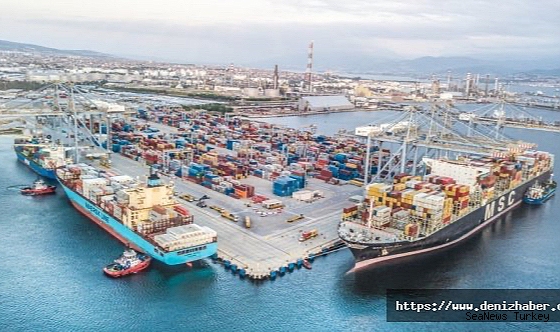
A joint research initiative led by the Singapore Energy Centre, in collaboration with Shanghai Maritime University and the Asia Pacific Institute of Science and Technology Education, has published a comprehensive study outlining a roadmap for the full electrification of Singapore's ports by 2035.
A joint research initiative led by the Singapore Energy Centre, in collaboration with Shanghai Maritime University and the Asia Pacific Institute of Science and Technology Education, has published a comprehensive study outlining a roadmap for the full electrification of Singapore's ports by 2035. The research concludes that port electrification stands to deliver both environmental and economic benefits, with shore power identified as a critical instrument for reducing vessel emissions during berth.
Singapore has already committed to a 2050 decarbonisation target for port operations. The study finds that prevailing technological conditions and market dynamics present a timely opportunity to accelerate the transition. Advancing port electrification, the research argues, would not only support Singapore's broader maritime decarbonisation agenda but also reinforce its competitive positioning within the global green shipping transition.
Experts consulted in the study assess the current technical challenges associated with port electrification as largely manageable. The principal barriers, they conclude, lie in cross-sector coordination, construction timelines, and capital allocation - not in technical feasibility. Port electrification must therefore be embedded within a broader energy and maritime decarbonisation policy framework, requiring strengthened coordination between government agencies including the Maritime and Port Authority of Singapore and the Energy Market Authority.
The research estimates that achieving full port electrification by 2035 would enable the progressive phase-out of diesel-powered port equipment, reducing annual carbon dioxide emissions by up to 94,000 tonnes. Concurrent reductions in nitrogen oxides, sulfur oxides, and particulate matter are projected to yield measurable improvements in air quality across port-adjacent communities.
Beyond emissions reductions, electrification is positioned to lower fuel expenditure in port operations. Under the full electrification scenario, the study projects cumulative fuel cost savings of more than SGD 190 million (approximately RMB 1 billion) between 2026 and 2035.
Accelerated electrification entails increased upfront investment, with the scale contingent on the infrastructure development pathway selected. Under a peak power demand-based approach, ten-year cumulative investment is estimated to range from approximately SGD 1.2 billion (approximately RMB 6.3 billion) to SGD 2.6 billion (approximately RMB 13.65 billion). An incremental, year-by-year energy demand-based construction approach yields a lower investment range of SGD 96.5 million (approximately RMB 507 million) to approximately SGD 196 million (approximately RMB 1.029 billion).
Shore power receives particular attention in the study as a decarbonisation tool of strategic importance. When vessels at berth shut down onboard diesel generators and draw power from the land-based grid, both fuel consumption and associated emissions during the berthing period are reduced. However, the research team cautions that current international carbon accounting frameworks may systematically understate the decarbonisation benefits attributable to shore power. Under the prevailing accounting structure, electricity-related emissions from shore power use are attributed to Singapore's national grid rather than to the vessels consuming that power. The study warns that without corresponding adjustments to emissions attribution methodology, port-level decarbonisation gains risk being offset on paper by increased grid emissions. Expanding shore power infrastructure must therefore be accompanied by greater clarity in international emissions attribution rules, alongside refined carbon pricing frameworks and regulatory structures to strengthen investor confidence.
Victor Nian, founding chairman of the Singapore Energy Centre and co-author of the study, notes that Singapore is already advancing the electrification of Tuas Port - and that the central question is one of timing. The research demonstrates that full electrification can serve as a long-term strategic investment for Singapore's port sector. Nian emphasises that while the economic and environmental case for port electrification is becoming increasingly clear, decisive progress hinges on the government's capacity to deliver unambiguous policy signals, establish stable market demand, break the current investment impasse between ports and shipowners, and secure returns at the earliest viable stage.
The study advances eight recommendations for the next phase of policy development: the phased introduction of mandatory shore power requirements; enhanced coordination between port and grid planning; the deployment of blended financing mechanisms to mitigate investment risk; and the establishment of a globally consistent emissions attribution framework for shore power, among others. The research affirms that Singapore's position as an international shipping hub - supported by its port infrastructure and regulatory capabilities - places it in a strong position to pioneer a comprehensive institutional and commercial model for port electrification. The experience accumulated in doing so, the study concludes, is well placed to serve as a reference framework for low-carbon transition efforts at ports across Asia.