MSC continues operations in Russia as competitors withdraw, reshaping market dynamics and transit routes amid the ongoing conflict.
Since the outbreak of the Russia-Ukraine conflict, a number of the world's leading container shipping lines - including Maersk - have withdrawn from the Russian container shipping market. Mediterranean Shipping Company (MSC), however, has not followed suit, continuing to call at Russian ports and maintain associated services. This divergence has drawn considerable attention to MSC's market position and operational rationale on Russian routes.
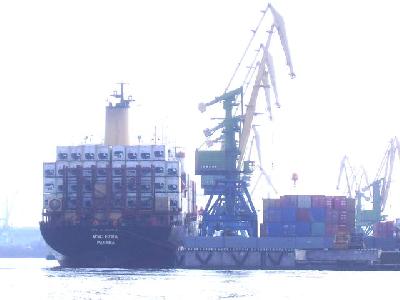
Data indicate that since September 2023, a total of 73 MSC container vessels have called at Russian and European ports. Among these, two Russian ports have emerged as the primary hubs: St. Petersburg on the Baltic Sea and Novorossiysk on the Black Sea.
Lars Jensen, analyst at Vespucci Maritime, expressed little surprise at this development. He noted that the departure of competing carriers has materially reduced competition within the Russian market. He stated that the choices made by other shipping lines have placed them at a commercial disadvantage. In addition, Jensen suggested that the limited participation of rival carriers likely renders the relevant services considerably profitable.
It bears clarification that calling at Russian ports is not, in itself, a violation of applicable law. Carriers are required to comply with sanctions targeting specific goods, entities, and individuals. MSC has stated that, since March 1, 2022, it has accepted bookings to and from Russia exclusively for food, medicine, and humanitarian cargo.
Jensen further noted that the Red Sea crisis may have elevated Russia's strategic value as a transit corridor for cargo moving between Asia and Europe. Container freight can be transported overland via the Trans-Siberian Railway through Russian territory and onward to European ports such as St. Petersburg - a multimodal arrangement that reduces transit times from approximately six to eight weeks to three to four weeks.
This dynamic implies that containers transiting through Russia do not necessarily carry Russian-origin goods; rather, Russia increasingly functions as a transit passage. Nevertheless, as container vessels progressively resume navigation through the Red Sea and Suez Canal, the time advantage associated with this overland routing may diminish accordingly. The ultimate trajectory of Russian route structures will depend on the evolving sanctions environment, the pace of Red Sea route resumption, and the compliance and operational strategies individual carriers elect to pursue.