
Secret fleet tankers near Turkey complicate Ukraine's targeting amid evolving Black Sea traffic and strategic routes.
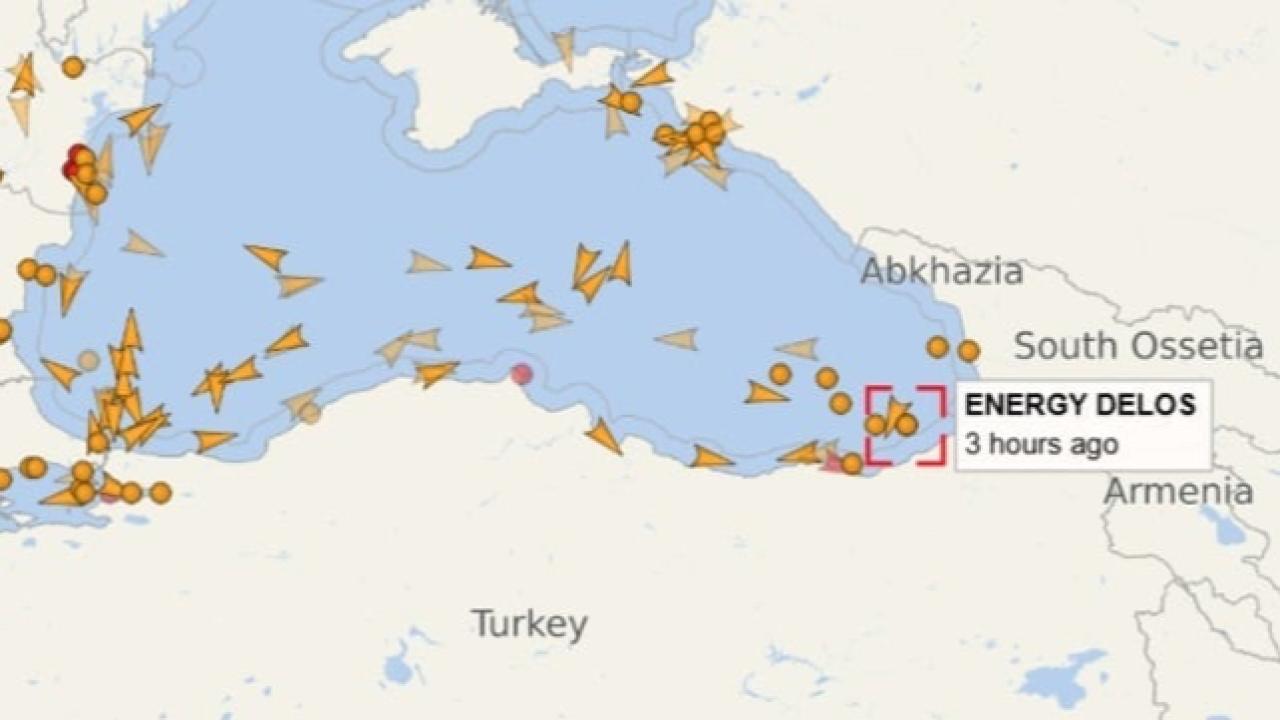
The movement of secret fleet tankers towards Novorossiysk in the Black Sea complicates target selection for Ukraine. AIS data indicates dense tanker traffic in the region.
CPC Terminals and the Weight of Kazakh Oil: There is a regular and legal flow of tankers to the three Caspian Pipeline Consortium (CPC) berths at the Novorossiysk-2 Marine Terminal. Approximately 85% of the oil loaded at these terminals consists of Kazakh crude oil from the Tengiz, Kashagan, and Karachaganak fields. This flow corresponds to about 80% of Kazakhstan's total oil exports. A portion of the remaining Kazakh production is transported to China via pipeline through CPC's eastern line.
Investments by Western Energy Companies: Major Western energy companies such as Chevron, ExxonMobil, Shell, and BP have significant investments in the CPC system and the technically complex oil fields in Kazakhstan. These investments necessitate stable exports and the protection of secure routes due to the high capital costs associated with extraction infrastructure. It is estimated that the oil transported through CPC accounts for approximately 1% of global crude oil production.
Russian Oil and Transit Revenues: About 15% of the oil passing through the CPC line consists of Russian oil from the Omsk and Kazan fields in Russia, transported both eastward via the Alashankou line and through Novorossiysk. Additionally, as a partial partner in CPC, Russia also earns revenue from the transit of Kazakh oil. This situation has prompted Ukraine to target the CPC facilities in Novorossiysk and encouraged Kazakhstan to seek alternative export routes that do not utilize Russian territory.
Kazakhstan's Search for Alternative Routes: Kazakhstan's President Kassym-Jomart Tokayev has initiated projects aimed at expanding trade along the Kazakhstan-Baku route over the Caspian Sea in coordination with Azerbaijan, with the goal of reducing dependence on Russia. In this context, shallow-draft Liwa and Taraz tankers, built as a joint venture between public entities of the United Arab Emirates and Kazakhstan, are operating between Aktau and Baku. The Kazakh oil transported via this route reaches the Mediterranean port of Ceyhan through the Baku-Tbilisi-Ceyhan pipeline.
Cautious Approach in Ukraine's Target Selection: The Ukrainian side is attempting to differentiate between Kazakh tankers and secret fleet vessels carrying Russian oil, taking into account environmental and political risks in tanker targeting. The definition of secret fleet emerges as a significant criterion in detecting tankers used to circumvent sanctions. Recently, the Russian-flagged Strateg tanker, which has been sailing near the Turkish coast from the Black Sea and is under sanctions, could have been considered a potential target. However, Ukraine is avoiding attacks on loaded tankers due to environmental risks.
AIS Open, Risks Continue: Over the weekend, the same route was also taken by the UK-flagged Energy Delos and the Liberia-flagged Delta Commander. These vessels sailed close to the Turkish coast, openly using AIS systems while loading Kazakh crude oil from Novorossiysk. In contrast, the non-sanctioned sister ship Delta Harmony was damaged in a drone attack by Ukrainian forces on January 13 while waiting to load. This situation makes it understandable for Greek shipowner Delta Tankers to act more cautiously.
Traffic Patterns in the Black Sea are Changing: The complexity of the targeting process stems from the fact that Black Sea traffic does not follow a one-way flow. Not all vessels between Russia and the Straits are heading south or sailing close to the Turkish coast. Recently, many cargo and tanker vessels have been observed turning off their AIS systems, and even ships departing from the occupied ports of Eastern Ukraine are taking the risk of using direct routes.
Vessels Using Direct Routes: According to reports published last week, the Russian-flagged bulk carrier Fedor passed through the Kerch Strait and is heading towards Lebanon. The sanctioned general cargo ship Severniy Proect sailed from Sevastopol to Latakia. The direct routing of both vessels from the Black Sea to the Straits once again highlights how complex and unpredictable maritime traffic in the region has become.
Source: SeaNews Türkiye


